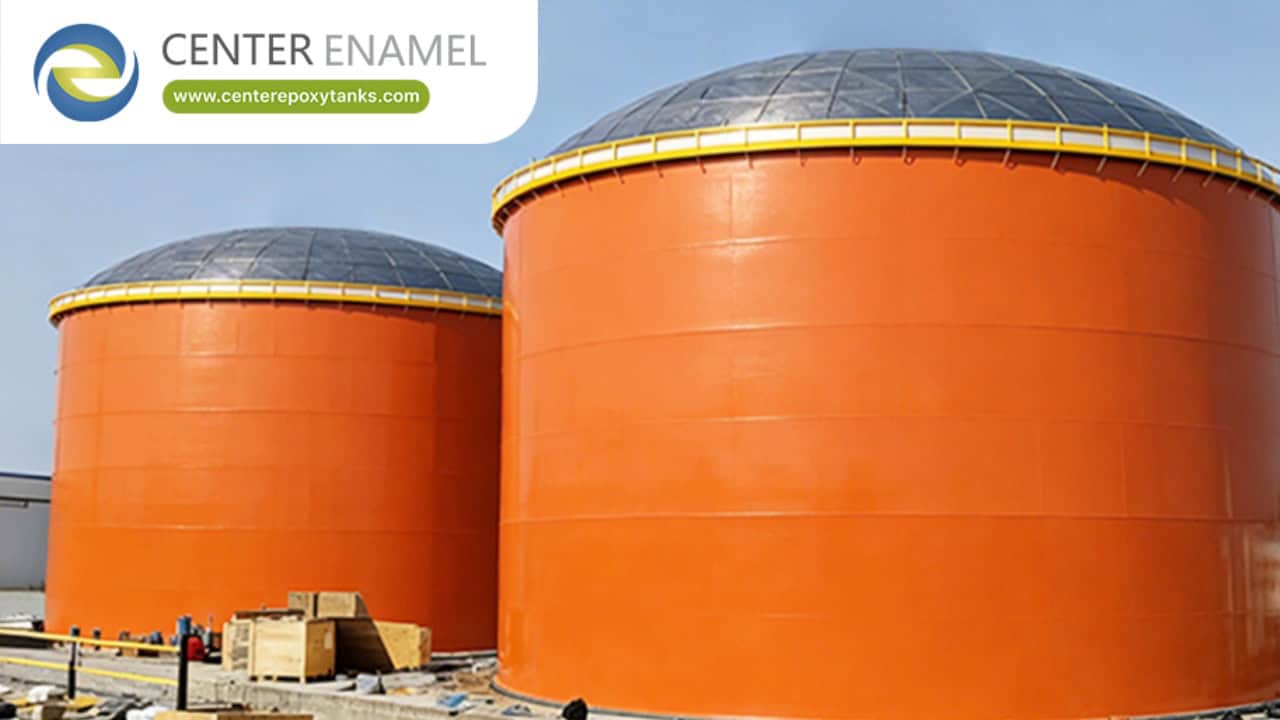
Gas Tanks for Oil Facilities - Vapour Recovery, Fuel Gas and Blanketing Storage
Oil terminals and refineries need gas storage for three quite different reasons: to capture hydrocarbon vapour that would otherwise be emitted, to buffer fuel gas so burners and generators have a steady supply, and to hold nitrogen for blanketing. Each has different pressure, composition and safety requirements, and treating them as the same problem leads to undersized or over-specified vessels.
Engineered by Shijiazhuang Zhengzhong Technology Co., Ltd. (Center Enamel), gas tanks for oil facilities are designed as pressure vessels or low-pressure storage to the applicable code, with the connections, instrumentation and safety devices each duty demands.
1. What Gas Storage Does an Oil Facility Need?
Vapour recovery vessels, fuel gas buffers and blanketing gas storage - three duties with three different design bases. Getting the duty clear first is what prevents the wrong vessel being bought.
· Vapour Recovery: Captures displaced vapour during loading and storage breathing so it can be recovered rather than vented.
· Fuel Gas Buffer: Provides a steady supply to burners, heaters and generators despite varying demand.
· Blanketing Gas Storage: Holds nitrogen used to pad tanks and exclude air and moisture.
· Instrument and Utility Air: Separate storage, kept distinct from hydrocarbon and blanketing service.
· Flare and Relief Headers: Knock-out vessels protect the flare from liquid carry-over.
2. How Does Vapour Recovery Work?
Displaced vapour is collected from tank vents and loading points, routed to recovery, and either compressed back into the liquid stream, sent to fuel gas, or treated. The vessel provides the buffer that decouples a variable source from a steady user.
· Collection: Vapour from loading and breathing is collected through dedicated lines rather than vented.
· Buffering: A vessel smooths the flow between an intermittent source and a continuous user.
· Recovery Route: Vapour is compressed, absorbed or sent to fuel gas depending on the facility.
· Safety: Flame arresters, detonation arresters and relief devices protect the collection system.
· Monitoring: Flow and composition are monitored so recovery performance is verified.
3. What Is a Fuel Gas Buffer Tank For?
To keep supply steady. Burners, heaters and generators need a stable pressure and flow; a buffer vessel absorbs demand swings and short supply interruptions so equipment does not trip.
· Demand Smoothing: The vessel absorbs short-term peaks that the supply cannot follow.
· Pressure Stability: A stable pressure protects burners from instability and trips.
· Liquid Separation: A knock-out section removes entrained liquid before the gas reaches equipment.
· Reserve: Provides a short reserve during a supply interruption.
· Instrumentation: Pressure, level and composition are monitored for safe operation.
Evaluation Criterion | Vapour Recovery Vessel | Fuel Gas Buffer | Blanketing Gas Storage |
Primary purpose | Capture emissions | Stabilise supply | Exclude air and moisture |
Typical pressure | Low | Low to medium | Medium |
Governing concern | Emission capture and flame safety | Pressure stability | Purity and delivery |
Liquid handling | Condensate knock-out | Entrained liquid separation | None |
Instrumentation focus | Flow and composition | Pressure and level | Pressure and purity |
Engineering Assurance and Project Support
Every welded oil tank delivered by Shijiazhuang Zhengzhong Technology Co., Ltd. (Center Enamel) is designed to API 650 with shell courses sized by the one-foot method and checked for wind, seismic and hydrostatic load cases, or to EN 14015 and the Eurocodes where the site is European. Shell plate is shot-blasted to Sa 2.5 and coated to a documented dry film thickness, longitudinal and annular plate welds are examined by radiography or ultrasonic testing to the acceptance level written into the purchase order, and every tank is hydrostatically tested and dimensionally surveyed before hand-over. Gas vessels are supplied to the applicable pressure vessel code with duty-specific connections, knock-out or separation internals where required, relief and arresting devices, instrumentation and full material and testing documentation.
Frequently Asked Questions (FAQ)
What is the difference between a vapour recovery tank and a fuel gas buffer?
Purpose. A vapour recovery vessel captures displaced hydrocarbon vapour so it can be recovered rather than emitted, and its design concern is emission capture and flame safety. A fuel gas buffer holds gas so burners and generators receive a steady supply despite demand swings, and its design concern is pressure stability and liquid separation.
Why does a gas buffer need liquid separation?
Because entrained liquid reaching burners or engines causes instability, incomplete combustion and damage. A knock-out section in the vessel removes entrained liquid before the gas leaves, and the separated liquid is drained from a low point so it cannot accumulate and reduce the vessel's effective volume.
What safety devices are needed on vapour recovery systems?
Flame arresters and detonation arresters appropriate to the service, pressure and vacuum relief devices, proper bonding and earthing, and isolation arrangements that allow maintenance without opening the whole system. The specific devices depend on the vapour composition and the system configuration.
Can the vessels be customised for our facility?
Yes. Duty, capacity, design pressure and temperature, material, separation internals, nozzle schedule, relief and arresting devices, instrumentation, insulation and supports are all engineered to your gas composition, flow profile and site conditions.


