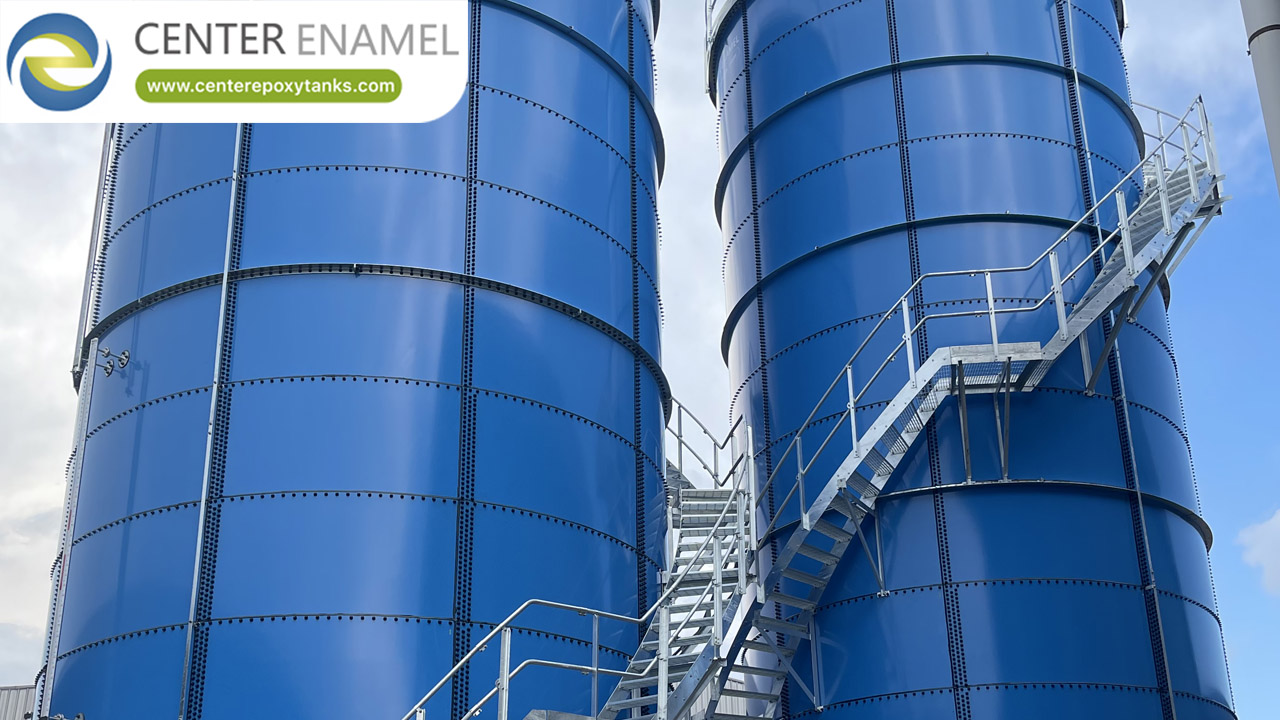
Fusion Bonded Epoxy Tanks in Oil Refining - Duties Where the Lining Earns Its Place
A refinery contains dozens of tank duties, and no single lining suits all of them. Fusion bonded epoxy has a clear place - process water, fire water, treated effluent, some intermediate streams - and clear boundaries: hot hydrocarbon, aromatic-rich streams and duties with significant abrasion or high temperature sit outside its envelope. The skill is in matching the lining to the duty rather than applying one specification across the site.
Engineered by Shijiazhuang Zhengzhong Technology Co., Ltd. (Center Enamel), fusion bonded epoxy tanks for refineries are specified duty by duty, with the envelope stated in writing and alternatives offered where the duty falls outside it.
1. Where Does FBE Fit in a Refinery?
In the water and low-temperature duties that surround the process rather than in the hot hydrocarbon core. Process water, fire water, treated effluent and utility storage are typical applications.
· Process and Utility Water: Fire water, cooling water make-up and utility storage.
· Treated Effluent: Oily water treatment stages where temperatures are moderate.
· Intermediate Streams: Cooler, less aggressive intermediates within the lining's envelope.
· Chemical Storage: Where the chemical and concentration sit inside the lining's compatibility range.
· Sludge and Slop Holding: Where temperature and chemistry are within the envelope.
2. Where Should FBE Not Be Used?
In hot hydrocarbon service, in aromatic-rich streams beyond the lining's compatibility, and where temperature or abrasion exceeds the envelope. In those duties a different lining or a different material is the correct answer.
· Hot Hydrocarbon: Elevated temperature is outside most epoxy immersion ratings.
· High Aromatic Content: Strong solvents attack epoxy films beyond their compatibility range.
· High Temperature Cycling: Repeated cycling stresses the film and its bond.
· Abrasive Slurries: A harder surface such as glass-fused-to-steel or an alloy is appropriate.
· Strong Acid or Alkali: Outside the lining's pH envelope.
3. How Is Lining Performance Verified?
Through the application records and through inspection in service. Surface preparation, film thickness and holiday testing establish the baseline; periodic internal inspection tracks condition against it.
· Application Records: Preparation standard, application conditions, film thickness and holiday testing.
· Baseline at Handover: Records establish what 'as new' looked like for future comparison.
· Scheduled Internal Inspection: Condition is examined and recorded on the interval in the owner's programme.
· Repair Records: Any repair is documented with its location, extent and method.
· Trend Review: Findings are trended so the lining's remaining life can be planned rather than guessed.
Evaluation Criterion | Duty-Matched FBE Lining | Site-Wide Generic Lining |
Specification basis | Per duty, with written envelope | One system for all tanks |
Hot hydrocarbon suitability | Excluded | Sometimes misapplied |
Aromatic compatibility | Checked against data sheet | Assumed |
Documentation | Full application and test records | Limited |
Inspection planning | Baseline plus trend review | Reactive |
Engineering Assurance and Project Support
Every welded oil tank delivered by Shijiazhuang Zhengzhong Technology Co., Ltd. (Center Enamel) is designed to API 650 with shell courses sized by the one-foot method and checked for wind, seismic and hydrostatic load cases, or to EN 14015 and the Eurocodes where the site is European. Shell plate is shot-blasted to Sa 2.5 and coated to a documented dry film thickness, longitudinal and annular plate welds are examined by radiography or ultrasonic testing to the acceptance level written into the purchase order, and every tank is hydrostatically tested and dimensionally surveyed before hand-over. Refinery tanks are supplied with a duty-by-duty lining recommendation, the coating data sheet and compatibility statement, surface preparation and application records, holiday testing and a written operating envelope.
Frequently Asked Questions (FAQ)
Which refinery duties suit fusion bonded epoxy linings?
The water and moderate-temperature duties around the process: fire water, process and utility water, treated effluent, cooler intermediates within the compatibility range, and chemical storage at concentrations the lining tolerates. The common factor is that temperature and chemistry sit inside the lining's documented envelope.
Where should epoxy not be used in a refinery?
In hot hydrocarbon service, in streams with high aromatic content beyond the lining's compatibility, where temperature cycling is severe, in abrasive slurries, and in strong acid or alkali duty. In those services a harder surface or a different material is the correct recommendation.
How do we verify the lining will perform?
Through records and inspection. Surface preparation standard, application conditions, dry film thickness across the surface and holiday testing establish the baseline at handover. Scheduled internal inspection then tracks condition against that baseline, and findings are trended so remaining life is planned rather than guessed.
Can the tanks be customised for our refinery?
Yes. Capacity and geometry, lining system selected per duty, surface preparation standard, roof type, nozzle schedule, heating and insulation, access and instrumentation are all engineered to your streams, temperatures and site conditions.


