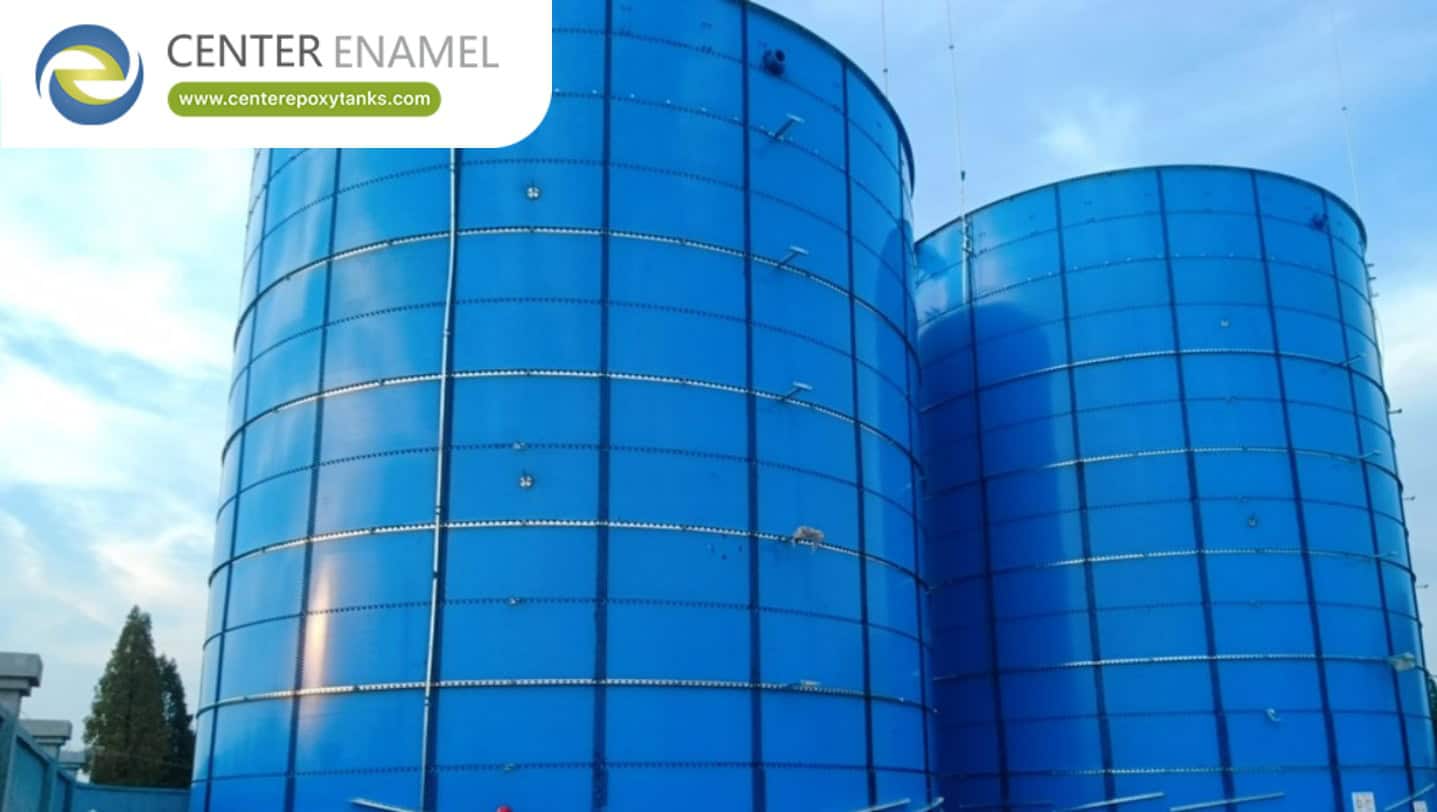
Fusion Bonded Epoxy (FBE) Tank Special Sealants: The Engineered Barrier
In Fusion Bonded Epoxy (FBE) bolted steel tanks, the mechanical integrity of the steel panels is only half the battle. The specialized elastomeric sealant applied at every lap joint, bolt penetration, and foundation interface is the actual "active" barrier against leakage. Unlike generic construction adhesives, these industrial-grade sealants are engineered specifically for high-pressure, chemical-resistant, and structural-movement environments. They provide a permanently flexible, high-adhesion interface that ensures the tank remains a single, sealed vessel for decades.
1. What Makes FBE Tank Sealants "Special"?
Standard commercial caulks (like silicones found in hardware stores) are insufficient for the structural demands of an industrial storage tank. FBE tank sealants are defined by three distinct technological characteristics:
A. High-Modulus Elastomeric Properties
These sealants possess superior "memory." As a tank fills and empties, or as it experiences seismic vibration and wind oscillation, the tank panels shift microscopically. A special FBE sealant can stretch (elongation) and compress repeatedly without losing its bond or tearing, effectively acting as a "gasket in a tube."
B. Specialized Chemical Cross-Linking
Most FBE-specific sealants are polyurethane-based rather than silicone-based. This is critical because:
● They bond aggressively to the Fusion Bonded Epoxy coating, which is itself a cured resin.
● They provide a higher "tear strength" to resist the shear forces exerted by the weight of the stored liquid pushing against the panel lap joints.
C. Environmental & Regulatory Inertness (NSF/ANSI 61)
If the tank stores potable water, the sealant must be NSF/ANSI 61 certified. This "special" designation means the sealant has been tested to ensure that it will not leach Volatile Organic Compounds (VOCs) or heavy metals into the water supply, even when in constant contact with the liquid for the tank's entire lifespan.
2. Sealant Selection Matrix: Engineering Requirements
When sourcing sealants for FBE tank construction, procurement must ensure the product meets these minimum industrial benchmarks:
Property | Requirement for FBE Tanks | Why? |
Adhesion Type | Chemical + Mechanical | Must stick to Epoxy (low surface energy) and Steel. |
Elongation | > 400% | To accommodate tank "breathing" and structural deflection. |
UV Stability | High | Prevents the exterior bead from chalking or cracking due to sunlight. |
Hardness (Shore A) | 25–40 | Soft enough to flex, hard enough to resist hydrostatic pressure. |
NSF 61 Compliance | Mandatory (for Potable Water) | Ensures health safety and regulatory compliance. |
3. Installation Points for Zero-Leak Integrity
The sealant is only as good as its application. Field crews must treat the sealant application as a surgical procedure rather than a basic caulking task.
Step 1: Substrate Preparation (The "Sanitization" Phase)
The FBE coating is chemically resistant, which makes it "slippery" for adhesives.
● Solvent Wipe: Before sealant application, the overlap area of every panel must be wiped with a manufacturer-approved solvent (like Isopropyl Alcohol or MEK) to remove industrial dust, fingerprints, and oils.
● Moisture Check: The surface must be 100% dry. Sealing over moisture will create a "blowout" or bubble in the sealant bead, leading to failure.
Step 2: Continuous Bead Application
● Uninterrupted Flow: Sealant must be applied using pneumatic or manual extrusion guns to ensure a constant, uniform diameter bead.
● The "Bolt Pattern" Weave: The bead must be applied in a specific geometric pattern (often a "snake" or continuous bead) that traces around each bolt hole. This ensures that the EPDM washer and the sealant bead work together to prevent water from reaching the bolt shank.
Step 3: Proper Compression
● The Squeeze-Out: When panels are bolted together, the goal is to achieve a visible, uniform "squeeze-out" of sealant along the entire seam. This confirms that the joint is fully packed and no air pockets remain.
● Tooling: Once the panels are tightened, the excess sealant "squeeze-out" must be tooled (smoothed) to create a perfect fillet. This fillet sheds water on the exterior and resists turbulence on the interior.
4. Frequently Asked Questions (FAQ)
Q: Can I use generic construction silicone on my FBE tank joints?
A: Never. Generic silicones have poor structural strength and often lack the chemical bond required for epoxy-coated steel. Using non-specified sealants is the #1 cause of bolted tank leaks and will immediately void your manufacturer's warranty.
Q: Does the sealant need to be replaced periodically?
A: In a properly constructed FBE tank, the interior sealant is protected from UV and weather. If the tank is correctly assembled and the foundation is stable, the internal sealant should last the lifetime of the tank. External sealant beads (exposed to the sun) may require inspection and touch-up every 10–15 years.
Q: What is the curing time before I can fill the tank?
A: This depends on the specific sealant chemistry and ambient humidity. Most high-performance polyurethanes require a minimum of 48 to 72 hours of curing time before they can be submerged in water. Always follow the manufacturer’s technical data sheet (TDS).
The special sealant used in FBE tank construction is a high-tech engineering component, not just a maintenance product. By selecting a certified, high-modulus polyurethane mastic and strictly enforcing the "clean, prime, squeeze" installation protocol, you eliminate the single most common failure point in bolted tank infrastructure.
Are you currently managing a leak remediation project, or are you in the procurement phase of a new tank build and need help verifying a sealant's technical data sheet?


