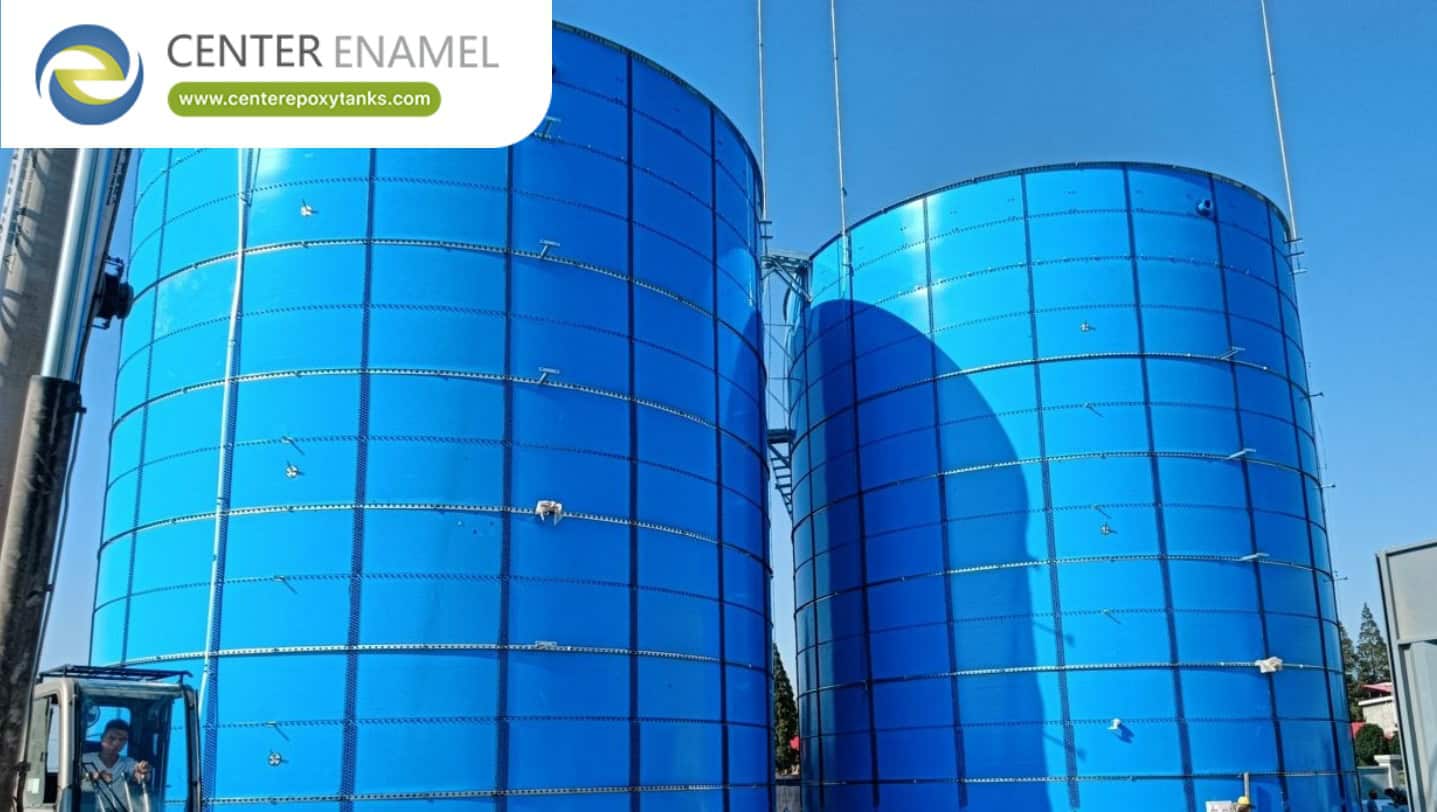
Chemical Resistance Range of Fusion Bonded Epoxy (FBE) Tanks: Engineering Guide
Fusion Bonded Epoxy (FBE) is a thermoset polymer coating known for its high cross-link density, which provides an excellent barrier against corrosion. However, "chemical resistance" is not absolute. The chemical resistance range of an FBE tank is defined by the specific formulation of the powder, the temperature of the stored liquid, and the concentration of the solute. Understanding these boundaries is critical to preventing coating failure, delamination, and subsequent tank shell corrosion.
1. Understanding the Mechanism of Resistance
The chemical resistance of FBE is derived from its thermoset cross-linked polymer network. Unlike thermoplastic coatings that can soften or re-melt, FBE forms a dense, three-dimensional molecular grid during the thermal curing process. This structure is highly resistant to permeation, but it remains susceptible to specific classes of chemicals that can break polymer bonds or cause swelling (osmotic blistering).
2. Chemical Resistance Classification
The range of compatibility for FBE coatings is typically categorized into three tiers. These tiers are based on standard exposure testing at ambient temperatures (20°C–25°C).
Tier 1: Excellent Compatibility (Suitable for Long-Term Storage)
In this range, FBE is highly inert and serves as a reliable barrier for the design life of the tank.
● Potable Water: Excellent; the industry standard for NSF/ANSI 61.
● Neutral Salts: Sodium chloride, calcium chloride, and sulfate solutions.
● Mild Acids: Dilute acetic, citric, or phosphoric acids (pH 5–7).
● Mild Alkalis: Dilute sodium hydroxide solutions (pH 7–9).
● Aliphatic Hydrocarbons: Mineral oils, fuels (though specific fuel-grade FBE may be required).
Tier 2: Moderate Compatibility (Conditional / Short-Term)
Storage is possible, but maintenance, inspection frequency, and coating thickness must be strictly monitored.
● Aggressive Salts: High-concentration brines.
● Moderate Acids/Bases: Chemicals slightly outside the neutral pH range (pH 4–5 or 9–10).
● Elevated Temperatures: Exposure in the range of 40°C–60°C will drastically reduce the resistance range of the Tier 1 chemicals.
Tier 3: Poor Compatibility (Not Recommended)
Exposure to these chemicals will typically result in coating degradation, softening, swelling, or total failure.
● Strong Oxidizing Acids: Concentrated sulfuric, nitric, or hydrochloric acid.
● Strong Solvents: Ketones (MEK, Acetone), Aromatics (Toluene, Xylene), and certain chlorinated solvents.
● High-Temperature Extremes: Continuous exposure to fluids above 65°C significantly accelerates chemical attack on the epoxy matrix.
3. Critical Factors Influencing Compatibility
An FBE tank's resistance range is not a fixed number; it is a sliding scale dependent on three variables. An engineer must evaluate the "Exposure Triangle" before specifying FBE:
1. Temperature
The chemical activity of a substance increases exponentially with temperature. A chemical that is "safe" at 20°C may be highly aggressive at 50°C. As the temperature rises, the polymer chain mobility increases, allowing for faster penetration of the coating by the chemical.
2. Concentration
The concentration of a solute in water dictates the osmotic pressure. High concentrations of salts or acids can pull moisture through the coating (osmotic blistering), leading to adhesion failure at the coating-steel interface.
3. Exposure Duration
Is the tank storing the chemical continuously, or is it for intermittent processing (e.g., wash cycles)? Continuous immersion is the "worst-case scenario." Intermittent exposure allows the coating to "recover" or dry out, which can extend the service life of the FBE even in moderate-exposure environments.
4. Quick-Reference Compatibility Matrix
Chemical Class | Typical Concentration | FBE Resistance | Notes |
Water (Potable/Fire) | N/A | Excellent | The primary use case. |
Organic Acids | < 10% | Good | Avoid high heat. |
Inorganic Salts | Saturated | Excellent | Highly stable. |
Caustics/Alkalis | < 20% | Good | Watch for temperature spikes. |
Strong Acids | Any | Poor | Do not use FBE. |
Solvents | Pure | Poor | Will dissolve/soften the matrix. |
5. Engineering Best Practices for Chemical Storage
● Consult the SDS: Always review the Safety Data Sheet (SDS) of the chemical to be stored. If the chemical is classified as a "Strong Oxidizer" or "Strong Solvent," assume FBE is incompatible.
● Request a Chemical Resistance Letter: Manufacturers (like Center Enamel) maintain databases of tested compatibility. For any non-standard application, request a formal compatibility certification based on your specific concentration and temperature profile.
● Implement Cathodic Protection: If your chemical resistance range is on the border of "Good" and "Moderate," consider adding a sacrificial anode system inside the tank to provide secondary protection to the steel substrate should the coating be compromised.
● The "Standard Practice" Rule: If you are storing mixed industrial waste (e.g., municipal sewage), remember that the "resistance range" refers to the composite chemistry. Variable waste streams require conservative engineering to account for the most aggressive potential chemical present.
Fusion Bonded Epoxy is one of the most versatile and durable coatings available, but it is not a "universal" liner. It is perfectly suited for water and mild industrial chemical storage, but it has defined boundaries. By evaluating your chemical profile against the Temperature-Concentration-Duration exposure triangle, you can determine if FBE is the right solution or if you need to look at alternatives like Glass-Fused-to-Steel or specialized high-performance liners.
Are you currently evaluating a tank for a specific wastewater or process fluid, and do you need assistance determining if it falls within the safe operating range for Fusion Bonded Epoxy?


