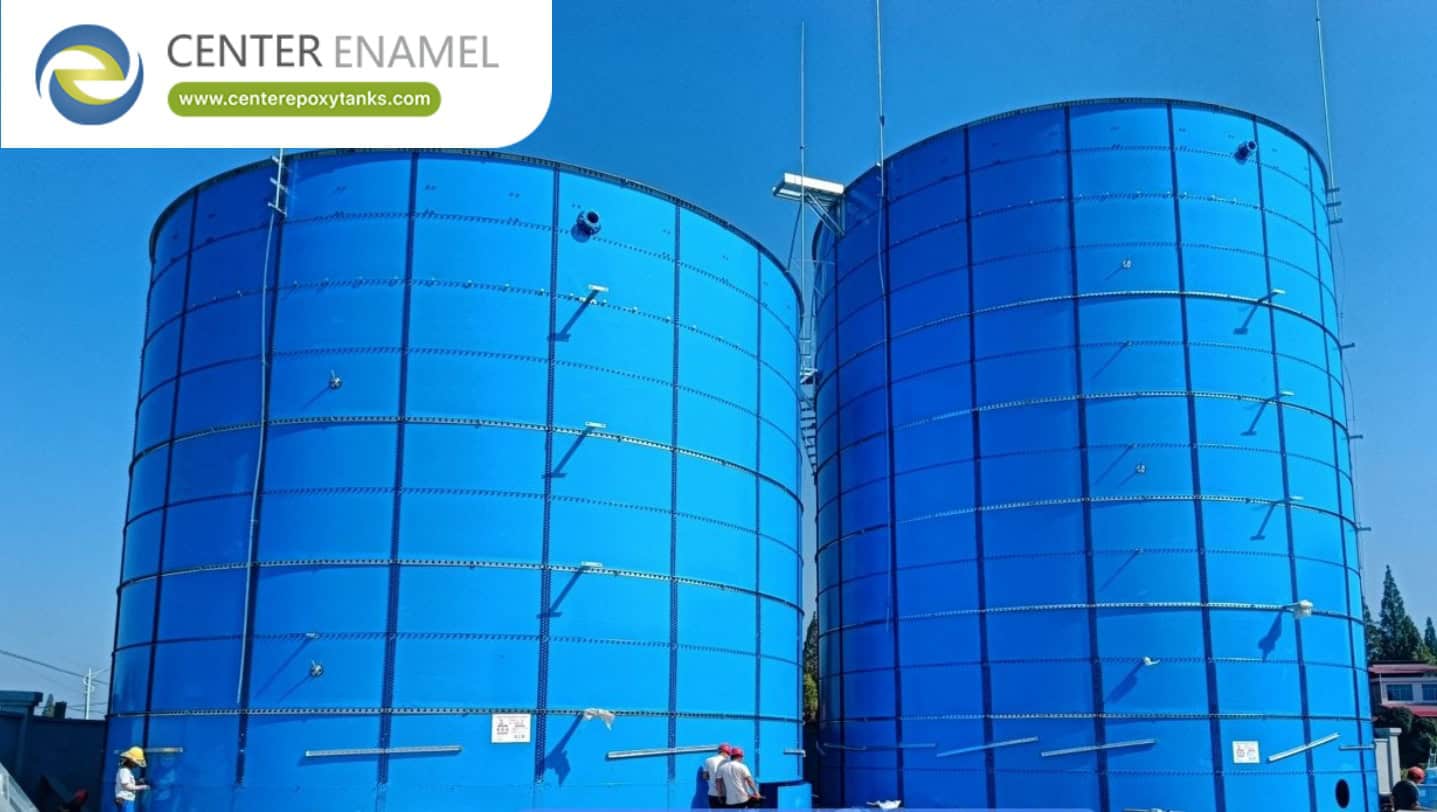
Fusion Bonded Epoxy (FBE) Steel Sheets: A Detailed Performance Analysis
Fusion Bonded Epoxy (FBE) steel sheets serve as the high-performance building blocks for modular bolted tanks. Unlike standard liquid-painted steel, FBE sheets are treated in a controlled factory environment where dry epoxy powder is electrostatically applied and thermally cured. This process transforms the coating from a loose powder into a dense, cross-linked, thermoset polymer matrix that is chemically fused to the steel substrate. This structure grants the steel exceptional physical toughness and chemical inertness, making it suitable for demanding containment applications.
1. The Physical Properties of FBE Steel Sheets
The physical durability of FBE-coated steel is defined by its ability to maintain barrier continuity under external stress. The coating must be hard enough to resist abrasion but flexible enough to accommodate the thermal expansion of the steel.
Key Physical Metrics:
● Hardness (ASTM D3363): FBE coatings typically achieve a pencil hardness of 2H or greater. This high surface hardness prevents damage from tools, maintenance equipment, and abrasive suspended solids within the stored fluid.
● Impact Resistance (ASTM D2794): The thermoset nature of the coating allows it to absorb significant energy without cracking. A standard FBE sheet is engineered to withstand direct impacts (often measured in Joules) without the coating debonding from the steel substrate.
● Adhesion (ASTM D4541): Because the coating is chemically bonded to the steel at the molecular level, it exhibits pull-off adhesion strengths far exceeding traditional liquid primers. This prevents "under-film" corrosion if the surface is scratched.
Property | Typical FBE Metric | Performance Benefit |
Hardness | Pencil 2H – 3H | Resists surface scratching/abrasion |
Flexibility | > 3% Elongation | Accommodates steel expansion/contraction |
Adhesion | > 15 MPa | Prevents delamination/blistering |
Abrasion Resistance | Low (Taber Abraser) | Long lifespan under slurry conditions |
2. The Chemical Properties of FBE Steel Sheets
The chemical resistance of FBE is a function of its "cross-linked" molecular density. During the thermal curing process (at temperatures between 180°C and 220°C), the resin molecules form a three-dimensional network that is virtually impervious to common industrial chemicals.
Barrier Mechanics:
● Low Permeability: The cross-linked polymer network creates a tortuous path for water and oxygen molecules, significantly reducing the rate of moisture permeation compared to conventional paints.
● pH Range Tolerance: FBE steel sheets are highly resilient across a broad pH spectrum (typically pH 4.0 to 10.0), making them ideal for wastewater treatment, which often involves varying acidic or alkaline inputs.
● Solvent & Chemical Inertness: The coating is highly resistant to standard organic solvents and mild hydrocarbons. It does not soften or swell when exposed to typical aqueous environments, which is the primary failure mode for inferior thermoplastic coatings.
3. The Performance Advantage: Why It Matters
The synergy between physical toughness and chemical inertness results in a material that solves the "Corrosion-Structural" paradox:
1. Elimination of Crevice Corrosion: Because the sheets are coated before assembly (including the pre-punched bolt holes), every edge and penetration is fully protected. The physical hardness of the coating protects these edges during the bolted assembly process.
2. Zero-VOC Environment: Since the coating process uses 100% solid powder (no solvents), there are no trapped air pockets or solvent-pop voids in the cured film. This physical homogeneity ensures that the chemical resistance is uniform across the entire surface area of the steel sheet.
3. Thermal Stability: The thermoset nature of the epoxy means the coating will not "melt" or lose its physical properties even if the tank is exposed to fluctuating environmental temperatures, maintaining a constant chemical barrier.
4. Frequently Asked Questions (FAQ)
Q: Does the chemical resistance of FBE change over time?
A: If the coating is kept within its design pH and temperature limits, the chemical resistance remains stable for the duration of the coating's lifespan. The primary threat to chemical resistance is mechanical abrasion that thins the coating below its required barrier thickness.
Q: Can FBE steel sheets be bent after coating?
A: No. FBE is a thermoset plastic. Attempting to bend a coated sheet will cause the cross-linked structure to micro-crack. All steel fabrication (cutting, hole punching, bending) must be completed before the thermal curing process.
Q: How does FBE compare to liquid spray coatings?
A: Liquid spray coatings often have internal stresses caused by solvent evaporation during drying. FBE sheets, cured by heat, have near-zero internal stress, resulting in superior physical adhesion and chemical resistance.
The performance of Fusion Bonded Epoxy steel sheets is not merely a result of the epoxy itself, but the synergy between the factory-controlled application and the thermoset cross-linking process. By providing a high-hardness, high-adhesion physical surface that is simultaneously chemically inert, these sheets offer a robust solution for environments where traditional steel or liquid-coated materials would fail.
Are you currently evaluating FBE steel sheets for a specific industrial application, and do you need the technical datasheet (TDS) regarding specific acid/base resistance concentrations?


