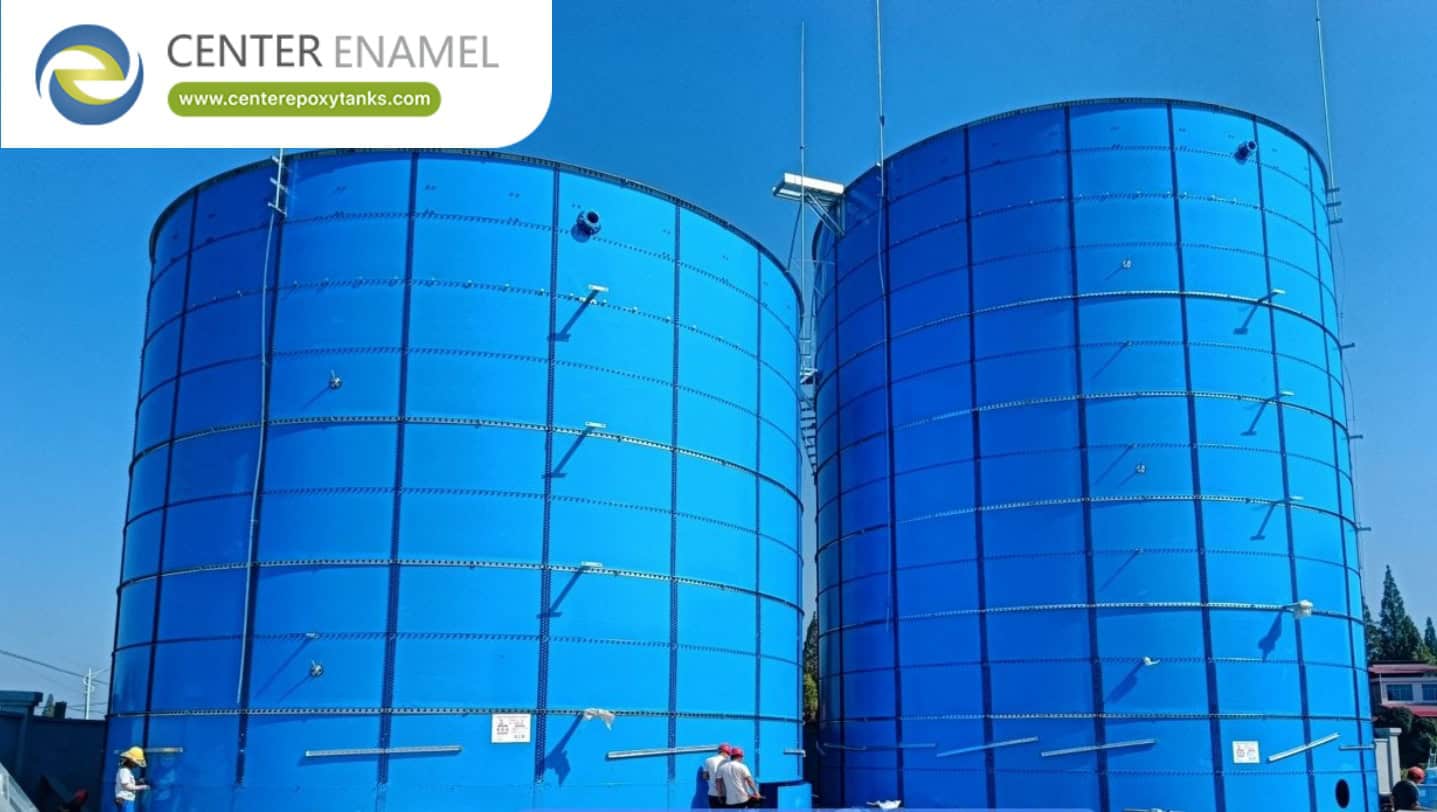
FBE vs. Stainless Steel vs. Carbon Steel: Tank Material Comparison Guide
Selecting a storage tank material is a complex trade-off between initial capital expenditure (CAPEX), long-term operational maintenance (OPEX), and chemical compatibility. While stainless steel offers premium resistance and painted carbon steel provides a traditional, lower-upfront-cost baseline, Fusion Bonded Epoxy (FBE) bolted tanks have emerged as the "value engineering" sweet spot. This guide breaks down the performance characteristics of these three materials to assist project engineers in making informed, lifecycle-focused decisions.
1. Material Profiles: Understanding the Contenders
A. Fusion Bonded Epoxy (FBE) Bolted Steel
FBE tanks are constructed from high-strength carbon steel sheets that are factory-coated with a thermoset epoxy powder.
● The "Factory Advantage": Because the coating is applied and thermally cured in a controlled environment, the steel receives 100% coverage, including all bolt holes and edges. This eliminates the "human error" variable of field-applied coatings.
B. Stainless Steel
Stainless steel is a monolithic alloy (containing chromium and nickel) that naturally resists oxidation.
● The "Premium Advantage": It does not require a coating to protect it from corrosion, as it forms a passive self-healing oxide layer. It is the gold standard for high-purity or highly reactive fluid storage.
C. Field-Painted Carbon Steel (Welded)
Traditional tanks constructed from raw steel plates that are welded in the field and subsequently sandblasted and coated with liquid paint.
● The "Tradition/Cost Advantage": Historically the default, it offers lower raw material costs but carries high risks related to weather-dependent field application and future coating maintenance.
2. Comparative Performance Matrix
Metric | FBE Bolted Steel | Stainless Steel | Painted Carbon Steel |
Corrosion Resistance | High (Factory-sealed) | Extreme (Inherent) | Variable (Field-dependent) |
Initial CAPEX | Moderate | High | Low to Moderate |
Maintenance Need | Very Low | Minimal | High (Periodic repainting) |
Installation Speed | Fast (Bolted) | Moderate (Welded) | Slow (Welded + Cured) |
Chemical Tolerance | Broad (pH 4-10) | Broadest (Specialized alloys) | Limited by coating type |
Expected Lifespan | 20-30+ Years | 40+ Years | 15-25 Years (if maintained) |
3. Deep-Dive Engineering Analysis
FBE vs. Painted Carbon Steel
The primary failure point of painted carbon steel is the field environment. Weather, humidity, and site-based surface preparation quality significantly impact the coating’s bond strength. If the paint fails, the steel rusts. In contrast, FBE steel sheets are factory-blasted (Sa 2.5) and heat-cured, ensuring the coating is molecularly bonded to the steel before it arrives on-site. The FBE tank effectively eliminates the risk of premature coating failure.
FBE vs. Stainless Steel
Stainless steel is chemically superior, particularly for ultrapure water or highly acidic/caustic environments where even high-performance epoxy might struggle. However, stainless steel often represents "over-engineering" for municipal or general wastewater applications. FBE tanks offer 80-90% of the corrosion protection of stainless steel at a fraction of the cost, making them the preferred choice for large-scale municipal water storage.
4. Decision Framework: Choosing the Right Material
Use this decision matrix to align your project requirements with the appropriate material:
1. Scenario: Municipal Potable Water
○ Recommended: FBE Bolted Tanks.
○ Why: NSF/ANSI 61 compliance, rapid erection speed, and predictable lifecycle costs make FBE the industry standard.
2. Scenario: Highly Corrosive Industrial Chemical Storage
○ Recommended: Stainless Steel.
○ Why: If the pH is outside the 4.0–10.0 range or involves strong solvents, specialized stainless steel (e.g., 316L) or duplex steel provides the necessary structural immunity.
3. Scenario: Limited Budget / Short-Term Use
○ Recommended: Painted Carbon Steel.
○ Why: Lower upfront costs if the tank is only needed for 5-10 years and if long-term maintenance can be managed.
4. Scenario: High-Seismic Zone or Tight Site Footprint
○ Recommended: FBE Bolted Tanks.
○ Why: The modular, bolted construction dissipates seismic energy effectively, and the panels can be moved into tight sites where large welding machinery cannot fit.
5. Frequently Asked Questions (FAQ)
Q: Can FBE tanks rust if the coating is scratched?
A: FBE is highly durable, but like any coated steel, it can rust if the steel is exposed. However, FBE resists "undercutting" (rust spreading under the paint) far better than field-painted steel because of the factory-applied, high-adhesion bond.
Q: Is stainless steel always better than FBE?
A: Not always. While stainless steel has better corrosion resistance, it is significantly more expensive and requires specialized welding skills, which increases total project costs. FBE offers better value engineering for 90% of water and wastewater applications.
Q: Why is field-painting usually the weakest link?
A: Field-painting is subject to "operator fatigue" and environmental factors (dew point, humidity, dust). If the steel isn't perfectly dry when painted, moisture gets trapped, leading to immediate blistering. FBE bypasses this entire risk profile.
When comparing storage tank materials, FBE bolted tanks provide a compelling balance of the corrosion resistance of high-end alloys with the cost-efficiency of modular steel construction. While stainless steel remains the champion of extreme chemical resistance, and painted carbon steel offers a baseline entry point, FBE technology has become the default "performance-to-cost" leader for modern infrastructure, offering factory-controlled quality that eliminates the uncertainties of field-applied solutions.
Are you currently evaluating a project budget, and do you need a more specific breakdown of material costs relative to your tank's projected volume and geographic location?


