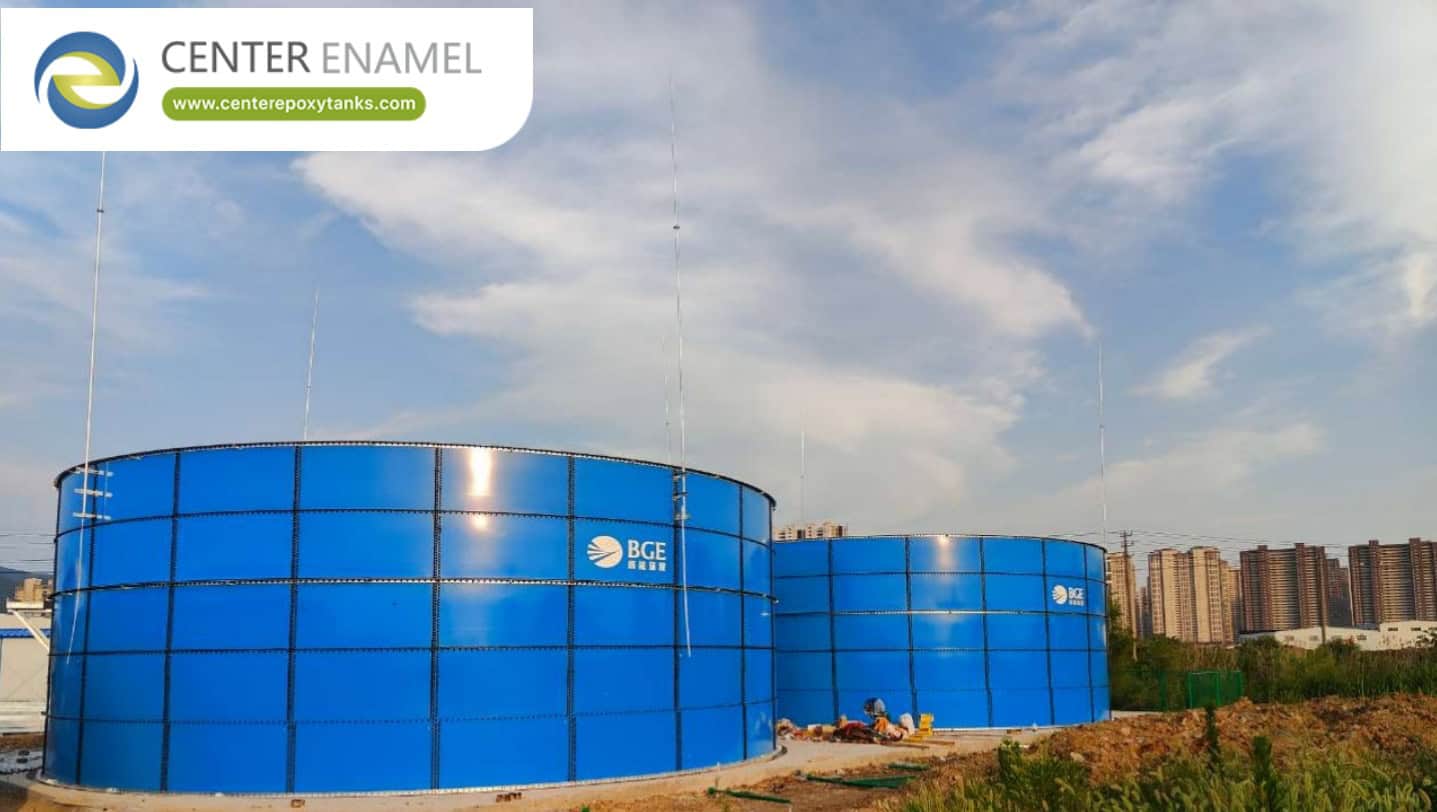
FBE Tank Modular Installation: Step-by-Step Engineering Guide
The modular installation of Fusion Bonded Epoxy (FBE) tanks is the industry standard for efficient, high-quality industrial storage construction. Unlike field-welded tanks that are subject to environmental variables, FBE tanks arrive as a kit of pre-fabricated, factory-coated components. The "modular" nature refers to a specific erection sequence that utilizes hydraulic jacking systems, allowing the tank to be built from the top down without the need for high-reach cranes or extensive scaffolding.
1. The Modular Advantage
Modular installation transforms the construction site into an assembly zone. Because the FBE panels are coated in a controlled factory environment, the "construction" phase is strictly mechanical assembly. This ensures:
● Quality Consistency: No field-welding means no field-coating application or heat-affected zones.
● Speed: Assembly time is often 50-70% faster than welded tanks of equivalent volume.
● Safety: The majority of the work is performed at ground level using hydraulic jacking systems.
2. The Modular Installation Sequence
Phase 1: Foundation Preparation & Starter Ring
The foundation must be perfectly level to within tight tolerances (typically ±3mm). The "Starter Ring" (the bottom-most row of panels) is set onto a specialized levelling channel or directly into the concrete ring beam.
● Precision: This phase is critical; any out-of-level error here will propagate upward, making it impossible to align the roof later.
Phase 2: Hydraulic Jacking System Deployment
Instead of using large cranes to hoist panels, modular installation uses a proprietary jacking system.
● The Process: The roof is built first, at ground level. Hydraulic jacks are then installed around the perimeter. As each row of wall panels is bolted to the one below, the jacks lift the entire structure, allowing the next row to be assembled underneath.
Phase 3: Panel Erection & Bolting
Panels are moved into position, and high-strength, galvanized or stainless steel bolts are installed.
● Torque Control: Each bolt is tightened to a specific torque specification using calibrated pneumatic or electric tools. This ensures the uniform compression of the structural sealant.
Phase 4: Precision Sealing
The "modular" integrity of an FBE tank relies on the joint seal. A specialized elastomeric sealant is applied between every panel lap joint before the bolts are tightened.
● The "Squeeze-Out": During the bolting process, the sealant is compressed, creating a gasketed barrier that prevents any contact between the stored liquid and the steel shell edges.
Phase 5: Roof Installation
In the modular approach, the roof structure is typically assembled on the ground at the very start of the project. Once the tank walls are completed, the roof is securely fastened to the top shell ring. This eliminates the need for expensive, high-reach cranes and increases site safety.
3. Comparison of Installation Methods
Feature | Modular (Jacking) | Traditional (Crane) |
Site Footprint | Minimal (No crane swing radius) | Large (Requires crane access) |
Height Requirement | Built at ground level | High-reach work platforms |
Weather Dependency | Low (Minimal exposure) | High (Wind/Rain affects welding) |
Labor Intensity | Lower (Optimized assembly) | High (Skilled welding required) |
4. Critical Quality Control Checks
To ensure the modular assembly maintains its structural and chemical integrity, the following checks must be performed before commissioning:
1. Torque Verification: A percentage of bolts must be checked with a calibrated torque wrench to confirm they meet engineering specs.
2. Holiday Testing: Post-assembly, the interior coating is checked using a "spark tester" to ensure no pinholes were created during the transportation or erection process.
3. Vacuum Box Testing: On critical joints or seams, vacuum box testing confirms the integrity of the sealant bead.
5. Frequently Asked Questions (FAQ)
Q: Can modular installation be done in confined spaces?
A: Yes. Because the jacking system operates within the footprint of the tank and does not require a crane, FBE tanks are the ideal solution for crowded industrial facilities where traditional heavy equipment cannot maneuver.
Q: Does the "modular" process affect the tank's durability?
A: Quite the opposite. The modular process is designed to protect the factory-applied coating. By using jacking systems and avoiding the "crane-and-rigging" damage common with welded tanks, the coating remains pristine from factory to final assembly.
Q: What is the biggest risk during modular installation?
A: The biggest risk is foundation unlevelness. If the foundation is not flat, the panels will not align, creating gaps in the seal. Strict foundation quality control is the prerequisite for a successful build.
The modular installation process is the defining engineering advantage of FBE bolted tanks. By shifting the complexity from the field to the factory and utilizing efficient, ground-level jacking systems, this method delivers a superior quality asset in a fraction of the time required by traditional construction.
Are you planning a site installation for an upcoming project, and would you like a detailed checklist of the site preparation requirements to ensure the foundation meets the necessary leveling tolerances?


