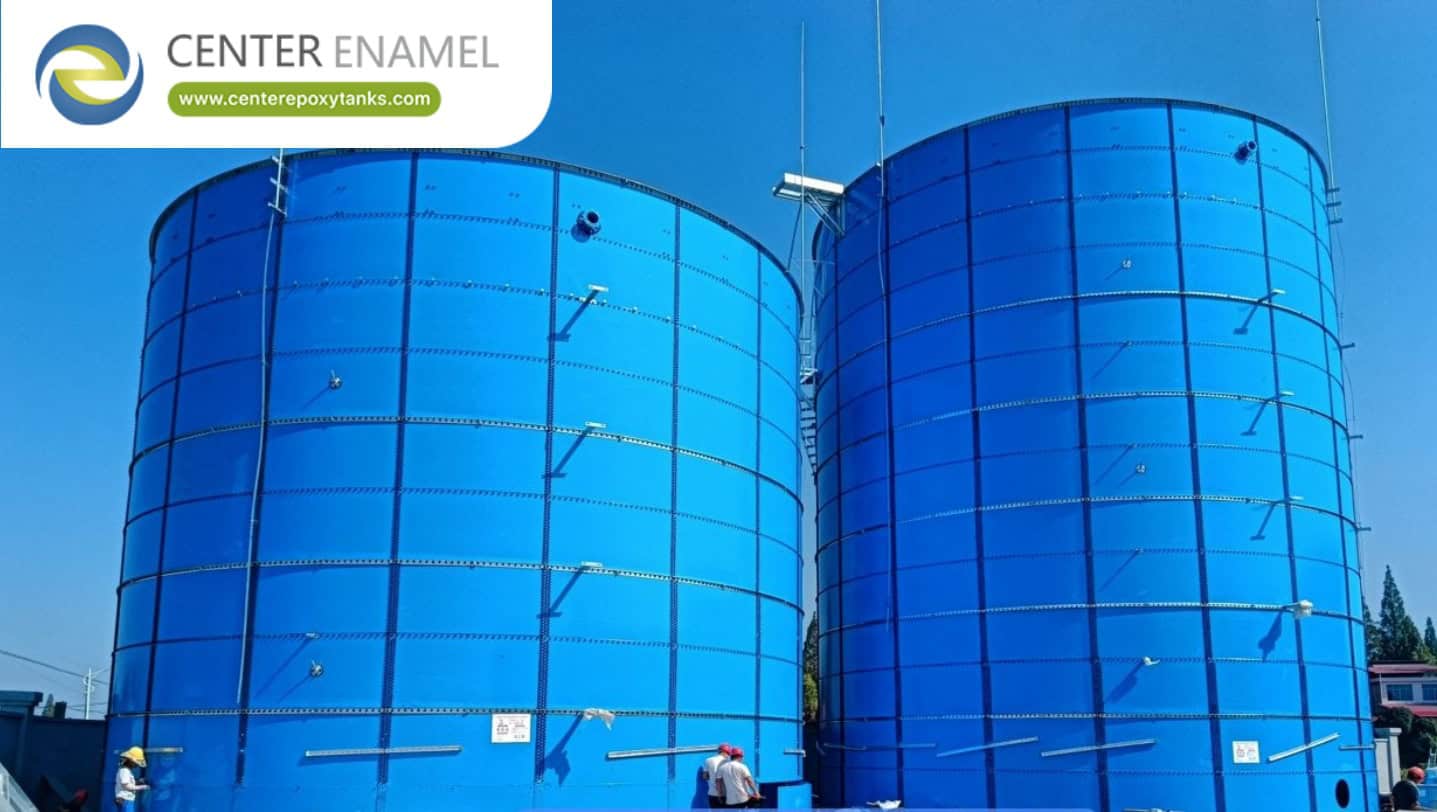
FBE Electrostatic Spraying Technology: Advanced Coating Analysis
Fusion Bonded Epoxy (FBE) is widely regarded as the gold standard for industrial bolted tank protection. The cornerstone of this performance is the electrostatic powder coating process. Unlike traditional liquid painting, which is prone to sagging, uneven thickness, and solvent entrapment, electrostatic spraying creates a molecularly uniform, high-density thermoset barrier. This article analyzes the physics and industrial execution of this advanced coating technique, which is essential for ensuring a tank’s 30+ year service life.
1. The Physics of the Electrostatic Process
The "Electrostatic" in FBE coating refers to the deliberate use of electrical charges to manipulate powder particles.
1. Ionization: As the epoxy powder passes through the spray gun, it is subjected to an electrical field (corona charging), which gives the powder particles a strong negative charge.
2. Grounded Substrate: The steel tank panel is electrically grounded.
3. Electrostatic Attraction: The negatively charged epoxy particles are naturally drawn to the grounded, neutral steel panel, wrapping around the surface like a magnet.
This process ensures that the powder coats even the most complex geometries—such as bolt holes and panel edges—with incredible precision, which is where traditional spray methods often fail.
2. The Three-Stage Industrial Workflow
To achieve the "Fusion Bonded" result, the application must be followed by a high-temperature cure.
Phase A: Surface Preparation (The Foundation)
Before spraying, steel panels undergo abrasive blast cleaning to SSPC-SP 5 / NACE No. 1 (White Metal). This creates an "anchor profile," giving the epoxy a mechanical surface to grab onto. Without this mechanical surface, the electrostatic bond would eventually fail under stress.
Phase B: Electrostatic Application
Using high-tech automated spray booths, the charged epoxy powder is applied. Because the powder is "dry," there is no risk of solvent entrapment (a major failure point in liquid paints). Excess powder is recovered, filtered, and recirculated, making the process highly material-efficient.
Phase C: Thermal Curing (The Fusion)
The coated panels enter a curing oven heated to 180°C–220°C. As the temperature rises:
● The powder melts into a semi-liquid state.
● The particles flow together to form a seamless, non-porous film.
● Cross-linking: The epoxy undergoes a chemical reaction that transforms it into a thermoset plastic—a hard, solid, 3D molecular grid that cannot be "re-melted."
3. Advanced Advantages of Electrostatic Spraying
Feature | Electrostatic Powder (FBE) | Traditional Liquid Spray |
Coating Uniformity | Excellent (self-leveling) | Variable (subject to operator skill) |
Edge Protection | High (wraps around edges) | Low (edges are often thin) |
Material Utilization | 95%+ (recyclable) | 60-70% (overspray waste) |
VOC Emissions | Zero (no solvents) | High (solvent evaporation) |
Physical Bond | Molecular fusion to steel | Mechanical/Adhesive bond |
4. Key Engineering Performance Metrics
● The Faraday Cage Effect: One of the most significant advantages of this technique is its ability to coat "deep" corners and bolt holes. Even when the electric field is partially blocked (creating a Faraday cage), the high-velocity air used to carry the powder ensures the epoxy penetrates into tight corners.
● Zero-VOC Sustainability: Because the coating is a dry powder, there are no volatile organic compounds (VOCs) released during the application. This makes FBE one of the most environmentally friendly industrial coating processes available today.
● Mechanical Memory: Once cured, the thermoset epoxy matrix possesses "elastic memory." If the steel panel flexes during a seismic event or wind load, the coating flexes with it without cracking or delaminating.
5. Frequently Asked Questions (FAQ)
Q: Why is FBE "better" than liquid epoxy?
A: Liquid epoxy is prone to "solvent pop"—microscopic bubbles created as the solvent evaporates during drying. These bubbles are weak points for corrosion. Because FBE is applied dry and cured via heat, it is completely free of these voids, creating a denser, more reliable barrier.
Q: Can electrostatic spraying be done on-site?
A: No. The fusion process requires large, industrial curing ovens to reach the necessary temperatures for cross-linking. This is why FBE tanks must be factory-manufactured and modularly shipped; the coating quality relies entirely on the controlled factory environment.
Q: Does the color of the FBE powder affect performance?
A: Generally, no. While different pigments (e.g., blue, green, grey) are used, the chemical performance is determined by the resin and hardener matrix. However, consistent color is often used as a quality control indicator to ensure uniform coating thickness.
The advanced nature of electrostatic spraying is what elevates FBE tanks above traditional storage solutions. By utilizing the laws of physics to apply a perfect, uniform layer of thermoset plastic and bonding it to the steel through heat, manufacturers ensure the highest level of corrosion resistance and structural integrity. For any project where tank longevity and maintenance-free operation are priorities, FBE electrostatic coating remains the undisputed technological leader.
Are you currently evaluating different coating technologies for a high-performance tank project, and would you like to compare the technical data sheets of electrostatic FBE against other protective linings like glass-fused-to-steel?


