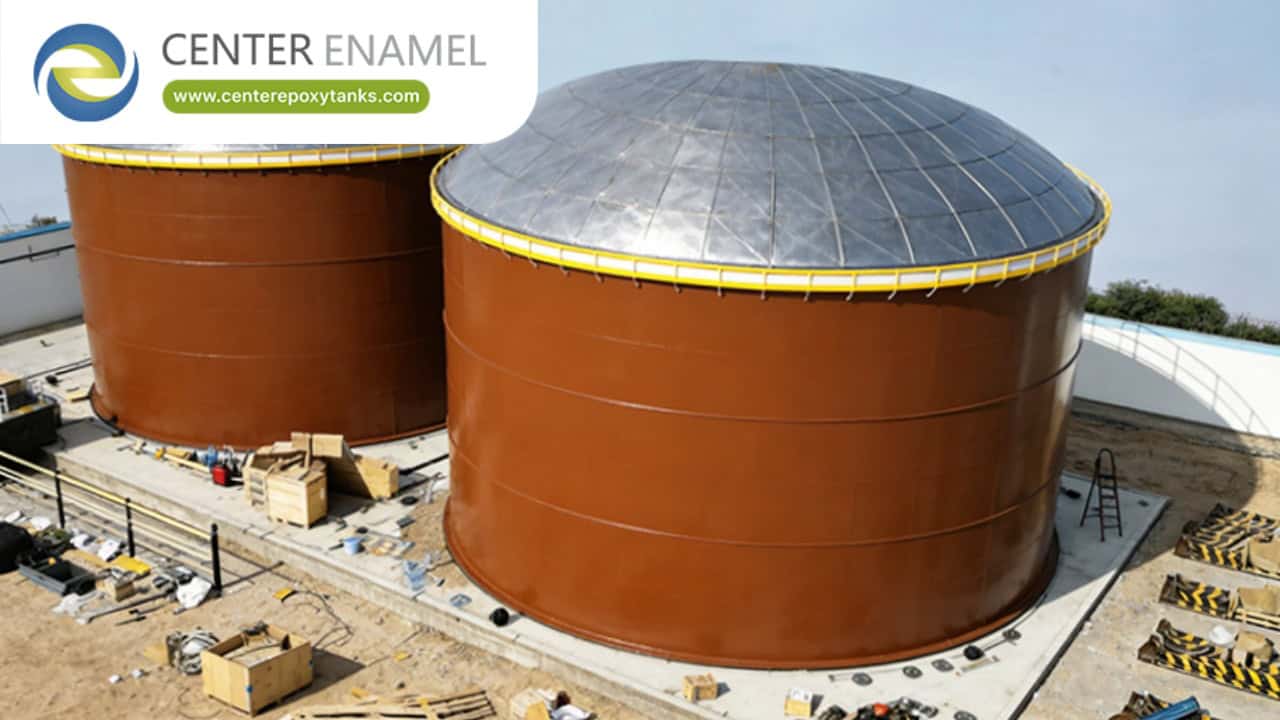
Fuel Storage Terminal Construction with Welded Steel Tanks: From Planning to Commissioning
A fuel terminal is not a tank with accessories — it is an industrial machine for receiving, holding, and dispatching hydrocarbons safely, and the tanks are merely its largest components. Projects that treat tank erection as the whole job discover the truth during commissioning, when piping, loading, fire protection, and containment systems must all perform together on day one.
Fuel storage terminal construction with welded steel tanks integrates site master planning, API 650 tank farms from 5,000 to 150,000 m3 per unit, secondary containment, transfer piping, metering and loading systems, and fire protection into one engineered, permitted, and commissioned facility delivered through EPC or turnkey execution.
1. What Does a Fuel Terminal Project Actually Include?
Scoping errors at the feasibility stage are the most expensive errors in terminal work.
· Tank farm: Multiple welded API 650 tanks — fixed roof for diesel and fuel oil, floating roof or domed IFR for volatile products — sized to throughput and product slate.
· Containment and drainage: Bunds around tank groups sized for the largest tank plus freeboard, with stormwater management, oily-water separation, and spill pathways engineered per SPCC-type programs.
· Transfer systems: Pumps, meters, filters, and loading arms for truck, rail, marine, or pipeline interfaces; line sizing and pressure relief analyzed for every transfer scenario.
· Fire protection: Firewater storage per NFPA 22, pump systems per NFPA 20, foam systems per NFPA 11, cooling water loops, and emergency shutdown architecture.
2. Why Welded Steel Tanks Anchor Terminal Design?
At terminal scale, welded construction remains the reference standard for large single-tank volumes.
· Scale economics: Field-welded API 650 tanks reach 150,000 m3 per unit — dimensions where factory modular logistics trade off against plate thickness and site welding capability.
· Product flexibility: Welded shells accept full lining systems, heating coils, and internal floating roof retrofits across changing product slates.
· Fatigue and longevity: Properly welded and inspected shells per API 650 with API 653-managed inspection serve 40-plus years in terminal service.
· Hybrid strategies: Many terminals pair large welded crude and product tanks with smaller bolted tanks for water, fire reserves, and additives — each technology where it fits best.
3. How Does a Terminal Project Move From Ground to Product?
A disciplined sequence keeps hundreds of interfaces converging instead of colliding.
· Geotech and civils: Borings, settlement analysis, and tank foundation construction come first — the schedule's long poles alongside permits.
· Tank erection: Shell courses rise per API 653-adjacent erection practice; NDE follows each course; hydrostatic testing closes out each tank while the next rises.
· Systems integration: Piping hydrotests, instrument loop checks, loading system calibration, and fire system acceptance run tank-by-tank, not after all tanks finish.
· Commissioning and handover: Dry-out, inerting where required, first fill procedures, and emergency drill validation complete the turnover dossier for operations.
Data Table: Fuel Terminal Construction Phases
Phase | Key Deliverables | Duration Drivers |
Permitting & design | Approvals, API 650 calc packages | Environmental review |
Civil works | Bunds, foundations, drainage | Soil conditions, weather |
Tank construction | Erection, NDE, hydrotests | Tank count and size |
Systems & piping | Transfer, metering, firewater | Interface complexity |
Commissioning | First fill, drills, handover docs | Regulatory sign-off |
Frequently Asked Questions (FAQ)
Q1: How long does fuel storage terminal construction take?
A mid-size terminal of 6-12 welded tanks typically runs 18-36 months from notice to proceed to first product, with tank construction itself often 9-15 months depending on size and climate. Permitting, geotechnical conditions, and loading-interface complexity are the biggest schedule variables.
Q2: Why are terminal tanks welded rather than bolted?
Terminal-scale fuel tanks commonly exceed 20,000 m3, where thick plate favors field welding, and the API 650 welded code basis is what insurers, regulators, and pipeline companies specify for bulk hydrocarbon service. Bolted factory-coated tanks remain standard alongside for fire water, process water, and smaller product duties.
Q3: What containment does a fuel terminal need?
Bunds around each tank group sized for the largest tank's full volume plus allowances for rainfall and firefighting foam, with impermeable liners or engineered soils, drainage to oily-water treatment, and transfer sumps. US-practice programs formalize this as SPCC plans; most national codes impose equivalent arrangements.
Q4: What testing proves a terminal tank before service?
Hydrostatic testing to design fill level per API 650 Section 7 validates shell, bottom, and foundation settlement together; NDE of welds, vacuum-box testing of bottom seams, and roof tests precede it. After water testing, dry-out and internal inspection confirm cleanliness before first fuel receipt.


