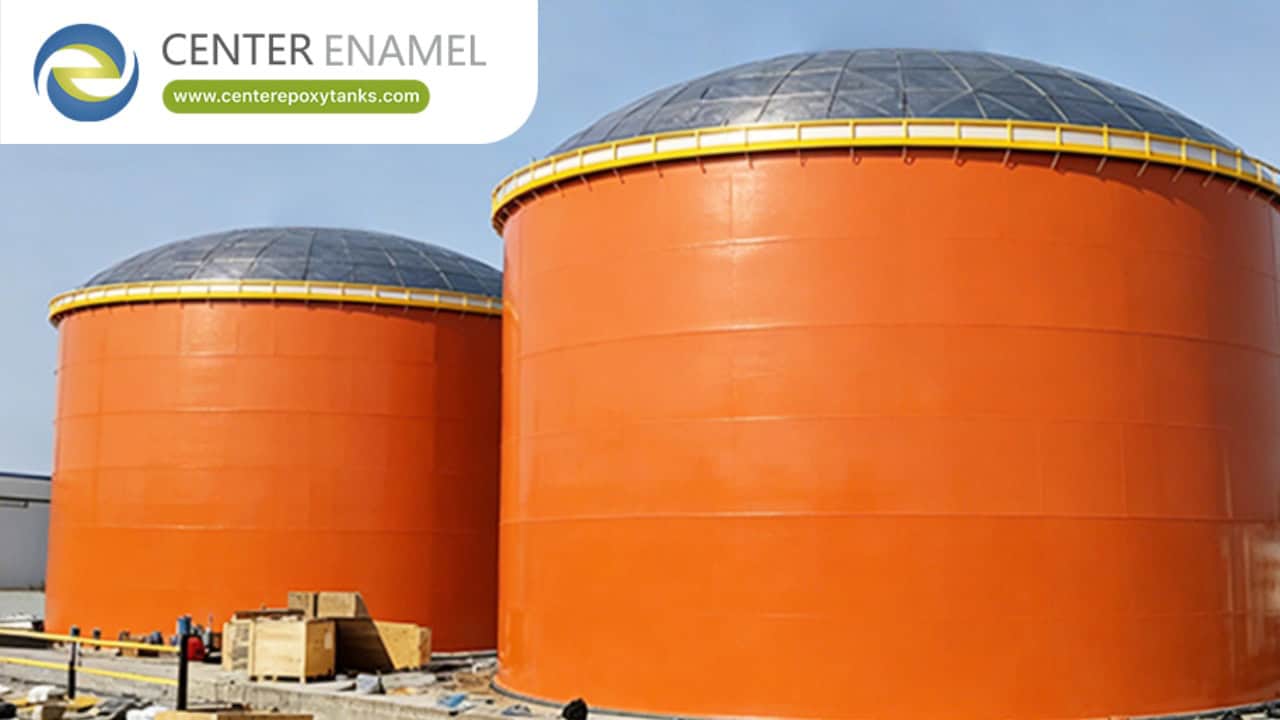
The Decision Framework: How to Choose
There is no "one-size-fits-all" fuel storage tank. The "best" choice is a calculated balance of four variables: Regulatory Compliance, Space Constraints, Long-Term Total Cost of Ownership (TCO), and Operational Throughput.
The Core Selection Matrix
Storage Type | Best For | Primary Advantage | Major Consideration |
Aboveground (AST) | Industrial sites, farms, worksites | Lower CAPEX, easier leak detection | Requires substantial footprint |
Underground (UST) | Urban areas, high-security sites | Maximizes surface utility | High installation/regulatory cost |
Glass-Fused-to-Steel (GFS) | Industrial process, wastewater, bulk | Corrosion resistance, low TCO | Higher upfront engineering/CAPEX |
1. Aboveground Storage Tanks (ASTs): The Accessible Standard
ASTs are the industry default for most industrial and agricultural applications.
Why choose them? If you have available land and need to minimize upfront installation costs, ASTs are superior. They are easier to inspect, clean, and relocate.
The "Best Practice": If you select an AST, prioritize double-walled, self-bunded designs. While they have a higher initial cost than single-wall tanks, they provide built-in secondary containment, which simplifies SPCC (Spill Prevention, Control, and Countermeasure) compliance.
2. Underground Storage Tanks (USTs): The "Invisible" Solution
USTs are essential when surface space is at a premium or security is the top priority.
Why choose them? When every square foot of your property is revenue-generating or necessary for traffic flow, placing storage underground is the only logical move.
The "Best Practice": Be prepared for higher "soft costs." You must plan for rigorous, ongoing regulatory reporting, leak detection audits, and cathodic protection testing.
3. The Modern Alternative: Glass-Fused-to-Steel (GFS)
For industrial sites managing aggressive chemicals or requiring extreme longevity, GFS is increasingly displacing traditional welded steel tanks.
Why choose them? GFS combines the structural flexibility of steel with the inert, corrosion-resistant surface of glass. They are the definitive choice for facilities looking to eliminate the cycle of "sandblast and repaint" required by traditional welded tanks.
The "Best Practice": Evaluate GFS if your "Best Choice" criteria prioritize lowest TCO (Total Cost of Ownership) rather than lowest initial CAPEX.
Interactive Decision Support
To determine the best fit for your specific project, use this simplified decision logic:
Frequently Asked Questions (FAQ)
Q: Is it cheaper to install an AST or a UST?
A: In almost all cases, Aboveground Storage Tanks (ASTs) are cheaper to install. USTs require significant excavation, specialized backfilling, and ongoing regulatory monitoring that drives up both installation and long-term operating costs.
Q: Do I need a Spill Prevention, Control, and Countermeasure (SPCC) plan?
A: In the U.S., if your aggregate aboveground oil storage capacity is ≥1,320 gallons (for containers ≥55 gallons) or you have significant underground capacity, you generally need an SPCC plan. Always consult with a local environmental engineer to confirm your specific regulatory threshold.
Q: Why would I choose GFS over standard carbon steel?
A: Choose GFS if your goal is minimal maintenance over 30+ years. Standard steel tanks eventually require sandblasting and recoating, which creates operational downtime. GFS surfaces are chemically inert and highly resistant to corrosion, effectively eliminating the need for periodic recoating.
Q: How often should I inspect my tank?
A: This varies by type and local jurisdiction. Generally, USTs require monthly monitoring and annual testing of electronic systems. ASTs should be subject to regular visual inspections, focusing on containment integrity and overfill prevention equipment.


