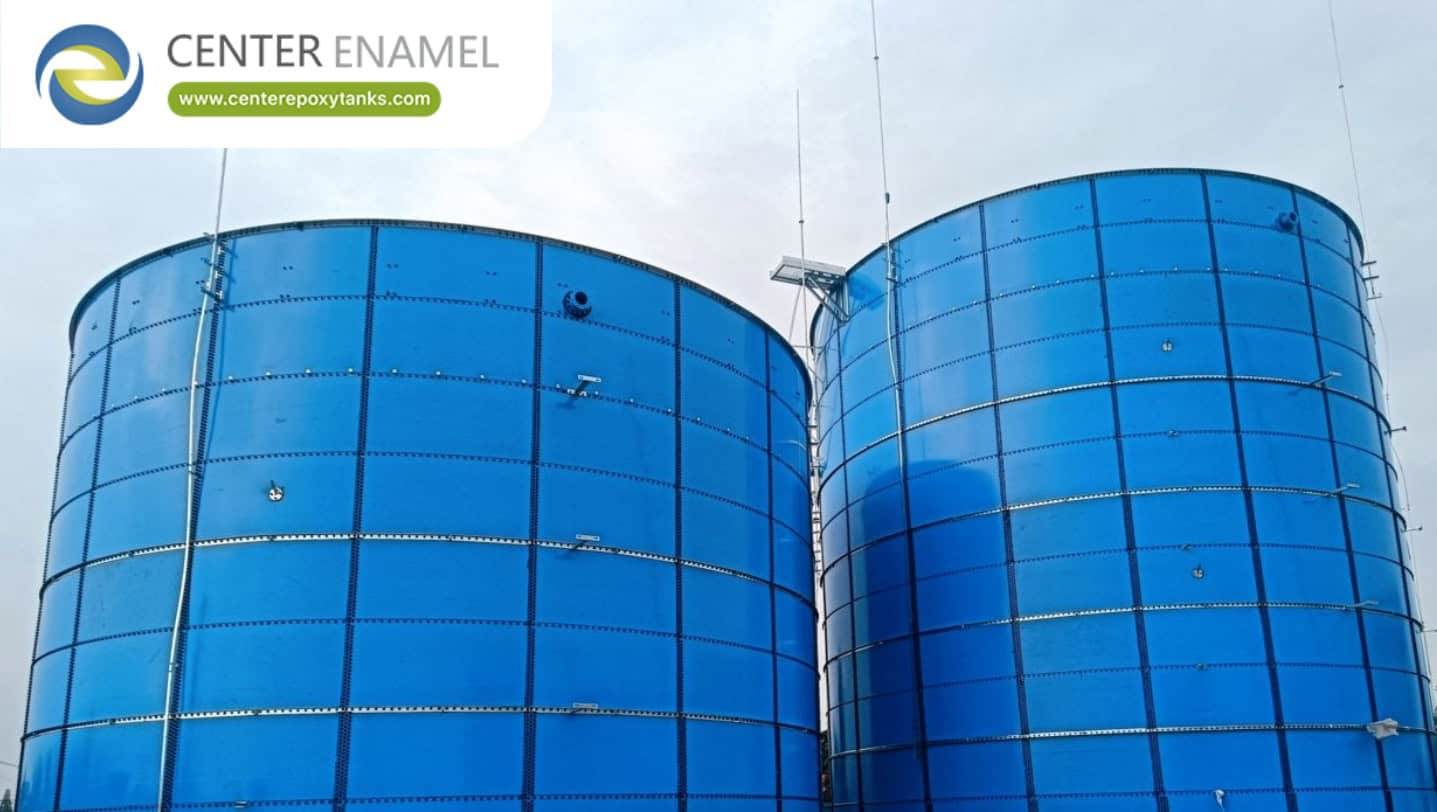
FM Approved Fusion Bonded Epoxy (FBE) Tanks: The Gold Standard for Fire Protection Storage
In industrial asset protection, FM Approval (Factory Mutual) is the ultimate benchmark for risk mitigation. When applied to Fusion Bonded Epoxy (FBE) bolted steel tanks, an FM Approval certification indicates that the storage vessel has been rigorously tested to survive catastrophic events—such as earthquakes, severe windstorms, and intense heat exposure—without losing structural or liquid containment integrity. For facility managers, EPC contractors, and structural engineers, specifying an FM Approved FBE tank is the definitive method to guarantee fire-protection water availability while significantly lowering commercial insurance premiums.
1. What Does "FM Approved" Mean for FBE Tanks?
FM Approvals is an independent, third-party testing arm of FM Global, an international insurance major. Unlike general commercial standards, FM standards are strictly designed through the lens of loss prevention.
For Fusion Bonded Epoxy tanks, certification falls primarily under FM Approval Standard Class 4020/4021 (Approval Standard for Ready-to-Assemble Bolted Steel Tanks for Fire Protection Service). To secure this stamp of approval, the tank design software, the structural components, and the factory-applied FBE coating process must pass destructive performance audits.
2. Rigorous Testing & Design Requirements for FM Compliance
An FM Approved FBE tank is engineered with significantly higher safety factors than standard commercial water vessels. The evaluation covers three core domains:
A. Structural Resiliency & Environmental Loadings
● Wind Load Resistance: FM structures must be mathematically proven and physically capable of withstanding extreme wind velocities, often exceeding 150 mph (240 km/h), without buckling or imploding when completely empty.
● Seismic Design: Tank calculations must incorporate advanced sloshing load factors. During seismic acceleration, the kinetic energy of moving water places immense localized strain on the upper tank rings and shell junctions; FM designs reinforce these zones to eliminate the risk of tearing.
B. Coating Durability and Interfacial Fusion
The Fusion Bonded Epoxy coating itself must undergo rigorous accelerated testing to ensure it remains a pristine barrier over a multi-decade lifecycle.
● Corrosion & Salt Spray Testing: Panels undergo continuous exposure to corrosive atmospheres to prove the epoxy will not blister or undergo under-film corrosion.
● Impact and Flexibility Matrix: The thermosetting cross-linked epoxy is tested for impact resistance. It must handle the mechanical flexing of bolted panel assembly without micro-cracking.
C. Component Standardization
Every gasket, bolt, sealant bead, and appurtenance used in the assembly must be explicitly approved by FM. Substituting a generic component or using a non-certified joint sealant immediately voids the entire tank's FM certification.
3. Technical Comparison: FM Approved vs. Standard FBE Tanks
The differences between an optimized FM Approved asset and a standard commercial FBE tank are embedded deep within the engineering criteria:
Engineering Parameter | Standard FBE Bolted Tank | FM Approved FBE Bolted Tank |
Primary Standard | AWWA D103 | FM Class 4020 / 4021 & AWWA D103 |
Target Application | Municipal water, wastewater | Dedicated Fire Protection, High-Risk Asset Safety |
Safety Factor (Steel) | Baseline structural thresholds | Elevated safety margins for structural survival |
Quality Auditing | Initial factory inspection | Periodic, unannounced factory audits by FM engineers |
Insurance Benefit | Standard commercial rates | Eligible for premium reductions via FM Global & major carriers |
4. Crucial Installation & Accessory Guidelines
To maintain the integrity of an FM Approved FBE installation, specific hardware configurations must be strictly executed on site:
Anti-Vortex Assembly: FM Approvals mandate that the suction line inside the tank must be equipped with an FM Approved vortex inhibitor. This prevents air pockets from forming during high-velocity water extraction, protecting emergency fire pumps from cavitation and failure during active firefighting operations.
1. Dedicated Fire Reserve: If the FBE tank is shared between process water and fire protection, the piping must be designed so that process water draw-offs cannot deplete the designated fire protection volume.
2. Heavy-Duty Anchor Embedment: Anchor bolts must be deeply embedded into a fully engineered concrete slab or ring wall according to stringent seismic and wind-uplift requirements explicitly detailed in the FM approval sheet.
3. Cathodic Protection: Depending on the stored water chemistry, internal sacrificial anodes may be required and must be monitored regularly to preserve the wetted FBE coating shell joints over time.
5. Frequently Asked Questions (FAQ)
Q: Can a standard AWWA D103 FBE tank be certified as FM Approved after it is built?
A: No. FM Approval is not an afterthought or a fancy sticker. It requires a completely audited chain of production, specialized plate thicknesses, specific bolt patterns, certified components, and an FM-audited manufacturing facility. The design must be stamped as FM Approved before the panels are fabricated.
Q: Why do insurance underwriters care so much about FM Approved tanks?
A: If a commercial facility catches fire, the entire property relies on the storage tank to feed the sprinkler systems. If the tank fails due to a concurrent seismic event or structural collapse, the facility is completely lost. Underwriters mandate FM Approvals to minimize the statistical probability of a catastrophic insurance payout.
Q: Is the coating on an FM Approved FBE tank different from standard FBE?
A: While the base powder epoxy might be chemically similar, the application tolerances, dry film thickness (DFT) monitoring, and post-curing holiday (spark) testing are subject to stricter quality control metrics and independent third-party verification under FM protocols.
Investing in an FM Approved Fusion Bonded Epoxy tank is an exercise in ultimate asset protection. By unifying the chemical resilience of premium factory-applied epoxy with the extreme structural safety factors demanded by Factory Mutual, these tanks provide industrial facilities with an ironclad guarantee: when disaster strikes, your fire protection water supply will remain completely secure.


