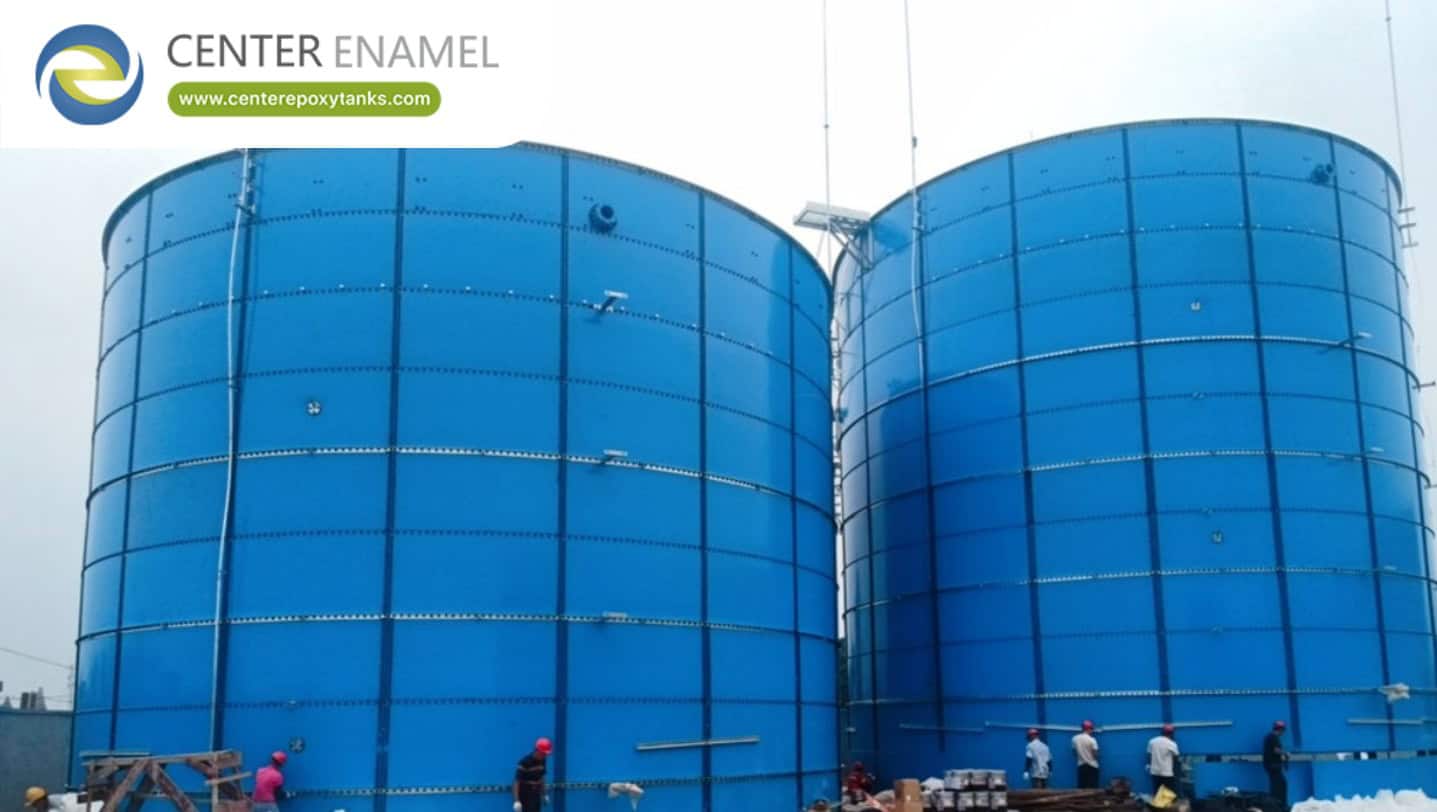
AWWA D103 Design Standards for Fusion Bonded Epoxy (FBE) Tanks
For the municipal and industrial water storage sectors, the AWWA D103 standard is the definitive benchmark. Published by the American Water Works Association, this standard governs the design, fabrication, and erection of Factory-Coated Bolted Carbon Steel Tanks for Water Storage. When applied to Fusion Bonded Epoxy (FBE) tanks, AWWA D103 ensures that the vessel not only withstands extreme environmental loads (wind, snow, seismic) but also features a highly durable, factory-controlled coating that guarantees long-term water quality and corrosion resistance.
1. What is the AWWA D103 Standard?
Unlike API standards which heavily focus on the oil and gas sector, AWWA D103 is explicitly tailored for water and wastewater storage. It is unique because it addresses two critical components of tank engineering simultaneously:
1. Structural Engineering: Exact mathematical formulas for calculating shell plate thickness, bolted joint strength, roof design, and foundation requirements based on local environmental loads.
2. Factory-Applied Coatings: Strict guidelines on how the steel must be prepared, how the coating (like FBE or Glass-Fused-to-Steel) is applied, and how it must be tested before leaving the factory.
2. FBE Coating Specifications Under AWWA D103
Fusion Bonded Epoxy is recognized under AWWA D103 as a premier thermoset powder coating. To comply with the standard, manufacturers must adhere to a rigorous, auditable application process.
● Surface Preparation (SSPC-SP10): AWWA D103 mandates that before any epoxy is applied, the steel panels must undergo Near-White Metal Blast Cleaning. This removes mill scale and rust, creating an anchor profile that allows the FBE to mechanically lock into the steel.
● Thermal Curing Process: The FBE powder must be applied electrostatically to pre-heated steel panels. The panels then pass through an oven at strictly controlled temperatures to ensure the epoxy fully cross-links, forming a continuous, impermeable barrier.
● Dry Film Thickness (DFT): The standard dictates minimum and maximum coating thicknesses to ensure both chemical resistance and mechanical flexibility. For FBE, this is carefully monitored to prevent brittle failure (if too thick) or pinhole corrosion (if too thin).
3. Structural Design Parameters
An FBE tank is only as good as its structural foundation. AWWA D103 integrates with other major codes (like ASCE 7 and IBC) to dictate the tank's physical engineering:
● Seismic Design: Tanks must be designed to accommodate the specific seismic zone of the installation site. This includes calculating the sloshing effect of the water during an earthquake and reinforcing the bottom ring and anchoring system accordingly.
● Wind and Snow Loads: The roof structure (whether a flat deck, cone roof, or aluminum geodesic dome) must be engineered to withstand local maximum wind speeds and potential snow accumulation without deflecting or compromising the FBE coating at the bolted seams.
● Specific Gravity: While standard water has a specific gravity of 1.0, AWWA D103 requires the design to account for heavier liquids (such as thick municipal sludge or leachate) if specified by the engineer, which increases the required steel thickness at the base of the tank.
4. FBE vs. GFS under AWWA D103
Both Fusion Bonded Epoxy and Glass-Fused-to-Steel (GFS) are approved factory coatings under AWWA D103. Here is how they compare in engineering applications:
Feature | Fusion Bonded Epoxy (FBE) | Glass-Fused-to-Steel (GFS) |
Coating Type | Thermosetting polymer (Epoxy) | Vitreous enamel (Glass) |
Impact Resistance | High: Flexible, resists chipping during transport and erection. | Moderate: Can chip if struck with hard objects; requires careful handling. |
Chemical Resistance | High: Excellent for water and moderate wastewater. | Extreme: Superior for highly aggressive industrial chemicals and extreme pH levels. |
Field Repairability | Easier to touch up in the field with liquid epoxy kits. | Requires specialized enamel repair kits; harder to match perfectly. |
5. Factory Quality Control and Inspection
AWWA D103 places the burden of quality control firmly on the manufacturer prior to shipment.
● Holiday Testing: Every FBE panel must undergo electronic discontinuity (holiday) testing. Depending on the coating thickness, this may be a low-voltage wet sponge test or a high-voltage spark test to guarantee zero pinholes exist in the coating.
● Adhesion Testing: Sample panels from production runs must pass adhesion tests (e.g., cross-hatch or pull-off tests) to prove that the FBE will not delaminate under the hydrostatic pressure of the stored water.
● NSF/ANSI 61 Integration: While AWWA D103 dictates the physical quality of the tank, the FBE powder used must concurrently hold NSF/ANSI 61 certification if the tank is intended for potable drinking water, ensuring no toxic leaching occurs.
6. Frequently Asked Questions (FAQ)
Q: Are field-welded tanks covered under AWWA D103?
A: No. AWWA D103 applies strictly to bolted steel tanks with factory-applied coatings. Field-welded water tanks are covered under a different standard (AWWA D100).
Q: Does AWWA D103 mandate the use of an Aluminum Dome Roof?
A: No. The standard allows for several roof types, including factory-coated bolted steel roofs, fiberglass (FRP) roofs, and aluminum dome roofs. The choice depends on the project's budget, spanning requirements, and the stored liquid's off-gassing properties.
Q: How often does an AWWA D103 FBE tank need to be inspected?
A: While D103 dictates design, AWWA provides separate guidelines for maintenance (often suggesting inspections every 3 to 5 years). A properly designed and installed FBE tank requires minimal maintenance beyond routine cleaning and anode replacement (if a cathodic protection system is installed).
Specifying an AWWA D103 Fusion Bonded Epoxy tank provides engineers and project owners with a predictable, highly regulated, and structurally sound water storage solution. By combining the rigorous structural calculations of D103 with the flexibility and durability of FBE coating technology, these tanks offer an extended service life, rapid installation, and unmatched reliability for critical water infrastructure.
Are you currently drafting the technical specifications for an upcoming water storage project, and would you like to discuss how to structure the wind and seismic load requirements for your specific geographic location?


