FBE Bolted Tanks vs. Concrete Tanks: Engineering & Selection Guide
Selecting between Fusion-Bonded Epoxy (FBE) Bolted Tanks and Concrete Tanks is a choice between two distinct construction philosophies: Modular Industrial Engineering vs. Civil Site Construction. While concrete tanks have been the traditional standard for large-scale reservoirs, FBE modular technology is increasingly displacing them in municipal and industrial sectors. FBE tanks offer factory-controlled quality, superior chemical inertness, and faster commissioning, whereas concrete tanks rely heavily on variable site conditions and lengthy curing timelines.
1. Technical Mechanics: Comparing Structures
The fundamental difference lies in how the tank interacts with the stored media and the environment.
Fusion-Bonded Epoxy (FBE) Bolted Tanks
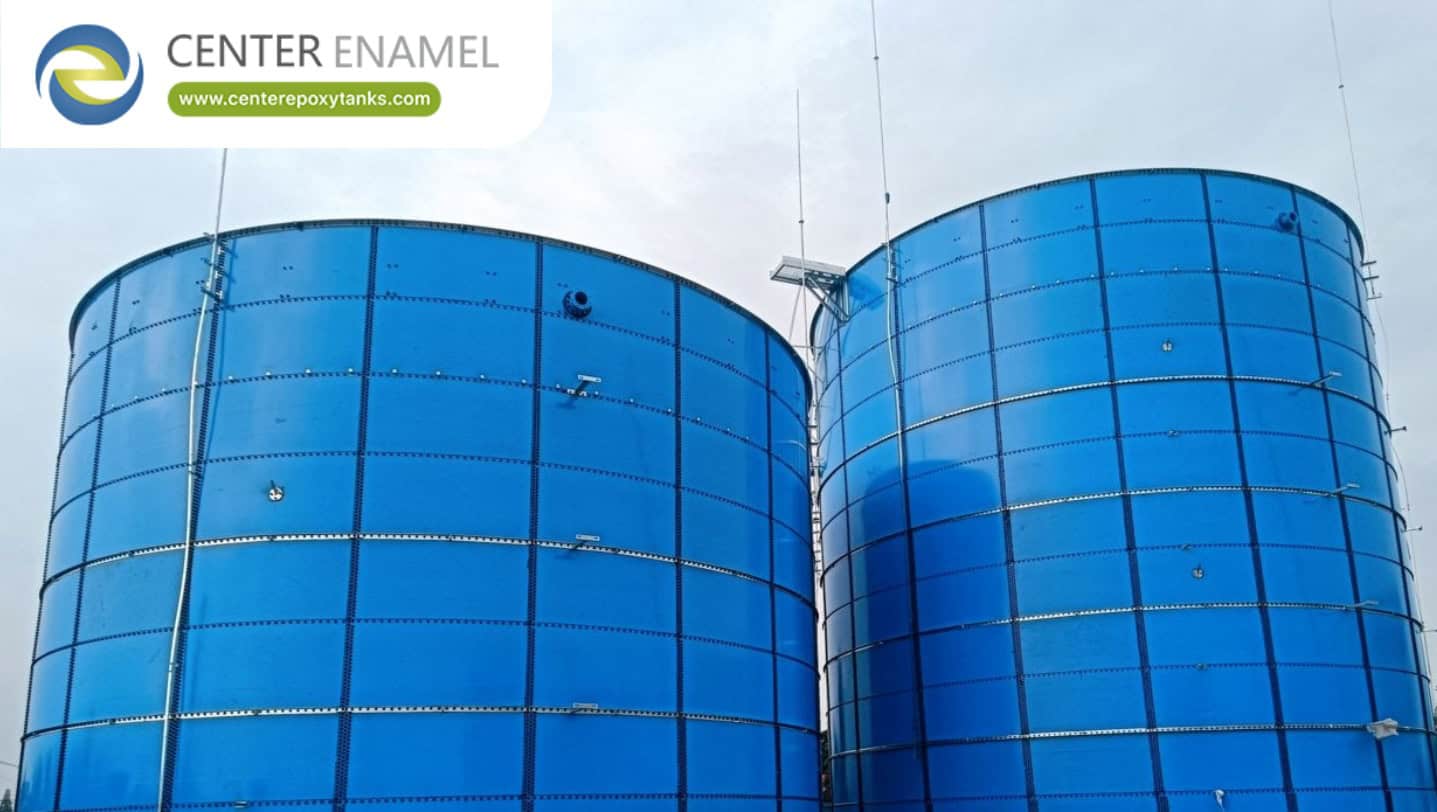
FBE tanks use high-strength steel panels coated with a chemically inert, thermoset polymer. These panels are bolted together on-site with elastomeric gaskets. The tank acts as a "flexible" vessel, meaning it can handle minor ground movement or seismic shifts without structural damage.
Concrete Tanks
Concrete tanks are monolithic, site-poured structures. They rely on the compressive strength of concrete and the tensile strength of steel rebar. While robust, concrete is inherently porous and prone to cracking under temperature fluctuations, chemical attack, or settlement. To store aggressive fluids, concrete tanks almost always require an additional internal membrane or coating, which becomes a "second point of failure."
2. Decision Matrix: At a Glance
Feature | FBE Bolted Tank | Concrete Tank |
Installation Time | Fast (Weeks) | Slow (Months) |
Coating Quality | Factory-Controlled (High) | Site-Applied (Variable) |
Chemical Resistance | High (Inherent) | Requires extra lining/membrane |
Seismic Response | Flexible (Energy dissipative) | Rigid (Prone to cracking) |
Leak Risk | Low (Factory-sealed gaskets) | Moderate (Shrinkage/thermal cracks) |
Project Cost | Predictable (Factory-fixed) | Variable (Site labor intensive) |
3. Why FBE is Reshaping Infrastructure Design
A. The "Site Variable" Problem
The biggest risk with concrete tanks is the human factor. Weather conditions during pouring, curing time, and the skill of the concrete finishers directly dictate the quality of the vessel. FBE panels, conversely, are manufactured in a climate-controlled factory. Every panel is spark-tested for holiday-free performance before it even leaves the shipping container.
B. Chemical Compatibility
Concrete is alkaline and porous. Many industrial chemicals—and even aggressive water chemistry—will leach lime or degrade the concrete over time. FBE is a cross-linked thermoset polymer, offering a smooth, hydrophobic surface that is chemically inert, making it far superior for wastewater, biogas, and chemical effluent storage.
C. Total Cost of Ownership (TCO)
While concrete might appear "cheap" regarding material costs, the Total Installed Cost (TIC) is often higher due to the extended labor, formwork, specialized equipment, and long on-site timelines. Furthermore, concrete tanks often require expensive periodic liner repairs or joint seal-replacement, whereas FBE systems offer a low-maintenance 30+ year service life.
4. Frequently Asked Questions (FAQ)
Q: Are concrete tanks stronger than FBE tanks?
A: Concrete has higher compressive strength, but FBE tanks are engineered to meet strict international structural standards (e.g., AWWA D103). FBE tanks are actually superior in terms of "structural flexibility"—they can deform slightly during a seismic event without cracking, whereas concrete is brittle and prone to structural failure during significant shifts.
Q: Can I build a concrete tank faster than an FBE tank?
A: Rarely. Concrete requires significant time for pouring, vibrating, and curing before the tank can even be pressure-tested. FBE tanks are modular; once the foundation is poured, the assembly happens like a puzzle, drastically reducing your critical path timeline.
Q: Which is better for wastewater storage?
A: FBE is generally preferred. Wastewater often contains corrosive gases (like H₂S) and varying pH levels that attack concrete. FBE is resistant to these variables and is significantly easier to clean due to its smooth, non-stick surface.
Engineering Certainty for Your Infrastructure
Choosing between FBE and concrete is about identifying your project's primary goal. If you are building a massive, below-ground, below-grade foundation, concrete is appropriate. However, for above-ground storage—where process performance, chemical inertness, and speed of delivery matter—FBE modular technology is the modern standard.
Are you currently in the design or procurement phase for a storage tank project, and would you like to review our technical performance data comparing FBE vs. Concrete for your specific liquid media?


