Fabrication & Construction of Welded Steel Tanks: From Shop to Site
When industrial facilities, petroleum terminals, and municipal water authorities require high-capacity fluid containment, shop-fabricated vessels become insufficient due to transport limitations. Large-scale bulk storage demands massive, custom-engineered structures built through precision welded steel tank fabrication and field construction.
Transforming flat structural steel plates into a multi-million-gallon, leak-proof operational asset is a rigorous engineering journey that bridges controlled factory manufacturing with complex on-site assembly.
1. Phase One: Engineering Design and Shop Plate Preparation
Before a single piece of steel is cut, the fabrication process begins with comprehensive engineering calculations and material selection governed by standards like API 650 or AWWA D100.
Engineering Calculations: Structural engineers analyze hydrostatic head pressures, regional wind shear, and seismic loads to determine exact shell plate thicknesses, corrosion allowances, and weld sizing.
Plate Cutting and Beveling: High-definition plasma and laser cutting machines slice structural carbon steel plates (such as ASTM A36 or ASTM A516 Grade 70) to exact dimensions. Edges are mechanically beveled to prepare precise weld joints.
Plate Rolling: Individual rectangular shell plates are fed through heavy-duty industrial rolling machines to curve them precisely to the tank's specified radius, ensuring a flawless fit during field erection.
2. Phase Two: Foundation Preparation and Bottom Erection
Once pre-formed components are transported to the job site, field construction commences with the foundation and floor assembly:
Engineered Foundations: Depending on soil conditions, contractors construct a compacted crushed-stone ringwall with a concrete leveling pad or a full reinforced concrete slab designed to distribute the immense dead load of the filled tank.
Annular Plate and Floor Installation: Bottom plates (and thick annular ring plates for large API 650 tanks) are laid out across the foundation. Certified welders stitch the floor seams together, creating a leak-proof bottom membrane.
3. Phase Three: Sequential Field Erection and Multi-Pass Welding
The superstructure of a field-erected welded tank is built course-by-course using specialized lifting equipment and scaffolding:
Shell Course Stacking: Using crane equipment, fabrication crews raise the lowest shell course (course 1), tack-welding it to the bottom annular ring, followed by subsequent higher courses stacked sequentially.
Multi-Pass Field Welding: Vertical and horizontal joints are fused permanently using advanced multi-pass welding techniques (such as Shielded Metal Arc Welding or Flux-Cored Arc Welding). This fuses the steel plates into a monolithic, seamless structural unit.
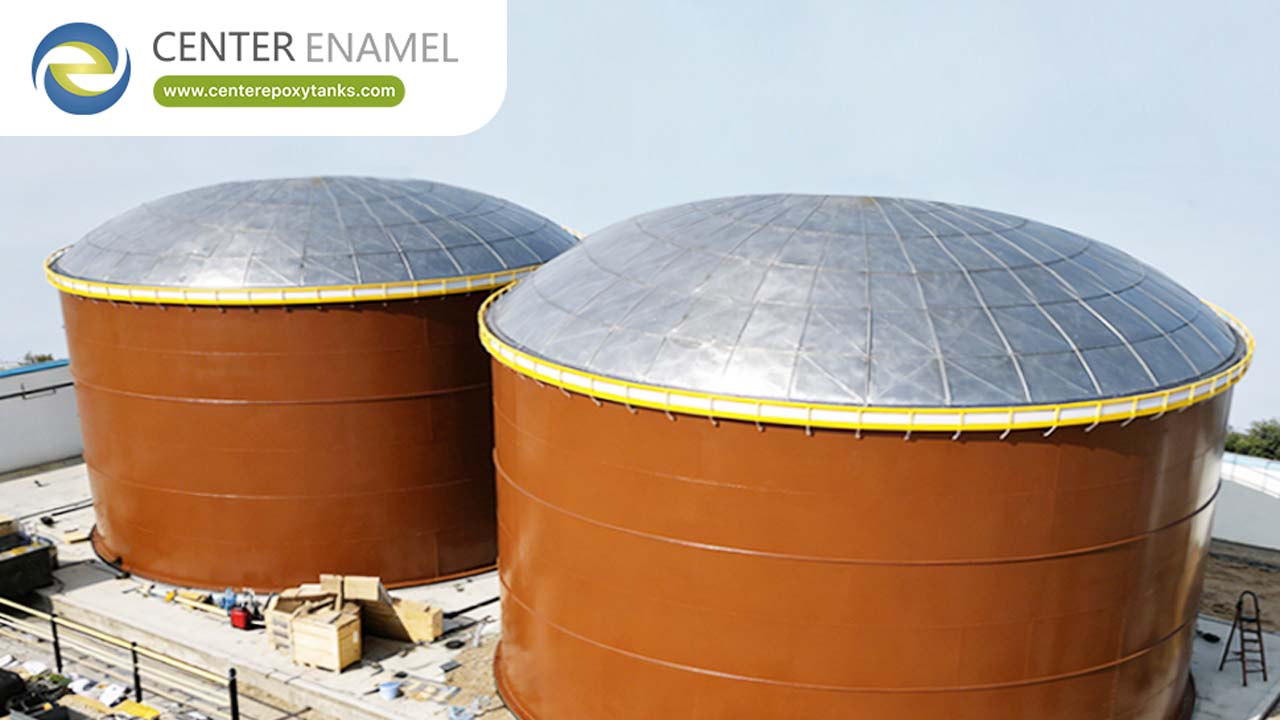
Roof Installation: Depending on project specifications, a fixed cone roof, structural framing, or an advanced aluminum geodesic dome is secured to the top shell course.
Data Table: Welded Steel Tank Fabrication & Construction Stages
Construction Phase | Primary Operational Process | Key Quality Assurance / Testing |
Shop Fabrication | CAD engineering, plate cutting, beveling, and radius rolling | Dimensional checks, mill test reports (MTRs) verification |
Foundation & Bottoms | Ringwall construction, annular plate layout, and lap/butt welding | Vacuum box leak testing on all floor weld seams |
Field Erection | Course-by-course shell stacking, crane lifting, and alignment | Plumbness, roundness, and level tolerance checks |
Structural Welding | Multi-pass fusion of vertical and horizontal shell joints | Radiographic (RT) or Ultrasonic (UT) weld examination |
Commissioning | Hydrostatic water testing and settlement monitoring | Full water fill test, roof pressure test, and inspection sign-off |
4. Phase Four: Quality Control, Testing, and Commissioning
Because welded steel tanks house hazardous hydrocarbons or essential water supplies, quality assurance is uncompromising:
Non-Destructive Examination (NDE): Certified inspectors utilize radiographic (RT) or ultrasonic (UT) testing on vertical and horizontal butt welds to detect any internal discontinuities.
Vacuum Box Testing: Floor weld seams are sprayed with a soapy solution and covered with a transparent vacuum box to detect microscopic leaks.
Hydrostatic Water Testing: The completed tank is filled entirely with water to verify structural deflection limits, monitor foundation settlement under maximum load, and ensure absolute leak-tight integrity before final commissioning.
Frequently Asked Questions (FAQ)
Q: How are welded steel tanks fabricated if they are too large for highway transport?
A: They are fabricated in a modular shop setting where steel plates are cut, beveled, and rolled flat, then transported to the job site as individual components to be assembled and welded on location (field-erected).
Q: What welding methods are used during field construction?
A: Certified technicians use advanced multi-pass welding techniques such as Shielded Metal Arc Welding (SMAW) and Flux-Cored Arc Welding (FCAW) to ensure deep, structural fusion between steel plates.
Q: What quality checks are performed on welded tank seams?
A: Quality checks include radiographic or ultrasonic examination of structural shell welds, vacuum box testing of floor plate seams, and a comprehensive hydrostatic water test.
Q: What engineering standards govern the fabrication and construction of welded steel tanks?
A: Fabrication and construction are strictly governed by international engineering standards, primarily API 650 for petroleum and industrial storage and AWWA D100 for municipal water reservoirs.


