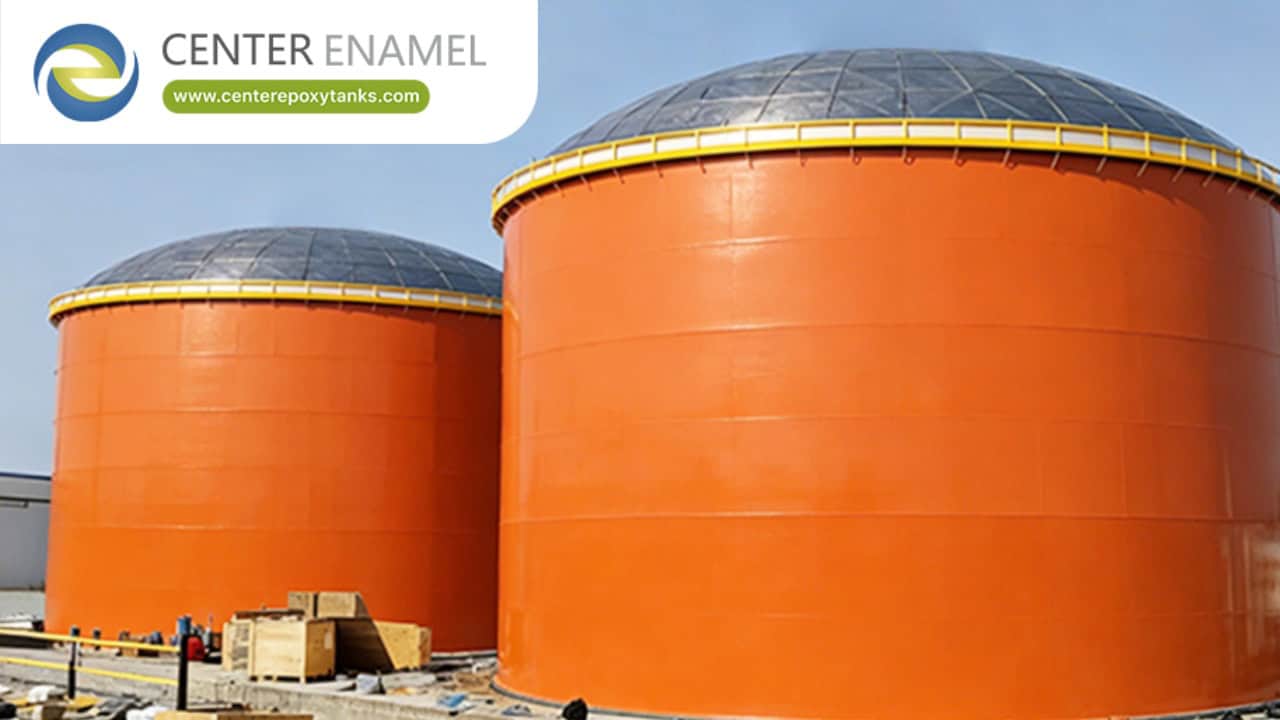
5 Things Field-Erected Tanks Are & Are Not: Myth vs. Reality
When industrial facilities, municipal water districts, and petroleum terminals scale their bulk storage requirements into millions of gallons, conventional container solutions no longer apply. This is the realm of the field-erected tank—massive industrial vessels built on-site from heavy steel plates.
Because field-erected tanks represent multi-million-dollar capital investments, misconceptions frequently arise regarding their construction, engineering, and operational capabilities. To help project managers and engineers separate engineering fact from fiction, here are 5 things field-erected tanks are and are not.
1. They ARE Massive High-Capacity Vessels — They ARE NOT Limited by Highway Transport
What they are: Field-erected tanks are engineered for monumental storage scales, capable of holding anywhere from several hundred thousand to millions of gallons of crude oil, chemicals, or municipal water.
What they are NOT: They are not constrained by highway hauling dimensions. Because shop-fabricated tanks are limited by road clearance, weight limits, and overpass heights, field-erected tanks bypass these restrictions entirely by transporting flat steel plates to the job site for on-site assembly.
2. They ARE Custom-Engineered Structures — They ARE NOT Off-the-Shelf Kits
What they are: Every field-erected tank is a bespoke engineering marvel calculated precisely for its operating environment. Structural engineers analyze specific hydrostatic head pressures, regional wind shear, and seismic loading requirements before cutting a single sheet of steel.
What they are NOT: They are not generic, catalog-ordered storage kits. Each vessel requires detailed structural calculations, plate-by-plate rolling schematics, and customized nozzle and piping placements tailored to the plant's process flow.
3. They ARE Governed by Strict Global Standards — They ARE NOT Unregulated Builds
What they are: Field-erected tanks must adhere to rigorous international engineering codes—primarily API 650 for petroleum and industrial liquids, and AWWA D100 for municipal water storage. These standards dictate material quality, weld sizing, and mandatory testing.
What they are NOT: They are not built according to arbitrary contractor preferences. Construction involves stringent quality assurance, including radiographic weld testing, vacuum box leak examinations, and full hydrostatic water testing before commissioning.
4. They ARE Monolithic, High-Integrity Structures — They ARE NOT Simple Bolt-Together Pools
What they are: High-capacity field-erected tanks are constructed via advanced multi-pass welding, fusing heavy carbon or stainless steel plates (such as ASTM A36 or A516 Grade 70) into a continuous, seamless metallic barrier.
What they are NOT: They are not lightweight, temporary pools or basic gasketed structures. Welded field-erected tanks eliminate joints and mechanical fasteners that could degrade or weep when exposed to aggressive industrial chemicals and heavy hydrocarbons.
5. They ARE Long-Term Capital Assets — They ARE NOT Disposable Infrastructure
What they are: Built with heavy structural steel, reinforced foundations, and advanced protective interior linings or external geodesic domes, field-erected tanks are designed to operate reliably for 40 to 50+ years.
What they are NOT: They are not short-term holding containers. With proper maintenance schedules and adherence to inspection standards (such as API 653 for ongoing evaluation), they serve as the permanent, foundational backbone of industrial plant operations.
Data Table: Field-Erected Tanks vs. Shop-Fabricated Tanks
Comparison Parameter | Field-Erected Tanks | Shop-Fabricated Tanks |
Storage Capacity | Massive scale (Millions of gallons / Unlimited diameter) | Limited by road transport dimensions (Smaller capacity) |
Construction Location | Built and welded entirely on-site | Fully manufactured and welded in a factory setting |
Primary Standards | API 650, AWWA D100, ASME | UL 142, API 12F, AWWA D103 |
Material Thickness | Heavy-duty steel plates varying by hydrostatic shell height | Uniform plate thickness constrained by shop rolling limits |
Primary Application | Bulk petroleum terminals, municipal water reservoirs | Regional chemical dosing, small fuel reserves, backup water |
Frequently Asked Questions (FAQ)
Q: What exactly defines a field-erected tank?
A: A field-erected tank is a large-scale industrial storage vessel whose components are manufactured off-site as flat steel plates and structural shapes, then transported and assembled via welding directly on an engineered foundation at the operational site.
Q: Why can't large industrial tanks be built in a factory and shipped whole?
A: Highway transportation imposes strict height, width, and weight limits. Tanks exceeding roughly 12 to 14 feet in diameter cannot be transported by road, necessitating on-site field erection to achieve high-capacity storage.
Q: What engineering standards govern field-erected tanks?
A: Field-erected tanks are strictly designed, fabricated, and inspected in accordance with recognized international standards such as API 650 for industrial and petroleum applications and AWWA D100 for municipal water systems.
Q: How long does it take to construct a field-erected storage tank?
A: Construction timelines vary based on tank diameter, height, and site weather conditions, generally ranging from several weeks to a few months for massive multi-million-gallon petroleum or water storage terminals.


