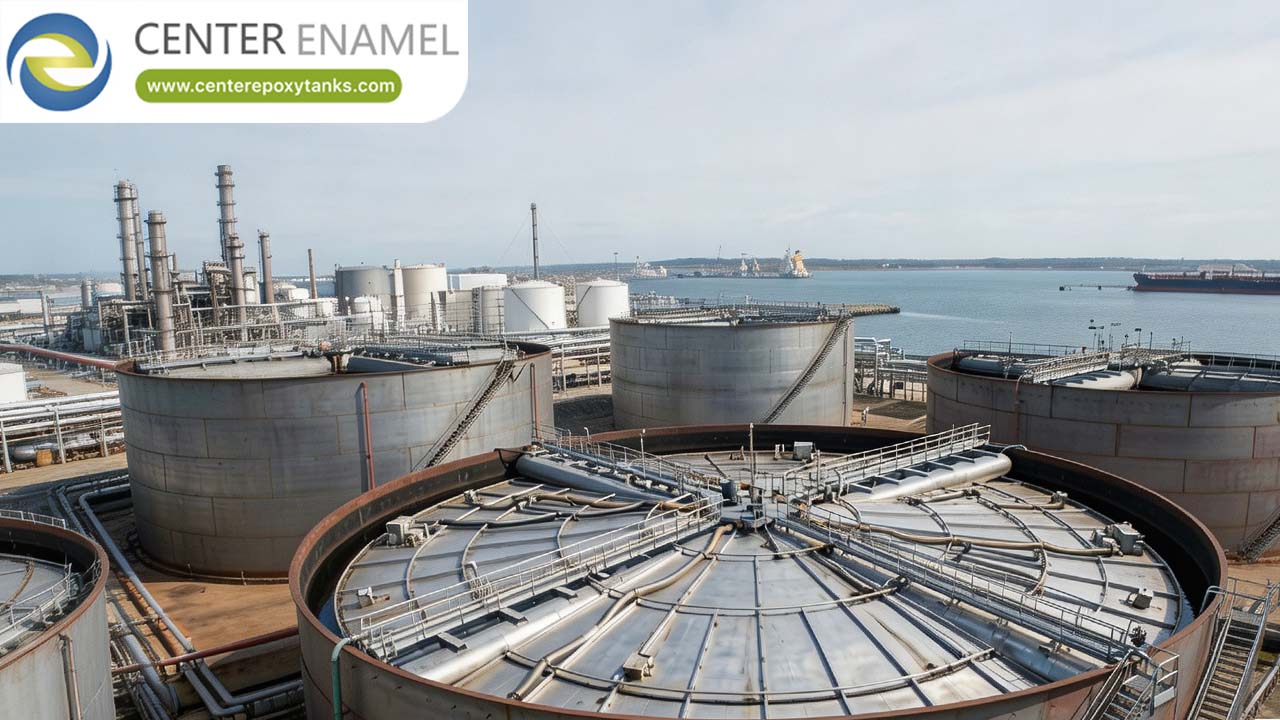
External Floating Roof for Fuel Oil Storage: Rim-Seal Engineering and Emission Compliance
An external floating roof does 95% of its emission work simply by covering the liquid. The last 5% — the number regulators actually audit — lives in a few centimeters of annular gap between the deck edge and the shell, and everything about modern EFR engineering is a campaign to win that gap back.
External floating roofs on fuel oil storage cut evaporative losses up to 95%, with residual emissions concentrated at the rim seal — the engineered gap system between deck and shell where primary mechanical shoe or resilient seals, secondary seals, and weather shields determine permit-level compliance under emission regulations for volatile fuels.
1. Why Is the Rim Seal the Emission Battleground?
After the deck, the annulus is everything.
· The gap reality: Deck-to-shell gaps of 150-250 mm vary with tank out-of-roundness and shell taper; the seal must follow both continuously.
· Primary seal types: Mechanical shoe (spring-loaded wiper), liquid-mounted (foam or liquid log riding the product), or vapor-mounted resilient seals — each balancing tightness, wear, and product compatibility.
· Secondary seals: A second barrier above the primary — required in most emission regimes — slashes residual annular loss and backs up primary wear.
· Weather shields: Flexible shields keep wind from stripping vapor through the seal zone, a major loss channel on tall tanks.
2. What Does Emission Compliance Demand of an EFR?
Modern permits measure the deck, the seals, and the fittings together.
· Seal system standards: Regimes commonly mandate primary-plus-secondary configurations with defined gap tolerances and periodic inspections.
· Deck fitting control: Gauge wells, sample hatches, and leg sleeves require covers, gaskets, or slit-membrane seals — fittings are the second emission source.
· Inspection and monitoring: Periodic visual seal inspections, gap measurements, and in some programs vapor concentration checks at the rim.
· Alternating maintenance: Seal replacement scheduled between inspections keeps measured emissions inside permit limits — a planned cost, not a surprise.
3. How Do Operations Keep an EFR Compliant Year After Year?
Compliance is an operating discipline, not an install-and-forget state.
· Drain vigilance: Roof drain function tests after heavy rain; standing water is both an emission-path symptom and a sinking risk.
· Lightning and shunt checks: Bonding straps between deck and shell maintained to prevent rim-gap ignition.
· Seal wear monitoring: Sun-weathered elastomers and worn shoe fabric strips recorded per inspection cycle and replaced before permit breach.
· Shell condition: Shell roundness and corrosion directly affect seal contact — shell repairs belong in the EFR integrity program.
Data Table: Rim-Seal System Options Compared
Seal Element | Function | Emission Impact |
Mechanical shoe (primary) | Wipes shell continuously | Baseline tight primary |
Liquid/foam-mounted primary | Seals at product surface | Very tight, product-limited |
Secondary seal | Backs up primary zone | Cuts residual 60-90% |
Weather shield | Blocks wind stripping | Major on exposed sites |
Gasketed fittings | Closes deck penetrations | Fitting-loss control |
Frequently Asked Questions (FAQ)
Q1: How do external floating roofs control emissions?
The deck covers the liquid surface, eliminating the bulk vapor space and cutting evaporative losses up to 95%. Residual emissions concentrate at the rim seal and deck fittings, so compliance engineering focuses on primary-plus-secondary seal systems, gasketed fittings, and periodic inspection.
Q2: What is a secondary rim seal and when is it required?
A second seal mounted above the primary at the deck-shell annulus. Most emission-control regimes require it on external floating roofs because it cuts residual rim losses dramatically and backs up primary seal wear — the cheapest large emission reduction available on an existing EFR.
Q3: How often should floating roof seals be inspected?
Visually at least annually and after extreme weather, with gap measurements per the applicable regime; several programs require more frequent checks. Seal wear is predictable — shoe fabric and elastomer weathering — so scheduled replacement between inspections keeps measured emissions within permit.
Q4: What is the main operational risk of an external floating roof?
Water: failed or blocked roof drains accumulate rainwater that can sink the deck. Drain testing after heavy rainfall, keeping clear of frozen drain legs, and prompt seal-zone maintenance — plus lightning bonding checks — form the core of the EFR reliability program.


