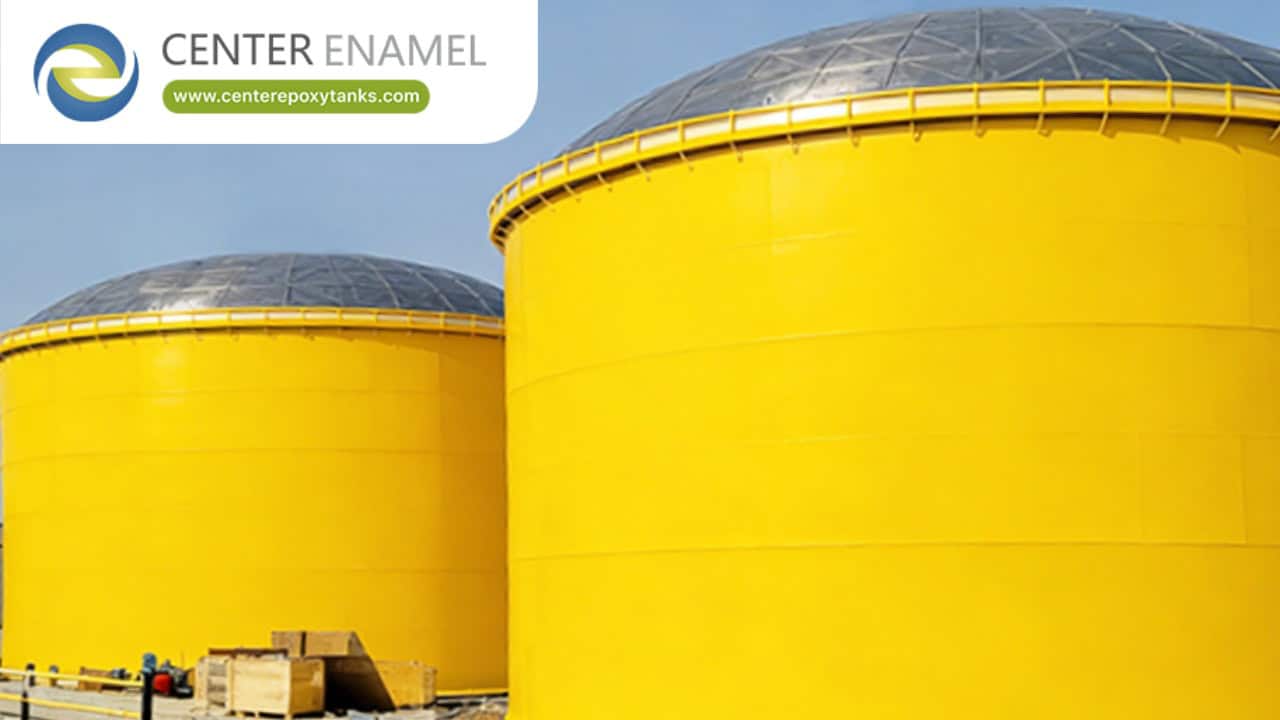
Epoxy Coated Steel Oil Tanks: Lining Protection from the Inside Out
An unlined oil tank corrodes from the inside even when the outside looks flawless: bottom water, acidic product, and humid vapor space work on the steel continuously, and every rust particle shed ends up in the fuel. Epoxy lining turns the tank's interior into a chemically inert surface — protecting the steel from the oil and the oil from the steel.
Epoxy coated steel oil tanks are welded carbon steel vessels protected by an engineered two-layer system: an internal epoxy lining isolating the steel from product and bottom water, and an external coating defending against weather and corrosion — a combination that delivers lined-tank product purity and coated-tank weather resistance at carbon steel economics.
1. What Does the Internal Epoxy Lining Do?
It is a chemistry barrier, not paint.
· Product isolation: The lining prevents oil, water bottoms, and acidic trace chemistry from contacting steel — stopping corrosion where it starts.
· Purity protection: No rust pickup, no iron contamination: stored oil keeps its color and spec; filters downstream stay cleaner.
· Full-zone coverage: Lining extends through the wetted surface, the vapor space, and the roof underside where condensation corrosion runs hardest.
· Quality verification: Specified dry film thickness confirmed and holiday-tested — every pinhole found and repaired before service.
2. How Does the External Coating Complete the System?
The outside fights weather while the inside fights product.
· Atmospheric defense: External epoxy systems block moisture, UV, and industrial pollutants from the shell and roof.
· Edge and detail protection: Nozzles, manways, and stairs receive stripe coats — details fail before plates, so details get extra film.
· Foundation interface: Tank bottom edges and base details sealed against water and debris traps.
· Inspection-friendly finishes: Coating systems chosen for color-stable inspection: corrosion undercuts show early against clean epoxy.
3. What Standards and Lifecycles Apply?
Lining practice is codified — and renewal is planned.
· API 652 practice: Tank lining work follows established petroleum-industry lining standards for surface preparation, application, and testing.
· Surface preparation: Blast cleaning to near-white profile before lining — the film's adhesion is built at the surface, not in the bucket.
· Lining service intervals: Linings serve years, then enter survey-and-renewal cycles; planning those cycles is part of owning a lined tank.
· Two economics in one tank: Lined carbon steel delivers most of stainless' product-purity benefit at a fraction of its cost — the reason it dominates oil storage.
Data Table: Lined vs Unlined Oil Tank Performance
Aspect | Unlined Carbon Steel | Epoxy Coated Steel Tank |
Internal corrosion | Ongoing product contact | Isolated by lining |
Product purity | Rust / iron pickup risk | Protected |
Vapor space corrosion | Condensation attack | Lined |
Maintenance driver | Corrosion monitoring | Lining survey cycle |
Relative cost | Lowest first cost | Moderate — coating only |
Frequently Asked Questions (FAQ)
Q1: Why line a steel oil tank with epoxy?
To break both corrosion directions: the lining stops product, bottom water, and vapor-space condensation from attacking the steel, and it stops rust from contaminating the stored oil. The tank stays structurally sound while the product stays clean — two outcomes for one coating system.
Q2: How long do epoxy tank linings last?
A properly specified and applied lining serves for years — often a decade or more — before entering a survey-and-renewal cycle. Service life depends on product chemistry, temperature, and film quality; holiday-tested application at the start is the strongest predictor of long life.
Q3: What standards govern epoxy lining of oil tanks?
API 652 is the petroleum-industry practice for internal tank linings — covering surface preparation, material selection, application, and inspection. Lining work executed to that discipline, with dry-film verification and holiday testing, is the baseline for reliable service.
Q4: Is an epoxy coated tank as good as stainless steel?
For most oil storage duties, it delivers the product purity at much lower cost; for the harshest chemistries — high-acid, high-temperature, or contamination-critical service — stainless metallurgy still holds the edge. Lined carbon steel is the economic middle path, and the lining's renewal cycle is its price.


