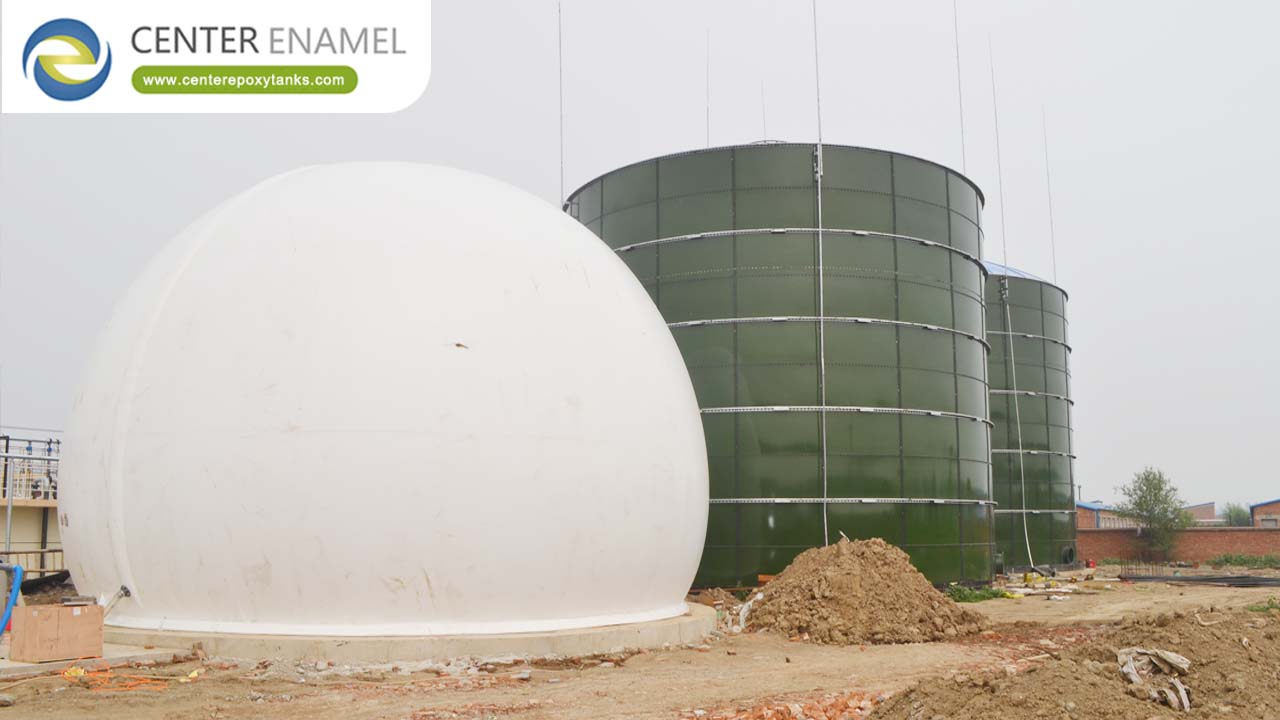
Explosion Proof Membrane Gas Holder: Advanced Safety for Biogas Storage
In anaerobic digestion and industrial biogas generation, managing the highly flammable output—primarily methane (CH4) and hydrogen sulfide (H2S)—requires zero-tolerance safety architecture. The Explosion Proof Double Membrane Gas Holder represents the pinnacle of modern biogas storage, combining flexible capacity management with rigorous, globally recognized anti-explosive standards.
Unlike traditional steel bells, explosion-proof membrane systems utilize advanced anti-static textiles and automated pressure regulation to isolate the volatile gas from atmospheric ignition sources, making them the default specification for high-compliance wastewater and agricultural biogas projects worldwide.
1. Structural Engineering of the Double Membrane System
To achieve explosion-proof status, the gas holder relies on a highly engineered, multi-layered architecture rather than a single rigid vessel.
The Inner Membrane (Gas Containment)
The inner layer is the primary barrier holding the biogas. It expands and contracts dynamically based on the volume of gas produced by the anaerobic digester.
Material: Constructed from high-tensile polyester fabrics coated with specialized PVC or Polyurethane (PU).
Chemical Resistance: Engineered to withstand the highly corrosive effects of $H_2S$ and condensation, which quickly degrade unprotected steel.
The Outer Membrane (Weather & Pressure Armor)
The outer hemisphere remains permanently inflated, creating a protective pressurized envelope around the inner membrane.
Shape Integrity: An explosion-proof, ATEX-certified air blower constantly feeds air into the cavity between the inner and outer membranes. This maintains the dome's spherical shape against heavy snow loads, hurricane-force winds, and UV degradation.
Thermal Insulation: The dead air space acts as a thermal buffer, stabilizing the temperature of the stored biogas and preventing freezing in cold climates.
2. Core Explosion-Proof Safety Mechanisms
Standard membrane holders become "explosion-proof" only when integrated with specific, internationally certified safety mechanisms designed to mitigate the three elements of the fire triangle: fuel, oxygen, and an ignition source.
Safety Component | Engineering Function | Explosion-Proof Standard |
Anti-Static Membrane Coating | Prevents the buildup of static electricity on the fabric surface caused by wind friction or gas movement. | Prevents electrostatic discharge (ESD) ignition. |
ATEX-Certified Air Blowers | Supplies air to the outer membrane using non-sparking impellers and flame-proof motor housings. | ATEX Zone 1 / Zone 2 compliant. |
Ultrasonic Level Sensors | Monitors the inflation level of the inner membrane without physical contact or electrical exposure to the gas. | Intrinsically safe (Ex i) circuitry. |
Hydraulic Overpressure Valve | Automatically releases gas if internal pressure exceeds the structural design limit (typically > 20-30 mbar), using a water seal to prevent mechanical sparking. | Failsafe mechanical pressure relief. |
Methane Leak Detectors | Sniffers installed in the air cavity between membranes to immediately detect if the inner membrane is compromised. | Triggers automated plant shutdown protocols. |
3. Global Compliance: ATEX and IECEx Standards
For global procurement teams and facility engineers, specifying an explosion-proof gas holder requires adherence to strict international directives.
ATEX Directive (Europe): Equipment intended for use in explosive atmospheres. Biogas holders must typically meet Zone 1 (explosive atmosphere is likely to occur in normal operation) or Zone 2 (explosive atmosphere is unlikely, but possible for short periods) classifications.
IECEx (International): The global standard for equipment used in explosive atmospheres, facilitating international trade of highly regulated safety equipment.
NFPA 820 (United States): Standard for fire protection in wastewater treatment and collection facilities, dictating the ventilation and electrical classifications for biogas storage zones.
Specifying a gas holder that meets these benchmarks is critical not only for operational safety but for securing facility insurance and passing rigorous municipal environmental audits.
4. Operational Advantages for High-Yield Plants
Beyond safety, explosion-proof double membrane systems deliver distinct operational efficiencies that drive ROI for industrial-scale biogas facilities:
Constant Output Pressure: By regulating the air pressure in the outer cavity, the system pushes down on the inner membrane, ensuring that biogas is delivered to the CHP (Combined Heat and Power) engine or upgrading facility at a constant, predictable pressure.
Zero Corrosion Risk: Unlike traditional wet-seal steel gas holders, the synthetic membranes are entirely immune to rust and the corrosive bite of hydrogen sulfide.
Rapid Deployment: The membrane system is manufactured, cut, and high-frequency welded in a factory environment. Site installation takes a fraction of the time compared to welding and coating heavy steel gas holders.
Technical Procurement & Design Integration
Securing A-class performance from a biogas plant requires matching the storage capacity precisely to the digester's yield and the CHP engine's consumption rate. Whether mounted directly atop a Glass-Fused-to-Steel (GFS) digester tank or installed as a freestanding concrete-base unit, the explosion-proof membrane holder is a critical node in the facility's safety architecture.


