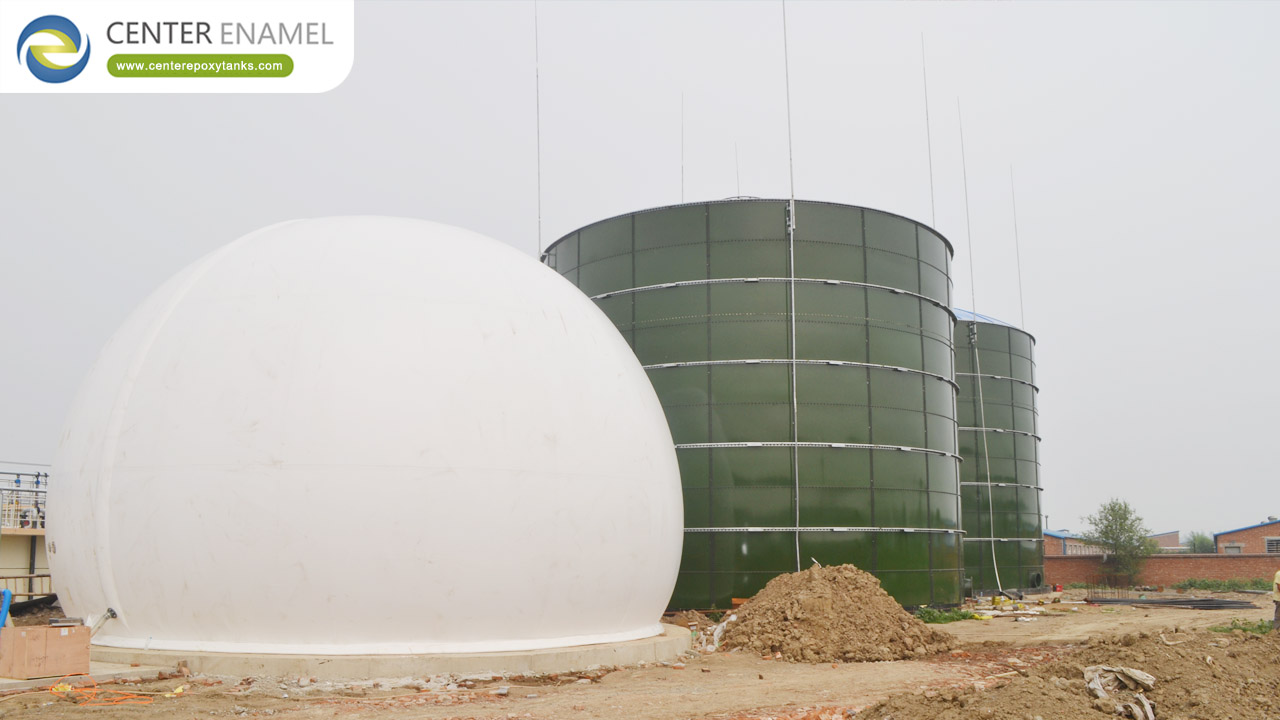
Double Membrane Gas Holders for Biogas Optimization
For anaerobic digestion (AD) facilities, effective biogas buffering is critical to balancing production and energy consumption. Double Membrane Gas Holders represent the modern standard for flexible gas storage, providing a safe, corrosion-resistant, and cost-effective alternative to rigid, fixed-roof designs. By utilizing an inflatable outer membrane for weather protection and a variable-volume inner membrane for gas storage, these systems ensure constant pressure and maximum utilization of captured methane.
1. The Engineering Principle: How it Works
A double membrane gas holder is a dynamic, pressure-regulated storage system consisting of three key layers: the bottom membrane (foundation), the inner membrane (gas containment), and the outer membrane (protective cover).
Inner Membrane: Houses the biogas. As gas production increases or decreases, this membrane expands and contracts, providing a variable-volume storage space.
Outer Membrane: Maintains the physical shape of the holder. A continuous-duty air blower maintains a slight air pressure in the space between the inner and outer membranes. This pressure serves two purposes: it protects the inner membrane from weather elements (wind, snow, UV) and exerts consistent downward pressure on the gas, ensuring the biogas is supplied to downstream engines or flares at a constant operating pressure.
Control System: An integrated air regulation valve monitors the air space, automatically managing pressure levels to ensure safe, continuous, and stable gas extraction.
2. Technical Advantages vs. Fixed-Roof Infrastructure
Feature | Double Membrane Gas Holder | Fixed Steel/Concrete Roof |
Storage Flexibility | Variable (Volume adjusts to production) | Static (No buffering capacity) |
Corrosion Resistance | Superior (Inert PVC/Polyester fabrics) | Low (Subject to H₂S attack) |
Operational Safety | Integrated OUPV (Pressure relief) | High risk of explosion if pressure builds |
Maintenance | Low (Inspection-based) | High (Structural/Coating repair) |
Installation | Rapid (Prefabricated/Modular) | Slow (Labor-intensive) |
3. Critical Safety & Compliance Features
Modern double membrane systems must satisfy rigorous industrial safety standards, particularly concerning volatile methane environments:
Over/Under-Pressure Valve (OUPV): Essential safety hardware mounted to the tank wall to prevent structural rupture during rapid gas production surges or vacuum conditions during rapid gas withdrawal.
Flame-Retardant Materials: Membranes are typically manufactured from high-strength polyester fabric with PVC coating, meeting international fire safety standards (e.g., DIN 4102-B1).
H₂S Resistance: Specialized surface treatments protect the membrane fabric from degradation by hydrogen sulfide and other corrosive components inherent in raw biogas.
Atmospheric Stability: Advanced tensioning systems (belts and mesh) ensure the outer membrane remains taut and rigid, even in high-wind conditions.
4. Frequently Asked Questions (FAQ)
Q: Can these holders be integrated with existing steel or concrete digesters?
A: Yes. Double membrane systems are highly adaptable and can be retrofitted onto existing flat-roof digester tanks, effectively converting a simple fermentation tank into a combined digester and gas storage unit.
Q: What is the typical lifespan of a double membrane?
A: With proper maintenance and monitoring, the membranes typically offer a service life of 10–15 years in exposed environments, though high-quality materials and UV-stabilized coatings can extend this depending on site conditions.
Q: How do you handle pressure management in winter or high-wind environments?
A: The supporting air blower system is designed to provide constant, regulated pressure, ensuring the outer membrane remains rigid against wind loads. Snow sensors or "snow ropes" are often added as standard accessories to prevent snow accumulation.
Engineering Your Biogas Future
Upgrading to a double membrane gas holder is a strategic investment in the efficiency of your anaerobic digestion plant. By decoupling gas production from energy consumption, you can store fuel during low-demand periods and utilize it during peak price windows, significantly optimizing the ROI of your facility.
Are you currently in the design phase for a new biogas facility, or are you looking to upgrade an existing digester to improve its gas storage capacity and operational stability?


