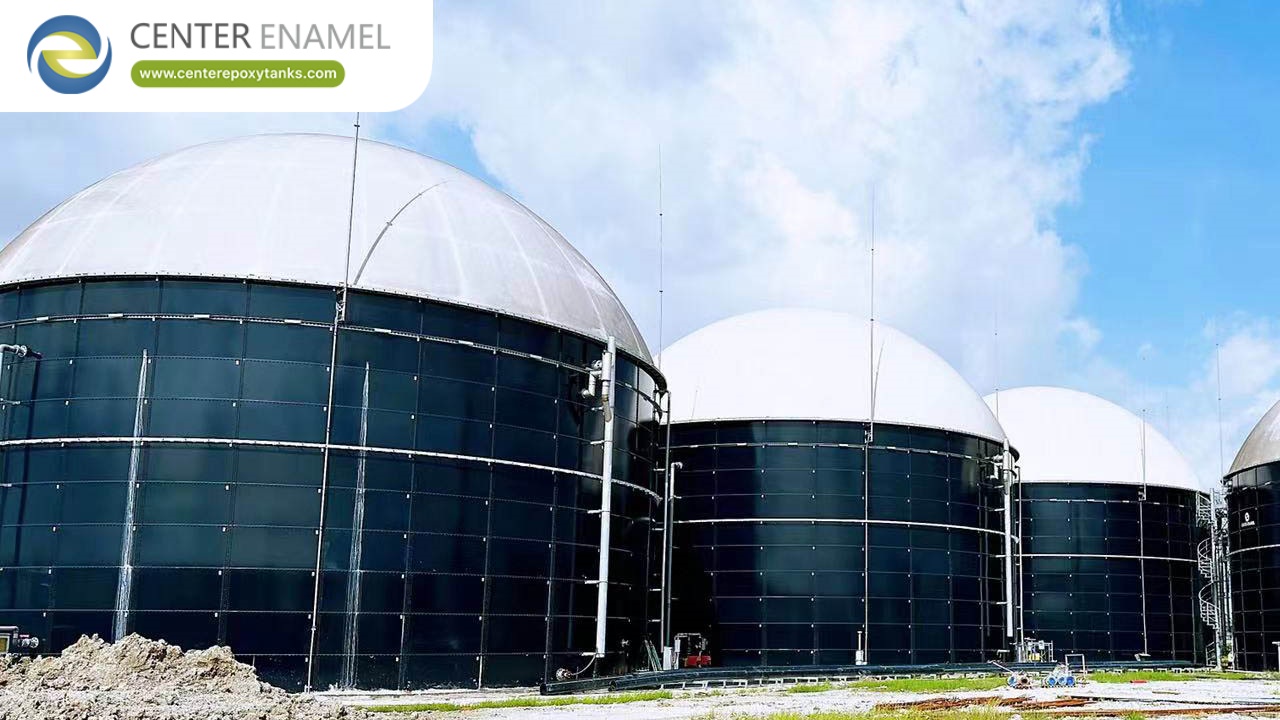
Anaerobic Digester Tank: Engineering High-Performance Biogas Infrastructure for Sustainable Energy Recovery
As the global energy landscape accelerates its transition toward decarbonization and circular bioeconomy models, anaerobic digestion (AD) has emerged as a cornerstone technology. By converting agricultural residues, food waste, industrial wastewater, and sewage sludge into high-grade biogas and nutrient-rich digestate, modern facilities achieve vital renewable energy goals while drastically reducing greenhouse gas emissions.
At the heart of any successful biogas facility lies the containment core: the anaerobic digester tank. Operating under severe biological, thermal, and chemical stress, the digester vessel must maintain absolute structural integrity, gas-tightness, and resistance to aggressive corrosive byproducts. Modern engineering standards increasingly favor advanced glass-fused-to-steel (GFS) bolted tanks to replace aging concrete structures and field-welded carbon steel containers.
Core Engineering Demands in Anaerobic Digestion
An anaerobic digester tank operates within a uniquely harsh microenvironment. Designing a reliable reactor vessel requires mitigating several critical physical and chemical challenges:
Biogenic Sulfuric Acid and Gas Attack: The breakdown of sulfur-containing organic matter generates hydrogen sulfide (H2S) and volatile organic acids. In the presence of moisture condensation in the tank headspace, these gases form corrosive compounds that rapidly pit standard steel and spall concrete.
Continuous Hydrostatic and Biological Loads: Digesters operate under constant liquid sloshing, thermal expansion cycles (mesophilic or thermophilic ranges), and active internal mixing via mechanical agitators or gas injection systems.
Strict Gas-Tightness Requirements: To maximize methane (CH4) recovery and prevent fugitive emissions, the reactor and its integrated roof system must maintain a hermetic seal under fluctuating internal pressures.
Material Superiority: Glass-Fused-to-Steel (GFS) Technology
Representing the apex of modern tank engineering, Glass-Fused-to-Steel (also known as porcelain enameled steel) fuses molten glass frit to high-strength structural steel plates at extreme temperatures (820°C to 930°C):
Permanent Molecular Bond: The resulting vitreous enamel coating combines the high tensile strength and flexibility of steel with the absolute chemical inertness and hardness of glass.
Corrosion Immunity: The glass surface is impervious to organic acids, anaerobic sludge, and hydrogen sulfide, eliminating the risk of coating delamination or rust flaking.
Modular Bolted Agility: Factory-engineered panels bolt together on-site using specialized elastomeric sealants, bypassing the long curing delays of concrete and the high inspection overhead of field welding.
Technical Performance Matrix: Anaerobic Digester Tank Technologies
Technical Parameter | Glass-Fused-to-Steel (GFS) Bolted Tanks | Cast-in-Place Concrete Basins | Field-Welded Carbon Steel Tanks |
Corrosion Resistance to Digester Sludge & H2S | Exceptional; vitreous glass surface completely resists acid attack and sulfur degradation | Vulnerable to concrete carbonation, sulfate attack, and structural spalling over time | Moderate; highly prone to pitting and weld-seam oxidation without constant upkeep |
Construction Velocity & Deployment | Rapid modular erection completed in weeks without weather-related delays | Slow civil construction requiring extensive formwork and multi-week concrete curing | Labor-intensive field welding and weather-dependent protective coating applications |
Structural Scalability & Modularity | High scalability; modular bolted panels allow future height or diameter extensions | Monolithic structure; impossible to modify, expand, or relocate once poured | Difficult to modify without extensive hot-work cutting and re-welding |
Lifecycle Maintenance Overhead | Minimal; smooth non-porous surface resists scaling and requires only periodic checks | Moderate to high; requires joint re-sealing, crack injection, and interior lining repairs | High; requires scheduled abrasive blasting and complete recoating cycles |
Optimizing Process Efficiency Through Integrated Design
Modern anaerobic digester tanks are rarely standalone vessels; they function as integrated components of sophisticated waste-to-energy ecosystems:
Thermal Regulation: Tanks are frequently equipped with external insulation panels and internal heating coils to maintain optimal mesophilic (approx. 37°C) or thermophilic (approx. 55°C) bacterial digestion temperatures.
Roof Integration: GFS digesters seamlessly integrate with double-membrane gasholder roofs, aluminum geodesic domes, or heavy-duty steel covers, creating a unified structure that optimizes biogas storage and pressure management.
Digital Process Integration: Contemporary plant designs incorporate smart sensors to monitor pH, volatile fatty acid (VFA) ratios, and temperature in real-time, supporting data-driven feedstock optimization.
Frequently Asked Questions (FAQ)
Q: Why are glass-fused-to-steel tanks preferred for anaerobic digester applications?
A: Glass-fused-to-steel tanks combine the high structural strength of steel with the exceptional chemical inertness of glass. This prevents corrosion from hydrogen sulfide (H2S) and organic acids generated during waste breakdown, offering a longer lifespan and lower maintenance than concrete or welded steel.
Q: How do modular bolted digester tanks handle internal gas pressure?
A: GFS digester tanks are engineered as high-performance pressure-containment vessels. They utilize specialized, high-grade elastomeric mastic sealants between panel laps that maintain flexibility and gas-tightness under fluctuating operational pressures for decades.
Q: Can an existing anaerobic digester tank be expanded if a biogas plant scales up?
A: Yes. Because GFS tanks feature a modular bolted panel construction, plant operators can unbolt and add additional vertical rings or expand the tank perimeter, provided the original concrete foundation was engineered for the future load increase.
Q: What maintenance is required for a glass-fused-to-steel anaerobic digester?
A: Maintenance is minimal. The ultra-smooth, non-porous glass surface prevents biological scaling and sludge accumulation, meaning standard upkeep consists mainly of routine visual inspections of exterior bolt torques, perimeter seals, and safety valves.


