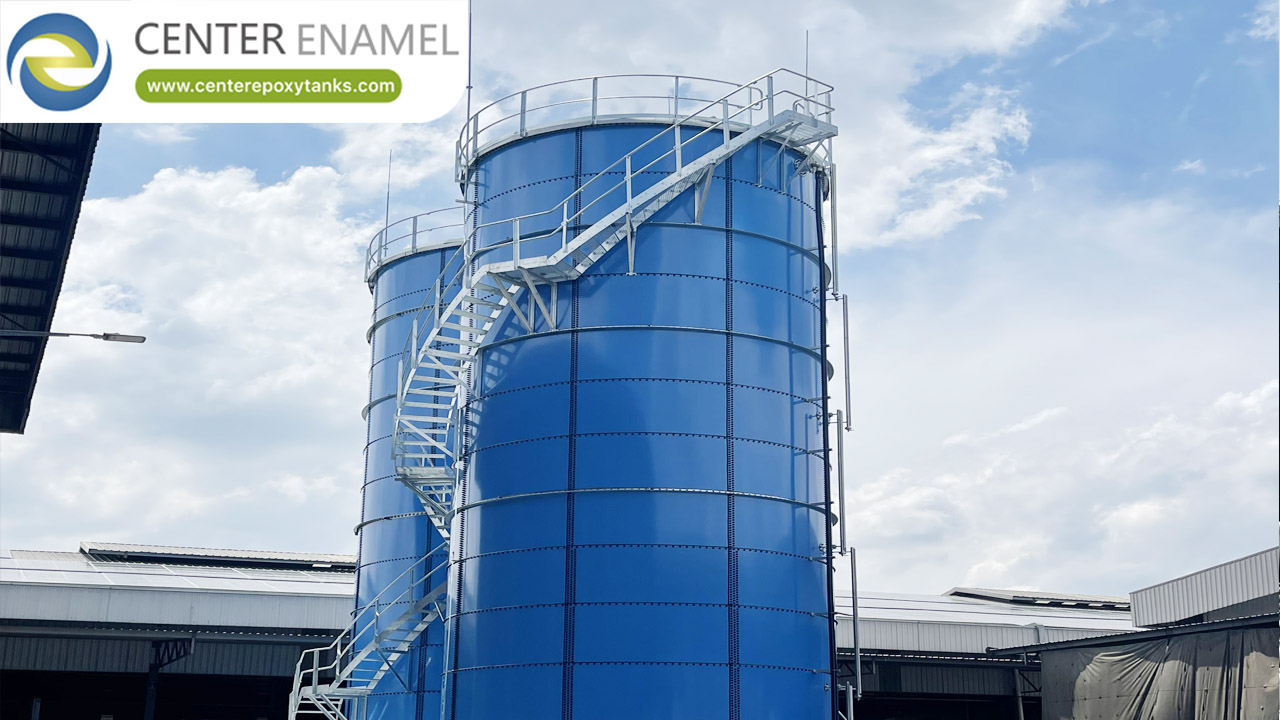
Essential Oil Processing Plant Tanks - Stainless Vessels for Distillation and Decanting
Essential oil production is a small-volume, high-value, aroma-critical process. The product is volatile, oxygen-sensitive and easily tainted by the wrong metal, the wrong gasket or residue from a previous campaign. A plant that produces beautiful oil in the still can lose it in storage: iron pick-up flattens the aroma, residues carry over between batches, and warm hydrosol left standing supports microbial growth.
The tanks therefore have to be process equipment, not just containers. Engineered by Shijiazhuang Zhengzhong Technology Co., Ltd. (Center Enamel), essential oil plant tanks are built in stainless steel with the surface finish, drainage and cleanability that aroma-critical, frequently-campaigned production demands.
1. What Tanks Does an Essential Oil Plant Need?
A condensate receiver, a separator or decanter, storage for the finished oil, and holding for hydrosol. Each has a different duty and a different geometry, but all share the same material and cleanability requirements.
· Condensate Receiver: Collects the distillate from the condenser before separation.
· Separator or Florentine Decanter: Allows the oil phase to separate from the hydrosol by density difference.
· Oil Storage: Holds finished oil, protected from light, heat and air.
· Hydrosol Holding: Stores the water phase, which is either sold or reprocessed.
· Feed and Intermediate Tanks: Hold botanical material maceration or intermediate streams where the process requires them.
2. Why Is Stainless the Standard Material?
Because the product taints easily and the plant is cleaned frequently. Stainless does not shed corrosion product into the oil, tolerates repeated cleaning, and can be finished to a surface that releases residue rather than holding it.
· No Taint: Stainless does not contribute metallic pick-up that would alter the aroma.
· Cleanability: A specified surface finish releases residues between campaigns.
· Corrosion Resistance: Essential oils and hydrosols are mildly acidic and warm; stainless tolerates both.
· Temperature Tolerance: Distillation condensate arrives warm, and the material must cope.
· Campaign Flexibility: Plants run many botanicals; a cleanable surface protects the next batch.
3. How Does Oil and Hydrosol Separation Work?
By gravity. The two phases have different densities, so a separator designed with the right residence time and the right outlet geometry lets oil rise or settle and be drawn off separately.
· Density Difference: Most essential oils are lighter than water and separate upward; a few are heavier and settle.
· Residence Time: The vessel is sized so separation completes before the stream leaves.
· Separator Geometry: A Florentine decanter is arranged for the specific oil's density - lighter or heavier than water.
· Quiet Flow: Inlet energy is dissipated so the interface is not re-mixed.
· Draw-Off Arrangement: Oil and water phases are drawn from the correct levels without disturbing the interface.
Evaluation Criterion | Stainless Process Tank | Coated Carbon Steel Tank |
Aroma taint risk | None from the vessel | Present if coating is breached |
Cleanability between campaigns | Excellent | Limited |
Warm acidic hydrosol tolerance | Good | Depends on coating |
Surface finish control | Specified | Not applicable |
Campaign flexibility | High | Low |
Engineering Assurance and Project Support
Every welded oil tank delivered by Shijiazhuang Zhengzhong Technology Co., Ltd. (Center Enamel) is designed to API 650 with shell courses sized by the one-foot method and checked for wind, seismic and hydrostatic load cases, or to EN 14015 and the Eurocodes where the site is European. Shell plate is shot-blasted to Sa 2.5 and coated to a documented dry film thickness, longitudinal and annular plate welds are examined by radiography or ultrasonic testing to the acceptance level written into the purchase order, and every tank is hydrostatically tested and dimensionally surveyed before hand-over. Essential oil tanks are supplied in 304L or 316L with a specified internal finish, smooth crevice-free welds, passivation records, separator geometry matched to your oil's density, and cleaning access sized for campaign changeover.
Frequently Asked Questions (FAQ)
Why is stainless used for essential oil plant tanks?
Because the product taints very easily and the plant is cleaned frequently. Stainless does not contribute metallic pick-up that would alter the aroma, tolerates warm mildly acidic hydrosol, and can be finished to a surface that releases residue between campaigns. That is what protects the next batch when the plant switches botanical.
How does a Florentine decanter work?
It separates the oil from the hydrosol by density difference under quiet flow conditions. The vessel is sized to give the stream enough residence time, inlet energy is dissipated so the interface is not re-mixed, and the two phases are drawn off at the correct levels. The arrangement differs depending on whether the oil is lighter or heavier than water.
Which stainless grade should we use?
304L is the standard for essential oil service; 316L is used where the hydrosol is more acidic, where chloride levels are higher, or where the specification calls for additional corrosion resistance. In both cases the internal surface finish and weld quality matter as much as the grade.
Can the tanks be customised for our process?
Yes. Capacity and geometry, grade and surface finish, separator arrangement for your oil's density, condensate receiver design, sight glasses and sampling points, cooling provision, drainage, cleaning access and instrumentation are all engineered to your process and botanicals.
·


