

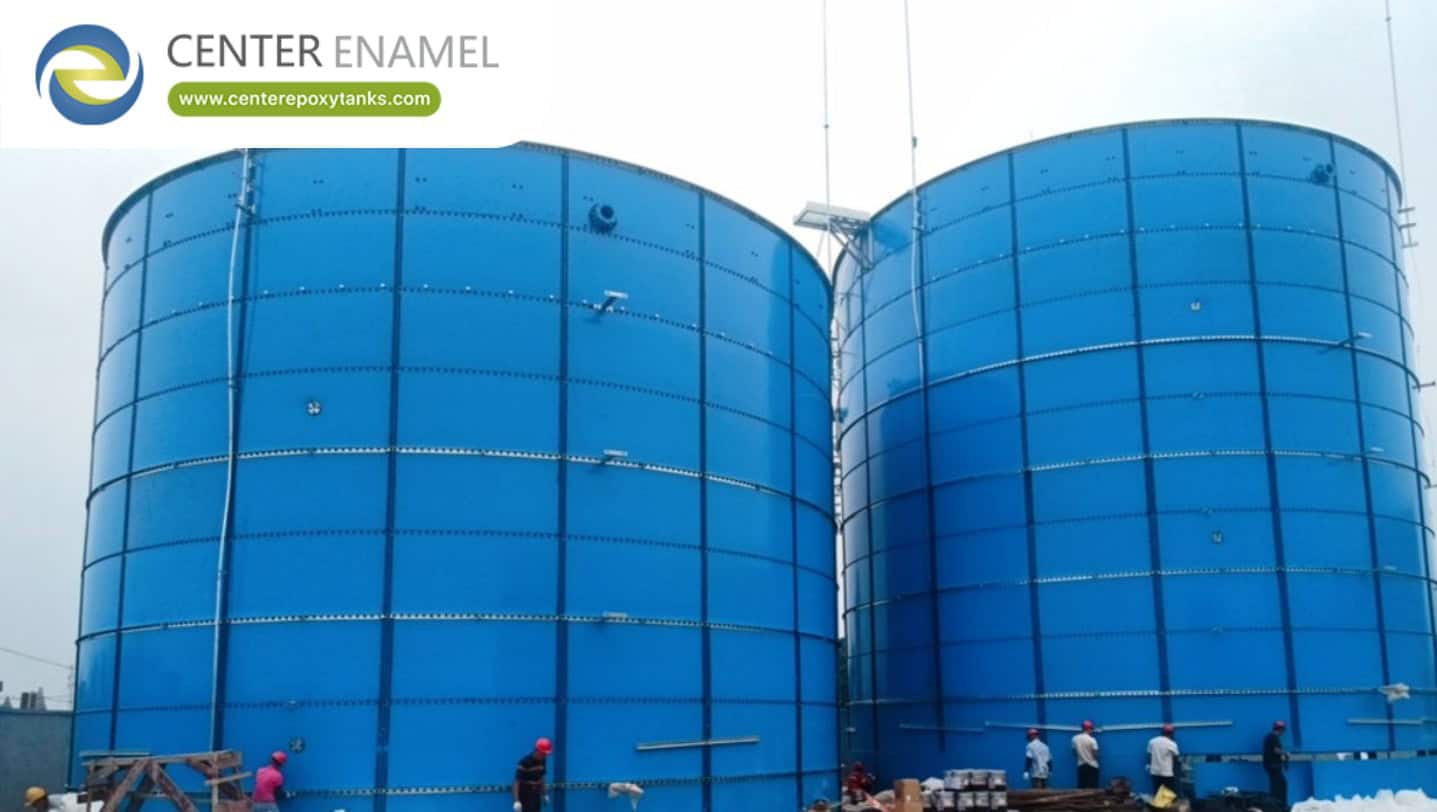
Epoxy Coated Steel Tanks: The Industry Standard for Large-Capacity Water & Wastewater
Epoxy coated steel tanks, particularly those utilizing Fusion Bonded Epoxy (FBE), are the definitive solution for large-capacity water and wastewater storage. By combining the structural high-strength of steel panels with factory-applied, heat-cured epoxy coatings, these tanks provide a monolithic, corrosion-resistant barrier that is vastly superior to field-applied coatings. They are engineered to meet stringent international standards—such as NSF/ANSI-61 for potable water and AWWA D103 for design—offering municipalities and industrial facilities a rapid, modular, and long-term storage solution that minimizes site downtime and lowers total cost of ownership.
Why Large-Scale Infrastructure Prefers Epoxy Coated Steel
For large-capacity projects, facility managers must balance durability, construction speed, and safety compliance. Epoxy coated bolted steel tanks have emerged as the primary alternative to traditional cast-in-place concrete or field-welded steel for several key engineering reasons:
Factory-Controlled Quality: Unlike concrete or field-welded tanks, epoxy coating is applied in a controlled manufacturing environment. This eliminates the risks of "holidays" (gaps) in the coating, environmental contamination during application, and human error, resulting in a consistent, uniform barrier.
Rapid Modular Assembly: Because the tank components are fabricated off-site, on-site assembly is a "bolt-together" process. This dramatically reduces construction time, labor costs, and site footprint—critical for projects in remote or environmentally sensitive areas.
Superior Corrosion Resistance: Fusion Bonded Epoxy creates a chemically inert, hydrophobic surface. This prevents oxidation and scale buildup, ensuring the stored water (whether potable or industrial effluent) remains uncontaminated and the tank structural steel remains protected for decades.
Comparative Overview: Storage Technology
Meeting Global Regulatory Standards
In large-capacity municipal water projects, compliance is non-negotiable. Leading epoxy coated tanks are designed to align with:
NSF/ANSI-61: Ensuring the interior coating does not leach toxic compounds into potable water.
AWWA D103: The gold standard for bolted steel tank design and construction, ensuring seismic and structural integrity.
ISO 9227/ASTM B117: Proving coating resistance against long-term salt spray and humidity exposure.
Frequently Asked Questions (FAQ)
Q: Are epoxy coated tanks suitable for aggressive wastewater?
A: Yes. Modern FBE formulations are engineered for a wide pH range (typically pH 2–13), making them highly resistant to the organic acids and chemicals commonly found in municipal and industrial wastewater.
Q: Can these tanks be expanded after installation?
A: One of the unique benefits of the modular bolted design is scalability. Unlike concrete or welded tanks, epoxy-coated bolted tanks can often be disassembled and relocated, or even expanded in height/diameter if capacity requirements increase, providing excellent future-proofing for your facility.
Q: How do you handle maintenance if the coating is scratched?
A: Professional manufacturers provide dedicated field-repair kits. Because the base coating is factory-applied, minor surface scratches can be repaired on-site with high-performance, matching epoxy resins that restore the integrity of the barrier without requiring full tank drainage.
Partnering for Large-Scale Storage Success
Selecting a storage system for a large-capacity project is a 30-year infrastructure decision. By prioritizing factory-applied coatings, modular design, and full regulatory compliance, you ensure that your facility operates with minimal maintenance and maximum longevity.
Are you planning a new large-capacity water or wastewater project?
[Contact our engineering team] for a custom structural feasibility study, load capacity assessment, and a preliminary project proposal tailored to your site-specific requirements.
