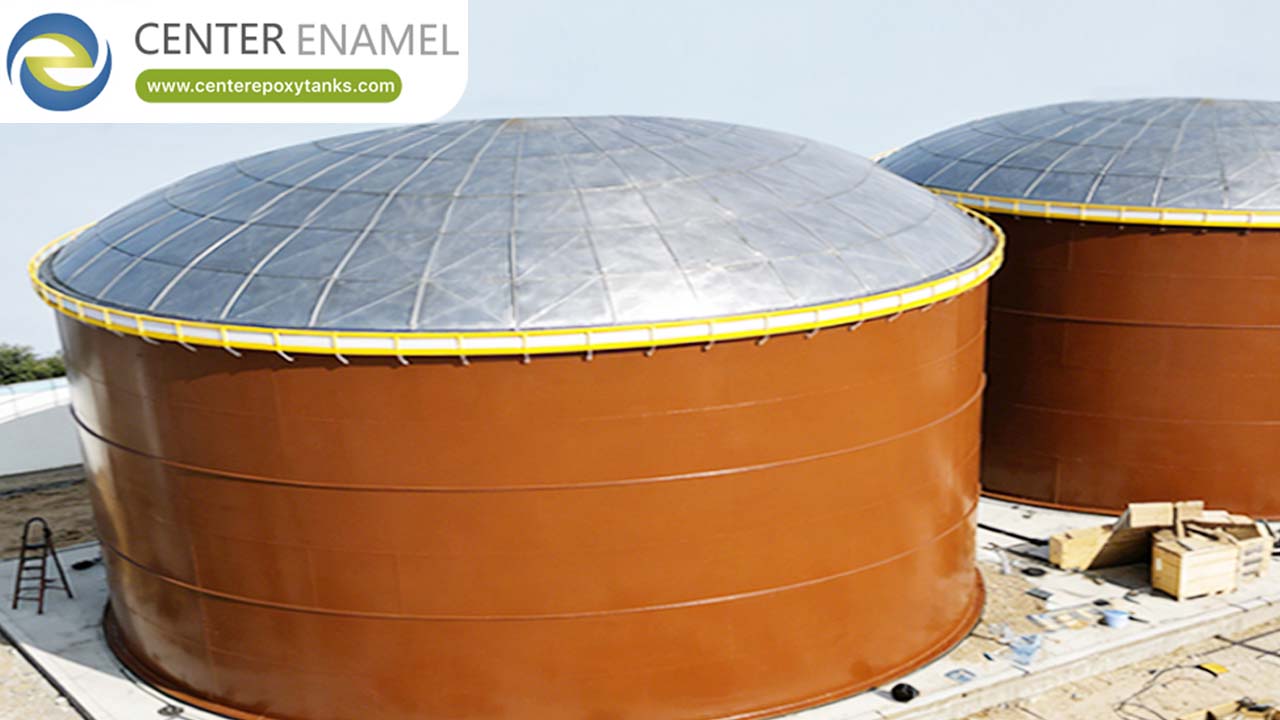
Engineering Guide to ASCE 7 Aluminum Geodesic Dome Roofs
In modern bulk liquid storage, municipal water treatment, and petrochemical infrastructure projects, covering large-diameter tanks requires lightweight, high-strength solutions. The ASCE 7 Aluminum Geodesic Dome Roof (ADR) represents the global benchmark for clear-span engineering. By utilizing a self-supporting geometric lattice, these structures cover expansive spans without internal column supports, drastically extending asset life while minimizing foundation loads.
To guarantee reliability under extreme environmental stress, these structures must be analyzed using ASCE 7 directives. This technical guide explores the structural physics, load combination criteria, and mechanical advantages of implementing code-compliant aluminum geodesic domes.
1. Structural Mechanics and the Self-Supporting Lattice
The structural integrity of a geodesic dome is derived from its triangular space-frame geometry. Made from extruded, high-strength, marine-grade aluminum alloys (typically 6061-T6 for structural struts and nodes), the frame distributes external loads across three-dimensional coordinate paths.
The Tension Ring Principle
Traditional steel roofs exert severe vertical downward forces and outward radial thrusts against the top rim of a storage tank shell, requiring costly shell reinforcement. In contrast, an ASCE 7 aluminum dome features an integrated aluminum tension ring at its base. This perimeter ring absorbs the horizontal thrust generated by the dome's dead weight and external live loads. As a result, only vertical gravity loads are transmitted to the tank shell, enabling rapid retrofitting onto existing tanks without structural modifications.
2. Environmental Load Computations Under ASCE 7
Every dome roof must be site-engineered using the localized parameters dictated by the latest edition of ASCE 7 (such as ASCE 7-22). This involves evaluating several critical load cases:
Wind Load and Aerodynamic Pressure
Wind flow across a spherical dome generates highly localized internal and external pressure distributions. Engineers determine the velocity pressure at the top of the structure using the standard ASCE 7 formula:
Because the dome is a curved aerodynamic surface, external pressure coefficients vary drastically from the windward side (positive pressure/compression) to the leeward side and center apex (negative pressure/suction forces). The space frame must be designed to resist localized buckling caused by these severe uplift forces.
Snow Loads and Drifting Criteria
While uniform snow accumulation applies downward pressure, unbalanced snow loads and snow drifting pose greater structural risks. Wind currents cause snow to gather unsymmetrically on one side of the spherical surface. ASCE 7 mandates Finite Element Analysis (FEA) testing to verify that individual strut segments will not bend under asymmetric localized weight distributions.
Tornado and Seismic Actions
The ASCE 7-22 update introduced dedicated structural mandates for tornado-prone regions, particularly affecting Risk Category III and IV critical infrastructure. Aluminum domes excel in high-seismic zones; their exceptionally high strength-to-weight ratio minimizes the overall mass at the top of the storage asset, drastically reducing the overturning moment and seismic shear forces exerted on the foundation.
Structural Performance Comparison Matrix
Engineering Evaluation Metric | Conventional Supported Steel Cone Roof | ASCE 7 Aluminum Geodesic Dome Roof |
Internal Structural Support | Required (Grid of columns, girders, rafter beams) | None (100% Clear-Span Self-Supporting) |
Dead Weight Impact | High (Heavy structural steel plates) | Low (Lightweight space-frame aluminum) |
Radial Thrust Transmitted | Substantial outward thrust on tank rim | Zero (Contained by integral tension ring) |
Corrosion Resistance | Low (Prone to internal vapor and atmospheric rust) | Maximum (Inherent aluminum oxide protection) |
Maintenance Cycle | Periodic sandblasting and protective recoating | Virtually maintenance-free (30+ year lifespan) |
Seismic Base Shear Profile | Severe (High top-heavy mass distribution) | Minimal (Extremely low top-heavy mass) |
3. Material Specifications and Watertight Integration
To achieve long-term field reliability, the space-frame lattice is sheeted with premium aluminum closure panels.
● Closure Panel Matrix: Fabricated using 3000 series or 5000 series aluminum alloy with a puncture-resistant minimum nominal thickness of 0.050 inches.
● Batten Sealing Network: To maintain strict water tightness against heavy downpours or chemical vapor containment, panel joints are clamped firmly to the frame members using specialized extruded aluminum batten bars. These profiles incorporate continuous elastomeric gaskets (such as EPDM or silicone) designed to accommodate thermal expansion and contraction across severe temperature differentials without cracking.
4. Engineering Synergy: Global Infrastructure Compliance
When planning complex infrastructure projects, ASCE 7 design protocols are integrated with industry-specific standards to create single-source containment solutions:
● Petroleum Applications (API 650 Appendix G): Pairing an aluminum geodesic dome with an internal floating roof (IFR) effectively isolates the tank from atmospheric rain and wind. This configuration minimizes rim seal wear, maximizes VOC vapor suppression, and shields the liquid surface from external ignition vectors.
● Water and Municipal Storage (AWWA D108): Applied over large potable water reservoirs, wastewater clarifiers, and equalization basins, the self-supporting dome prevents avian infiltration, UV-driven algal blooms, and hazardous odor migration.
Manufacturing and Global Distribution Excellence
For decades, premium manufacturing companies like Shijiazhuang Zhengzhong Technology Co., Ltd (Center Enamel) have advanced global tank and cover engineering. Established as a leading tank manufacturer since 2008, Center Enamel custom-engineers ASCE 7-compliant aluminum geodesic domes that integrate seamlessly with their modular Glass-Fused-to-Steel (GFS) and bolted steel storage tank solutions. Utilizing advanced automated fabrication and automated Finite Element Analysis (FEA), each dome is tailored to withstand extreme site-specific wind and snow loads. This dedication to strict quality control ensures rapid assembly and multi-decade structural survival on international infrastructure installations.
Strategic Value and Structural Integrity
Deploying an ASCE 7 Aluminum Geodesic Dome Roof is an efficient asset-management strategy for modern infrastructure operators. By removing high-maintenance internal column grids, eliminating lateral stresses on the tank shell, and maximizing protection against wind and snow loads, facilities secure an optimized, code-compliant infrastructure asset built for continuous long-term performance.


