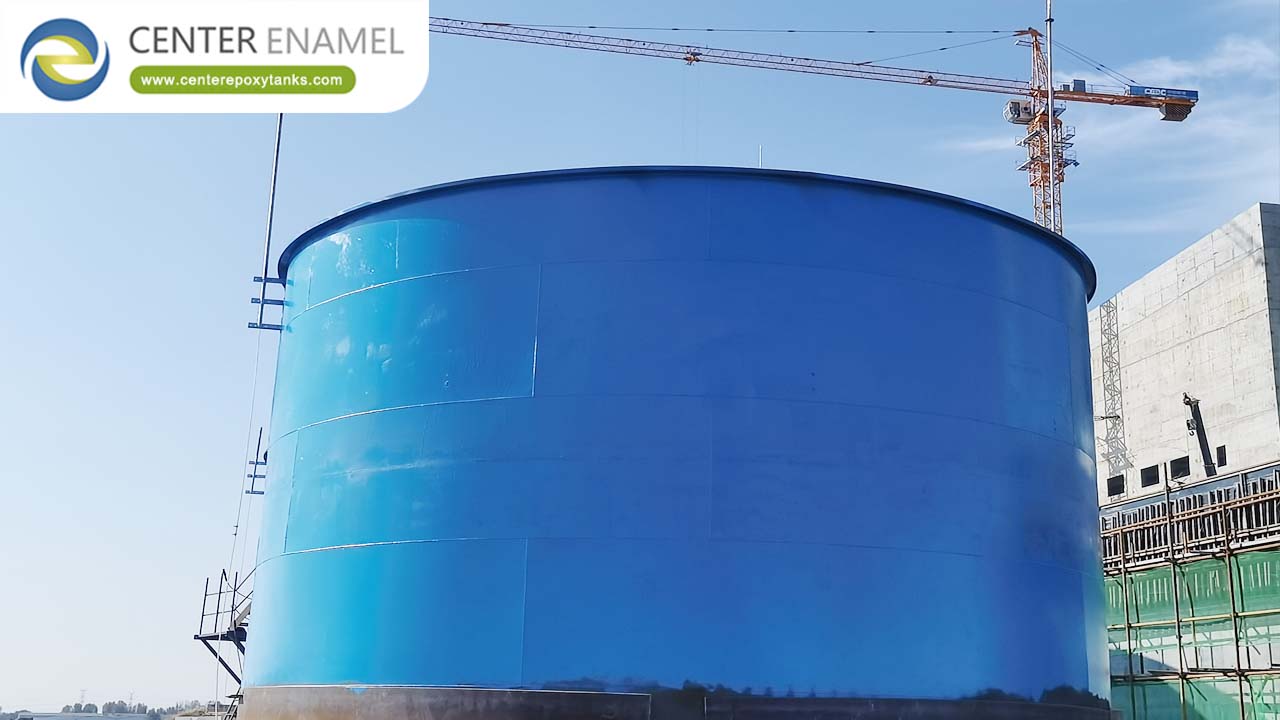
Dyes and Pigments Storage Tanks: Essential Engineering and Containment Solutions
In the textile, coatings, plastics, and ink manufacturing sectors, the precise storage and handling of colorants are vital to maintaining product quality and operational safety. Dyes and pigments storage tanks are specialized industrial containment systems designed to hold liquid dyes, organic or inorganic pigment slurries, and reactive chemical intermediates under strictly controlled conditions.
Unlike standard water reservoirs, storing dyes and pigments involves unique engineering challenges. Pigment dispersions are prone to settling, skinning, and phase separation, while liquid dyes often feature aggressive pH levels, complex solvent compositions, or moisture sensitivities. Selecting the correct tank material, agitation mechanism, and sealing system is critical to prevent contamination, batch failure, and structural degradation.
Key Engineering and Design Criteria
Effective dye and pigment containment requires careful evaluation of several operational and structural parameters:
1.
Chemical and Solvent Compatibility: Pigment and dye formulations frequently incorporate strong acids, alkalis, or organic solvents. Tank materials must resist chemical attack to prevent wall permeation, stress cracking, or trace metal leaching that can ruin color consistency.
2.
3.
Agitation and Slurry Suspensions: Pigments are solid particles suspended in liquid mediums. Without continuous or scheduled mixing, solids will rapidly settle, compact, and form dense sludge layers at the base. Tanks must feature integrated agitator mounts, high-torque mixers, or specialized recirculation ports.
4.
5.
Contamination Control and Purity: High-value colorants demand ultra-clean internal surfaces. Smooth, non-porous tank linings prevent residual dye absorption, allowing for efficient cleaning and rapid color-change workflows between production batches.
6.
Technical Performance Matrix: Storage Tank Materials
Technical Parameter | Stainless Steel Tanks (304/316L) | Fiberglass-Reinforced Plastic (FRP) | Lined Carbon Steel Tanks |
Chemical & Acid Resistance | Outstanding; highly resistant to reactive pigment chemistries and mild acids | Excellent corrosion resistance against a wide range of aggressive liquid dyes | High structural strength paired with specialized internal polymer or rubber linings |
Solvent & Hydrocarbon Compatibility | Excellent; unaffected by aromatic solvents or heavy chemical bases | Moderate; requires precise resin selection to prevent solvent permeation | Strong resistance when paired with compatible chemical-grade internal coatings |
Solid Settling & Agitation Support | Rigid shell easily accommodates heavy top-mounted industrial mixers and baffles | Requires engineered reinforcement pads to support active mechanical agitators | Highly customizable for sloped bottoms, flush outlets, and heavy-duty mixing |
Lifecycle & Maintenance | Long service life with minimal degradation; easy to passivate and clean | Lightweight and durable, though susceptible to UV damage if unshielded outdoors | Requires periodic inspection of internal liners to prevent substrate oxidation |
Operational Best Practices for Colorant Storage
·
Environmental and Temperature Control: Many organic pigments and liquid dye solutions are sensitive to extreme temperature shifts and high humidity, which can alter viscosity or trigger precipitation. Climate-controlled storage environments or insulated tanks with heating jackets are often deployed.
·
·
Venting and Vapor Management: Volatile solvents utilized in certain dye formulations require proper breather valves, flame arrestors, or closed-loop vapor recovery systems to maintain atmospheric equilibrium and worker safety.
·
Frequently Asked Questions (FAQ)
Q: Why are specialized agitation systems necessary for pigment storage tanks?
A: Pigments are solid particles suspended in liquid carriers. Because they naturally tend to settle, compact, or separate over time, integrated high-torque mixers or automated recirculation loops are required to maintain a homogeneous mixture and prevent batch inconsistency.
Q: Which tank material is best for storing corrosive liquid dyes?
A: Stainless steel (particularly grades 304 and 316L) or fiberglass-reinforced plastic (FRP) are typically preferred. They offer superior corrosion resistance against acidic or reactive dye solutions without introducing metallic contaminants that could alter the color.
Q: How do you prevent color cross-contamination between different production batches?
A: Tanks utilized for dyes and pigments require ultra-smooth, non-porous interior finishes (such as electropolished stainless steel or high-grade polymer linings). This prevents residual colorants from clinging to tank walls, ensuring thorough and efficient washdowns between changes.
Q: Are sealed or vented lids required for dye and pigment containment?
A: It depends on the formulation. Water-based dye systems typically utilize protected breather vents to control humidity ingress, while solvent-based colorants require closed, vapor-tight systems equipped with appropriate pressure-relief mechanisms for safety compliance.


