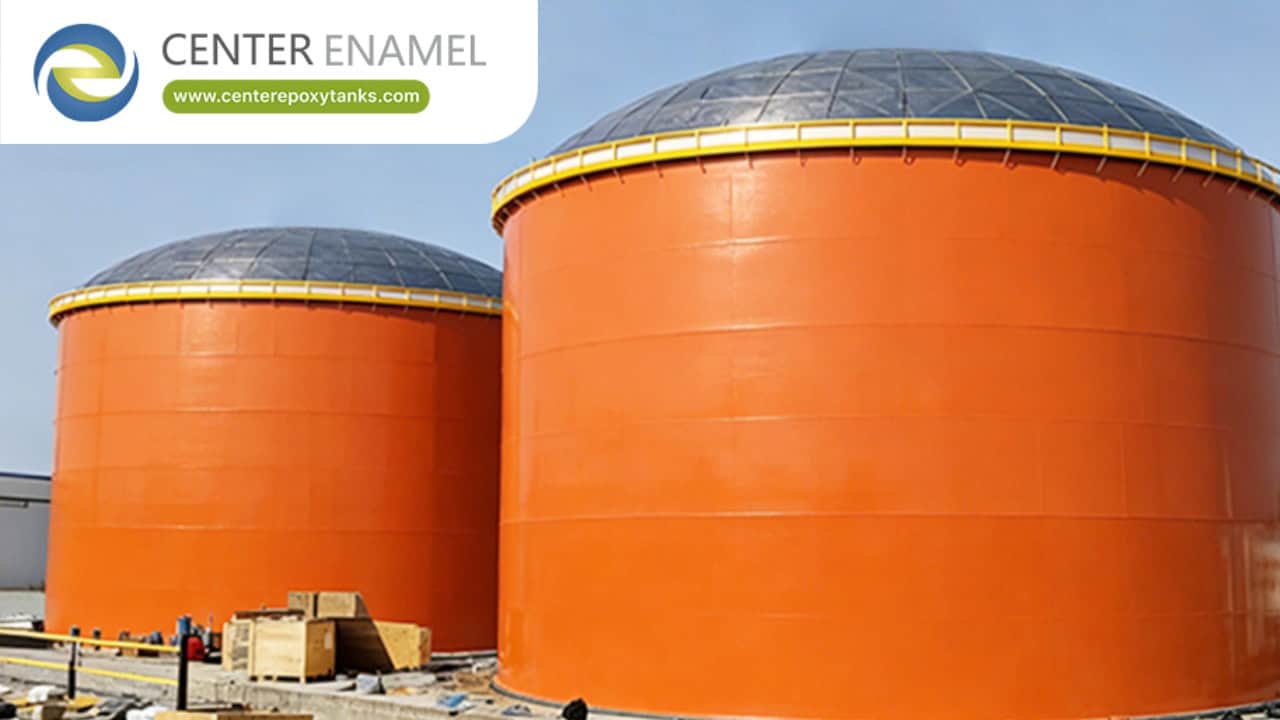
What is an FBE Fuel Oil Storage Tank?
In industrial facilities, power generation plants, commercial real estate complexes, and heavy transport terminals, reliable fuel oil containment is essential for uninterrupted operations. Whether storing diesel for emergency generators, heavy fuel oil for boilers, or refined petroleum distillates, storage vessels must resist internal degradation while preventing fuel contamination.
An FBE fuel oil storage tank is an advanced industrial liquid containment vessel constructed from high-strength structural steel panels protected by a Fusion Bonded Epoxy (FBE) coating. Unlike conventional liquid-painted tanks that degrade or chip over time, an FBE tank utilizes a thermo-setting epoxy resin powder applied electrostatically and thermally cured at high temperatures. This process fuses the polymer coating directly to the steel substrate at a molecular level, creating an impermeable, corrosion-resistant protective barrier designed specifically to handle petroleum-based fuels.
How Fusion Bonded Epoxy (FBE) Protection Works
The performance of an FBE fuel oil tank relies heavily on its rigorous factory manufacturing and coating application process:
Abrasive Blast Cleaning: Carbon steel panels undergo automated mechanical surface preparation to achieve an anchor profile conforming to international standards (such as ISO 8501-1 Sa 2.5), ensuring optimal mechanical grip.
Electrostatic Powder Spraying: Specially formulated, chemically inert epoxy powder is sprayed uniformly across both interior and exterior steel surfaces using high-voltage electrostatic guns.
High-Temperature Thermal Curing: The coated steel sheets are heated in tunnel ovens (typically between 200°C and 300°C), causing the epoxy particles to melt, flow together, and chemically cross-link into a solid, continuous film that forms a permanent bond with the metal.
Holiday Spark Testing: Every coated panel undergoes stringent high-voltage pinhole (holiday) spark testing to verify zero coating discontinuities before shipment and site assembly.
Technical Performance Matrix: Fuel Storage Technologies
Technical Parameter | FBE Coated Bolted Steel Fuel Tanks | Traditional Field-Welded Carbon Steel Tanks | Underground Concrete Fuel Vaults | Fiberglass-Reinforced Plastic (FRP) Tanks |
Corrosion Defense & Purity | Superior; factory-applied FBE creates a seamless dielectric barrier preventing rust and fuel contamination | Moderate; relies on manual field-applied coatings that can blister or degrade when exposed to fuels | Low; vulnerable to concrete cracking, micro-seepage, and chemical attack from fuel acids | Moderate; susceptible to resin degradation or softening under certain chemical and fuel profiles |
Installation Velocity | Rapid modular bolted assembly; eliminates long field-welding and painting delays | Slow; requires extensive field plate rolling, on-site welding, and mandatory NDT testing | Extremely slow; requires heavy civil formwork, excavation, and multi-week curing cycles | Moderate shop-built delivery, but constrained by large-capacity structural size limits |
Quality Control & Testing | High; factory-controlled thermal bonding verified via high-voltage holiday spark tests | Variable; subject to weather conditions and manual labor variances during site construction | Variable; dependent on concrete batch quality and pour execution on-site | Mold-dependent; quality varies based on resin formulation and glass fiber distribution |
Lifecycle Maintenance | Minimal; smooth non-porous interior prevents sludge buildup and simplifies routine cleaning | High continuous maintenance costs for repainting and exterior corrosion mitigation | High maintenance overhead; difficult to inspect or repair once subsurface placement occurs | Low maintenance, but extremely difficult to repair if structural impact damage occurs |
Key Benefits of FBE Fuel Oil Storage Tanks
1. Absolute Fuel Purity and Filter Protection
Rust flakes and particulate contamination from deteriorating uncoated steel tanks can quickly clog fuel injectors, damage high-pressure pumps, and ruin expensive combustion equipment. The inert, non-porous surface of an FBE coating eliminates rust flaking, keeping stored diesel and heavy fuel oil clean and compliant with strict ISO cleanliness standards.
2. Broad Chemical and Hydrocarbon Resistance
Fuel oils, diesel, kerosene, and emerging biodiesel blends can interact with unprotected metal walls over time. The specialized cross-linked polymer matrix of an FBE coating offers excellent resistance to petroleum hydrocarbons, moisture condensation, and mild sulfur compounds commonly found in fuel stocks.
3. Modular Bolted Versatility
FBE fuel storage vessels are typically engineered as modular bolted tanks. This allows precision-manufactured panels to be easily transported in standard ocean containers to remote project sites worldwide and rapidly assembled by local crews without hazardous on-site hot work or welding.
Frequently Asked Questions (FAQ)
Q: What is an FBE fuel oil storage tank?
A: An FBE fuel oil storage tank is an industrial containment vessel made from high-strength steel panels protected by a thermally fused Fusion Bonded Epoxy coating, providing exceptional corrosion resistance and fuel purity for diesel, heavy oil, and petroleum products.
Q: Why is FBE coating superior to traditional liquid paint for fuel storage?
A: Unlike liquid paint that dries via solvent evaporation and is prone to chipping, FBE is a heat-cured thermosetting powder that creates an unbreakable molecular bond with the steel, offering superior thickness uniformity, impact resistance, and long-term chemical durability.
Q: Can FBE fuel tanks prevent the formation of tank sludge and rust?
A: Yes. The smooth, non-stick, and non-reactive surface of the FBE coating prevents internal steel oxidation, significantly reducing rust particle shedding and inhibiting microbial sludge buildup associated with fuel storage.
Q: What international standards apply to industrial FBE fuel storage tanks?
A: FBE fuel tanks are engineered in accordance with recognized global design codes, including API 650 for welded/bolted bulk storage, UL 142 for shop-built fuel tanks, AWWA D103, and ISO 28765 standards.


