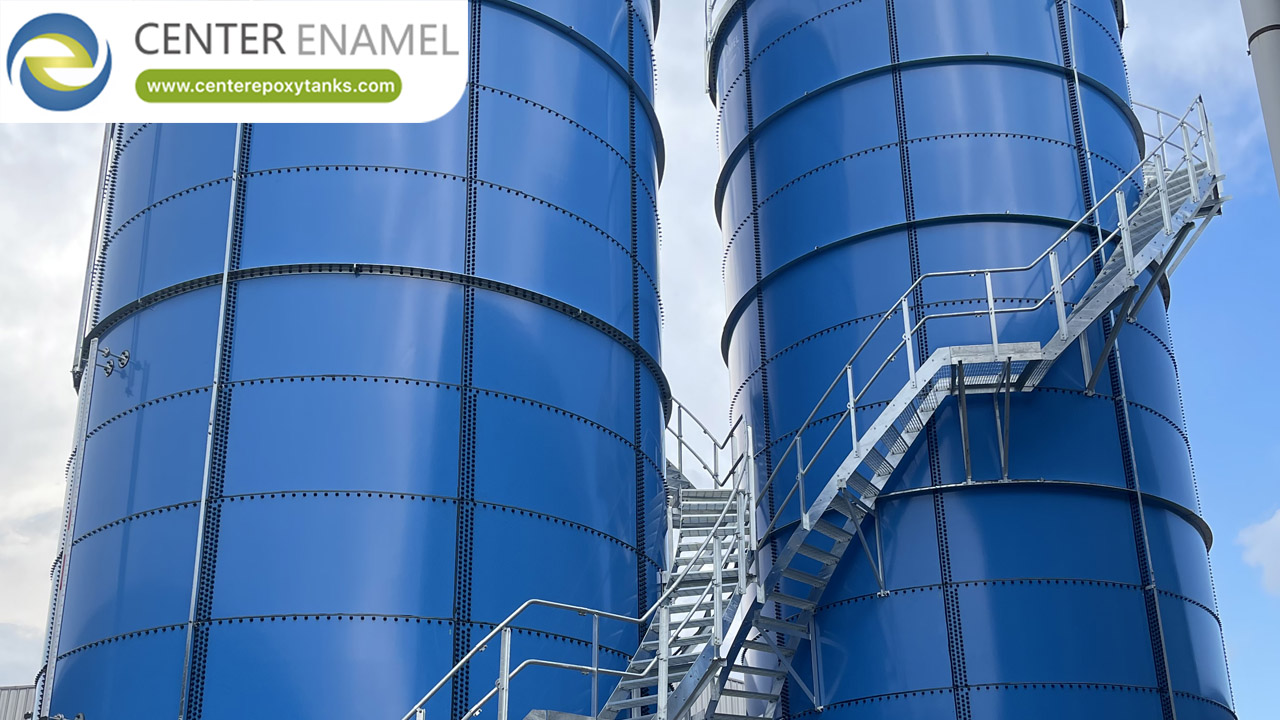
Durable Epoxy-Coated Steel Tanks from China for Industrial and Municipal Applications
For epoxy coated steel tanks from China industrial municipal, the right tank is defined by the stored medium, the duty cycle, and any coating or approval rule — not a single headline number. A factory-coated bolted shell serves both industrial process and municipal water duties reliably. A epoxy-coated bolted steel tank built with a verified coating system and correct sizing delivers a safe, low-maintenance installation.
Epoxy-coated bolted steel tank For Industrial & municipal
A bolted, coated steel tank is a versatile container for industrial & municipal. For epoxy coated steel tanks from China industrial municipal, the value is in the factory-controlled coating, fast erection, and easy expansion.
A factory-coated bolted shell serves both industrial process and municipal water duties reliably.
Why Bolted And Coated
For epoxy-coated bolted steel tank, a fusion-bonded epoxy or epoxy lining applied under factory conditions is more consistent than field painting, and the bolted shell arrives as panels that go up quickly on site.
The coating is the corrosion-control element: match it to the stored medium, the environment, and any potable or food contact rule.
Standards And Quality
Relevant references include ISO 28765 (vitreous-enamel-coated tanks), AWWA D103 (bolted steel tanks), and NSF-61 / WRAS for potable contact where applicable. Verify the coating certificate and lining inspection at acceptance.
A documented material and welding/bolt spec supports audit and handover.
Selection Factors
Define medium, capacity, temperature, and any approvals first; then choose coating, roof, and ancillaries. Confirm nozzle loads and access with the engineer of record.
How To Specify This Tank
1. Define the medium and duty: confirm the industrial & municipal specifics — chemistry, temperature, solids, and any approval such as NSF-61 / WRAS for potable-adjacent duty.
2. Set the capacity from the real driver — demand, retention time, or the fire hydraulic calculation — rather than a generic rule of thumb.
3. Choose the shell and lining: a bolted, factory-coated steel tank with the lining matched to epoxy-coated bolted steel tank duty and environment.
4. Agree ancillaries and standards with the engineer of record — nozzles, roof type, level and pressure control, bunding, and the applicable codes.
5. Verify at acceptance: coating certificate, lining inspection, and a hydrostatic or gas-tightness test before handover.
Common Pitfalls To Avoid
· Specifying a size before the medium and duty are known — the lining and volume must follow the process.
· Treating the roof, membrane, or cover as a late add-on — it must be matched to the shell at design time.
· Skipping the lining inspection and pressure or hydrostatic test, which is where most lifecycle problems begin.
· Assuming one coating fits every product — verify compatibility with the actual stored medium and temperature.
Procurement, Delivery, And Commissioning
For epoxy-coated bolted steel tank in industrial & municipal, procurement should lock the coating specification and the quality evidence — coating certificate, lining inspection, and test record — before shipment. Bolted panels arrive flat-packed; site erection is fast, and the tank can later be dismantled and re-erected if the duty or location changes.
During commissioning, confirm level and pressure instrumentation, verify the lining survived transport and erection, and document the as-built condition. A documented handover supports permitting, audit, and a sensible maintenance plan over the tank's service life.
Lifecycle, Maintenance, And Inspection
A epoxy-coated bolted steel tank is a long-life asset when the lining and structure are specified and verified for the duty. For industrial & municipal, plan routine checks of the lining, the roof or membrane, nozzles, and level or pressure instruments, and keep a record of the as-built coating and test evidence for audit and warranty purposes.
Bolted construction makes future expansion, relocation, or re-coating straightforward compared with a welded tank. Where the medium or regulation changes, the same shell can often be re-lined rather than replaced, which protects both budget and uptime over the service life.
Technical Specifications To Confirm
Parameter | What to specify |
Medium / product | Industrial & municipal — confirm chemistry, temperature, solids |
Capacity | From demand, retention time, or hydraulic calc |
Coating / lining | Epoxy or FBE; NSF-61 / WRAS if potable-adjacent |
Shell | Bolted steel (GFS / epoxy / stainless per duty) |
Roof | Sealed, dome, floating, or double-membrane per application |
Standards | ISO 28765, AWWA D103, NFPA 22 / EN 12845 as applicable |
Ancillaries | Nozzles, mixers, level control, bunding, access |
Verified Project Case
Field | Value |
Project / Application | Seawater desalination — Chile |
Industry | Seawater desalination |
Tank Type | FBE (Fusion-Bonded Epoxy) coated tank |
Tank Quantity | 2 |
Dimensions Per Tank | Ø 17 x 14.5 m (H) 2units |
Volume | 6,578 m3 |
Year | 2025 |
Source / Evidence | Company project ledger (2025 installation) |
Center Enamel's verified record includes a 2025 seawater desalination project in Chile — 2 unit(s), Ø 17 x 14.5 m (H) 2units, 6,578 m3 total, FBE (Fusion-Bonded Epoxy) coated tank. This is cited as a verified engineering reference (B-grade): it shares the same bolted-steel tank application and coating discipline as the article subject, but the referenced project used FBE (Fusion-Bonded Epoxy) coated tank, whereas this article addresses epoxy-coated bolted steel tank. It is presented as a background reference, not a claim that the exact article configuration was delivered.
Frequently Asked Questions
Q: Why bolted and coated?
A: Factory coating is more consistent than field painting, and panels erect quickly.
Q: What standards apply?
A: ISO 28765, AWWA D103, and NSF-61 / WRAS where potable contact applies.
Q: How do I choose the lining?
A: Match it to the medium, environment, and any approval requirement.
Q: Is it expandable?
A: Yes; bolted shells accept added panels or a second tank.
Q: What does verification cover?
A: Coating certificate and lining inspection at acceptance.
Q: What about nozzles?
A: Confirm loads and access with the engineer of record.
Durable Epoxy-Coated Steel Tanks from China for Industrial and Municipal Applications comes down to matching the epoxy-coated bolted steel tank to the medium, the duty, and the applicable standard. Specify the lining and sizing from the real operating condition, verify the coating and hydrostatic test at acceptance, and the installation will perform.
Request A Specification
Discuss your project with a Center Enamel engineer: share medium, capacity, site, and any approval requirement, and receive a tailored tank specification and quotation.


