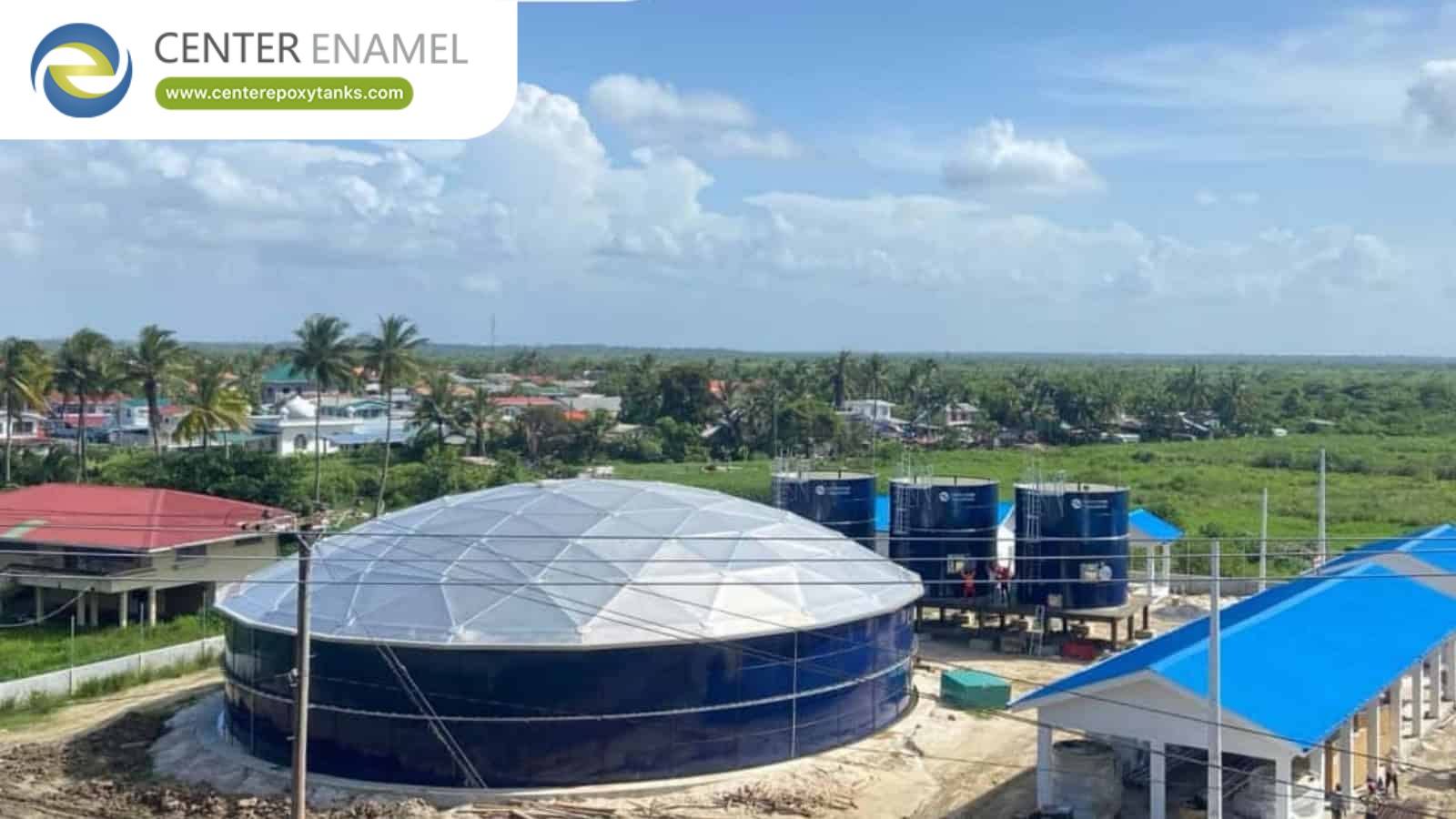
Aluminum Geodesic Domes for Wastewater Tanks: Engineering, Odor Control, and Structural Longevity
In municipal and industrial wastewater treatment plants, managing offensive odors, protecting process equipment, and complying with strict environmental regulations are critical operational priorities. Open-air clarifiers, biological reactors, and sludge holding tanks constantly emit volatile organic compounds (VOCs) and hydrogen sulfide ($H_2S$), leading to regulatory penalties and community complaints.
To contain these emissions while providing durable weather protection, modern facilities rely on aluminum geodesic domes for wastewater tanks. Engineered as self-supporting, lightweight space frames, these advanced covers offer a permanent, low-maintenance solution designed to withstand harsh chemical environments.
Core Engineering Principles and Material Advantages
The structural and functional superiority of aluminum geodesic domes stems from advanced geometry and marine-grade metallurgy:
Self-Supporting Clear-Span Geometry: Utilizing a fully triangulated spatial framework, the dome distributes structural loads efficiently across its perimeter tension ring. This eliminates the need for internal columns, trusses, or rafters, maximizing usable tank volume and preventing internal obstruction points.
Marine-Grade Aluminum Resilience: Fabricated from high-strength aluminum alloys (such as 6000-series series), these domes are inherently corrosion-resistant. Unlike carbon steel, which requires frequent sandblasting and protective recoating, aluminum forms a self-healing oxide layer that resists aggressive wastewater fumes without degrading.
Lightweight Structural Profile: Because aluminum weighs approximately one-third as much as steel, the dome imposes minimal dead load on underlying concrete or steel tank walls, often reducing foundation reinforcement costs.
Environmental Compliance and Odor Management
Wastewater treatment plants face tightening regulatory pressure regarding fugitive air emissions. Aluminum geodesic domes provide a hermetic sealing environment that solves multiple facility challenges:
Odor and Gas Confinement: By sealing process tanks completely, domes trap odorous gases and hazardous fumes, allowing facilities to channel emissions directly into scrubbers or biofilters to satisfy clean-air mandates.
Weather and Algae Prevention: The tightly sealed envelope prevents rainwater intrusion, debris accumulation, and sunlight penetration, effectively stopping algal blooms in open clarifiers and reducing hydraulic treatment overloads.
Data Table: Comprehensive Comparison of Wastewater Tank Cover Options
Technical Parameter | Aluminum Geodesic Domes | Traditional Steel Cone Roofs | Fiberglass Reinforced Plastic (FRP) |
Corrosion Resistance | Superior; natural oxide layer resists wastewater gases and moisture | Low; highly vulnerable to rust and chemical attack | High chemical resistance, but susceptible to UV degradation |
Internal Support Structure | None; self-supporting clear-span up to 100+ meters | Frequently requires internal columns, rafters, or trusses | Self-supporting for smaller diameters; limited on massive spans |
Maintenance Profile | Near-zero maintenance (no painting or recoating required) | High; requires regular sandblasting and repainting cycles | Low structural maintenance; prone to surface UV weathering over time |
Expected Service Life | 40 to 50+ years | 20 to 25 years | 20 to 30 years |
Frequently Asked Questions (FAQ)
Q: What is an aluminum geodesic dome for wastewater tanks?
A: It is a self-supporting, lightweight, spherical space-frame cover constructed from marine-grade aluminum panels, engineered specifically to enclose wastewater basins, clarifiers, and digesters for odor control and weather protection.
Q: How do aluminum geodesic domes help wastewater plants control odors?
A: They provide a continuous, hermetic seal over open-top tanks that traps odorous gases like hydrogen sulfide ($H_2S$) and VOCs inside the structure, where they can be safely captured and routed to air treatment scrubbers.
Q: Why is aluminum preferred over steel for wastewater tank covers?
A: Aluminum offers an exceptional strength-to-weight ratio and is naturally corrosion-resistant. Unlike steel, which rusts rapidly in corrosive wastewater environments and requires continuous painting, aluminum provides a maintenance-free service life exceeding 40 years.
Q: Can aluminum geodesic domes be installed on existing concrete or steel tanks?
A: Yes. Because they are lightweight and self-supporting across their perimeter, aluminum domes can be easily retrofitted onto existing circular concrete or steel wastewater tanks without adding excessive structural weight to the foundation.


