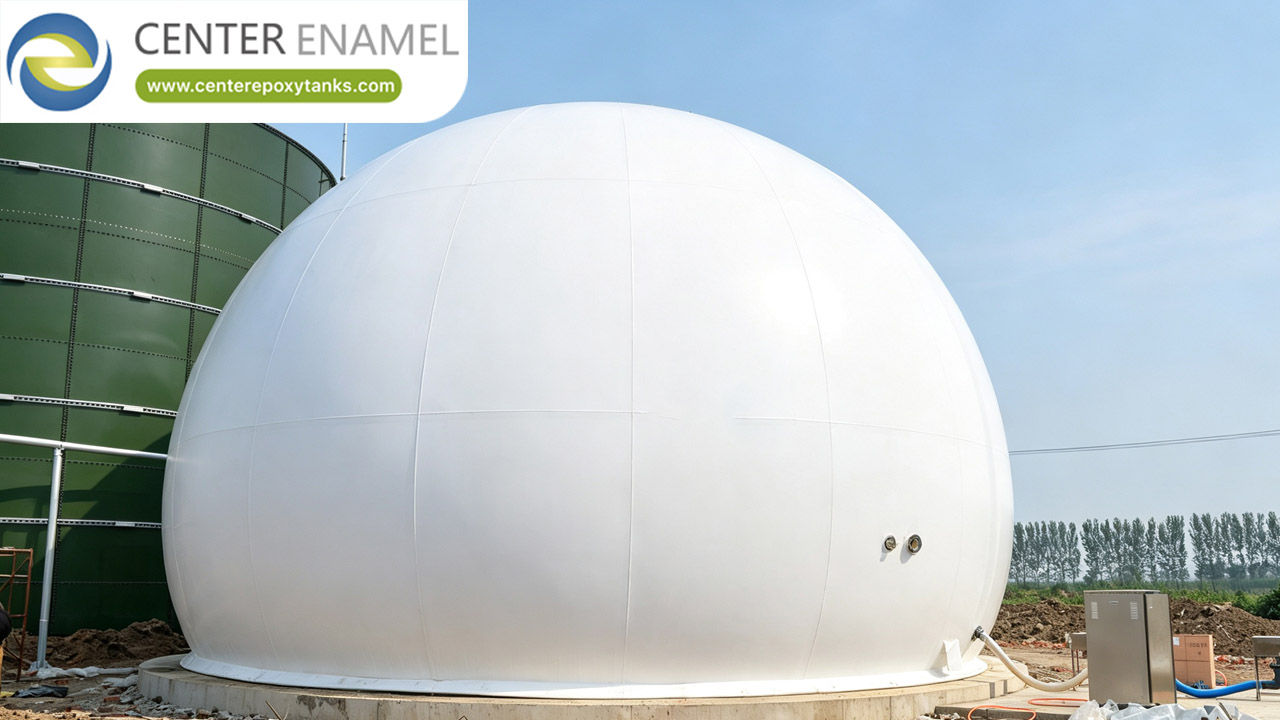
Cost-Effective Double Membrane Biogas Holders for Renewable Energy Facilities
The global acceleration toward decarbonization and circular energy economies has placed anaerobic digestion at the forefront of renewable energy production. Whether processing agricultural livestock waste, municipal sewage sludge, or industrial organic byproducts, biogas plants convert waste streams into valuable green energy, primarily methane. However, because biogas generation is continuous while energy consumption fluctuates, reliable, high-capacity, and economical gas storage is essential.
Traditional steel gasholders and heavy concrete gas vaults often involve exorbitant capital expenditures (CAPEX), complex construction timelines, and ongoing maintenance challenges. To maximize plant profitability, renewable energy facility operators increasingly rely on cost-effective double membrane biogas holders. Combining structural engineering innovation with advanced polymer technology, these systems deliver safe, flexible, and budget-friendly gas containment.
The Core Architecture and Working Principle
A double-membrane biogas holder features a sophisticated multi-layer configuration designed to optimize both storage volume and structural stability:
Inner Membrane (Gas Containment): Fabricated from high-tenacity, chemically inert polymer materials, the inner membrane expands and contracts freely within the containment perimeter, directly housing the raw biogas in a sealed environment.
Outer Membrane (Weather Protection & Aerodynamics): Acting as the external protective shell, the outer membrane is engineered to withstand severe environmental loads, including high-speed winds, heavy snow accumulations, and ultraviolet (UV) radiation.
Inter-Membrane Air Pressure Control Chamber: An automated support blower system continuously regulates the air pressure between the inner and outer membranes. This positive pressure stabilization ensures a constant, reliable gas delivery pressure to downstream combined heat and power (CHP) engines or biomethane upgrading units, regardless of storage capacity utilization.
Technical Performance Matrix: Biogas Storage Solutions
Performance Parameter | Double Membrane Biogas Holders | Traditional Low-Pressure Steel Gasholders | Unlined Concrete Gas Vaults | Bolted Carbon Steel Storage Bins |
Capital Expenditure (CAPEX) | Highly economical; low material weight and prefabricated modular design | High; requires heavy structural steel framing and intensive fabrication | High; demands massive concrete batch pours, rebar reinforcement, and formwork | Moderate to high, depending on specialized coatings and joint seals |
Corrosion Resistance & Chemical Inertness | Superior; inert polymer fabrics resist moisture, carbon dioxide, and hydrogen sulfide (H2S) | Low; prone to internal pitting, requiring scheduled sandblasting and repainting | Moderate to Low; vulnerable to concrete carbonation and acid gas permeation | Moderate; requires periodic inspection and recoating at bolted seams |
Installation Speed & Logistics | Rapid on-site modular assembly (typically days); lightweight containerized shipping | Slow field fabrication, plate rolling, and extensive X-ray weld testing | Extremely slow; multi-week construction schedules dependent on weather and curing | Moderate modular bolted assembly speed |
Volumetric Flexibility & Pressure Control | Dynamic variable-volume storage with constant positive delivery pressure | Fixed volume capacity with heavy mechanical piston counterweights | Fixed volume capacity with poor surge buffering capabilities | Rigid storage configuration with limited pressure compensation |
Key Economic and Operational Benefits for Renewable Energy Plants
1. Minimized Capital and Lifecycle Costs
By replacing rigid, heavy metallic structures with high-tensile, lightweight engineered fabrics, double-membrane holders drastically reduce structural foundation requirements and civil engineering expenses. Furthermore, their superior resistance to biological acids and atmospheric corrosion eliminates the need for expensive, recurring interior repainting, minimizing operational expenditures (OPEX).
2. Modular Scalability and Rapid Deployment
Renewable energy projects operate under tight construction schedules. Prefabricated double-membrane gasholders can be rapidly deployed and assembled on-site—whether configured as standalone ground-mounted units or integrated directly onto the crowns of anaerobic digesters—drastically shortening project commissioning timelines.
3. Integrated Safety and Automated Control Systems
Equipped with state-of-the-art pressure monitoring instruments, automated blower regulators, hydraulic safety relief valves, and lightning protection grounding, modern double-membrane systems guarantee fail-safe operation and continuous compliance with stringent international industrial safety guidelines.
Frequently Asked Questions (FAQ)
Q: Why are double membrane biogas holders considered a cost-effective storage option?
A: They utilize lightweight, high-tensile polymer fabrics instead of heavy structural steel or reinforced concrete, drastically lowering material expenses, foundation requirements, and on-site labor costs while offering long service lives with minimal maintenance.
Q: How do double-membrane gasholders maintain stable gas delivery pressure?
A: An automated air blower system maintains constant positive pressure in the airspace between the outer and inner membranes. This presses down on the inner storage bladder, ensuring a steady, reliable output pressure to downstream energy conversion equipment.
Q: What is the expected design life of a double-membrane biogas holder?
A: Utilizing high-grade, UV-stabilized, and chemical-resistant PVC/PVDF coated polyester fabrics, these systems typically offer a robust design life of 10 to 15 years or more when properly maintained and operated within rated parameters.
Q: Can double-membrane gas holders be mounted directly onto existing anaerobic digester tanks?
A: Yes. They are highly versatile and can be engineered either as independent ground-mounted storage vessels or as tank-mounted covers installed directly on top of concrete, steel, or Glass-Fused-to-Steel (GFS) anaerobic digesters to optimize facility footprints.


