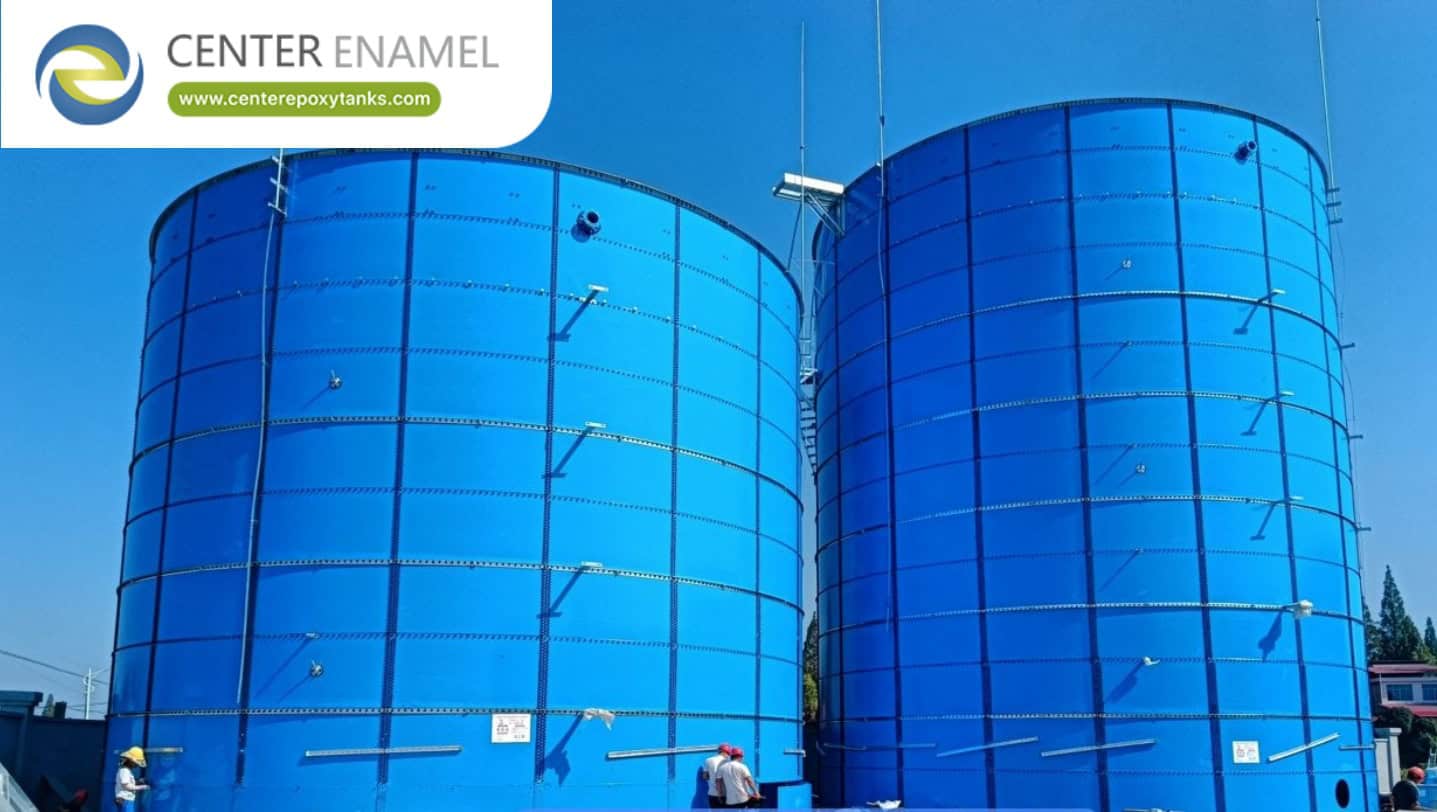
Fusion Bonded Epoxy Tanks: Durable Solutions for Potable Water
For municipalities, industrial facilities, and agricultural projects, storing potable water requires more than just a vessel—it demands a solution that ensures absolute purity, long-term corrosion resistance, and structural integrity. Fusion Bonded Epoxy (FBE) tanks have emerged as a premier choice, offering a balanced combination of high-performance protection and cost-effective modular construction.
Center Enamel (Shijiazhuang Zhengzhong Technology Co., Ltd.) has optimized the fabrication of FBE tanks, utilizing advanced automated powder-coating processes to deliver reservoirs that meet stringent international safety standards, including NSF/ANSI 61.
Why Choose Fusion Bonded Epoxy for Potable Water?
The "fusion-bonding" process involves applying an epoxy powder to steel panels and curing it at high temperatures. This creates a chemically bonded, non-porous layer that shields the steel from contact with water, preventing oxidation and leaching.
Key Advantages
Guaranteed Purity: When certified to NSF/ANSI 61 standards, FBE coatings are food-grade and non-toxic, ensuring the water remains safe for human consumption without imparting odors or flavors.
Corrosion Resistance: The fusion-bonded layer acts as a permanent barrier against moisture and environmental chemicals, outperforming traditional liquid-applied coatings that can degrade or peel.
Modular Speed & Flexibility: Because these tanks are bolted steel structures, they are manufactured in a controlled factory environment and assembled on-site. This significantly reduces installation timelines and allows for easier expansion or relocation if facility needs change.
Cost-Effectiveness: FBE tanks typically offer a lower initial capital expenditure (CAPEX) compared to complex glass-fused-to-steel or poured-concrete options, while maintaining a service life measured in decades.
Technical Comparison: Storage Solutions
Feature | Fusion Bonded Epoxy (FBE) | Glass-Fused-to-Steel (GFS) | Concrete Tanks |
Coating Type | Thermoset Polymer | Vitreous Enamel (Glass) | N/A (Porous) |
Installation Time | Very Fast (Bolted) | Fast (Bolted) | Slow (Pour-in-place) |
Repairability | High (Field-repairable) | Low (Fragile coating) | Difficult/Costly |
Purity/Safety | Excellent (NSF 61) | Excellent (Inert) | Risk of Leaching |
Best Use Case | Municipal & Industrial | High-Corrosivity Waste | Large-Scale Gravity |
Engineering Excellence with Center Enamel
At Center Enamel, we apply precision engineering to every tank design. Our production lines feature automated laser cutting and tunnel oven curing, ensuring that every steel panel receives an even, durable epoxy coating.
By adhering to AWWA D103-09 and international ISO manufacturing standards, our tanks are engineered to handle seismic loads, wind pressures, and diverse environmental conditions, ensuring that your potable water remains secure and consistent, regardless of the climate or application.
Frequently Asked Questions (FAQ)
1. Is the FBE coating safe for drinking water?
Yes, provided the tank is certified to NSF/ANSI 61. This certification ensures that the epoxy coating is non-toxic, does not leach harmful substances into the water, and meets strict hygiene requirements for potable water storage.
2. How long does an FBE tank last?
With proper maintenance and routine inspections, an FBE bolted steel tank can provide a service life of 20 to 30 years or more. Their durability stems from the chemical bond between the epoxy powder and the steel substrate, which resists peeling and oxidation.
3. Can FBE tanks be repaired if damaged?
One of the distinct advantages of FBE tanks is their field-repairability. Minor scratches or impacts can be addressed using field-applied coating kits that restore the seal, a feature that is much more difficult to execute with glass-lined (GFS) or concrete surfaces.
4. How do FBE tanks compare to Glass-Fused-to-Steel (GFS)?
GFS tanks are chemically inert and highly resistant to extremely corrosive environments (like high-acidity wastewater), making them the "gold standard" for longevity. However, FBE tanks offer a cost-effective alternative that provides excellent performance for potable water where extreme chemical resistance isn't the primary constraint.
5. What maintenance is required?
Maintenance is minimal. It generally involves periodic inspections of the sealants, bolt torque, and the coating surface. Routine water quality testing is also recommended to ensure the system remains within compliance for public health standards.


