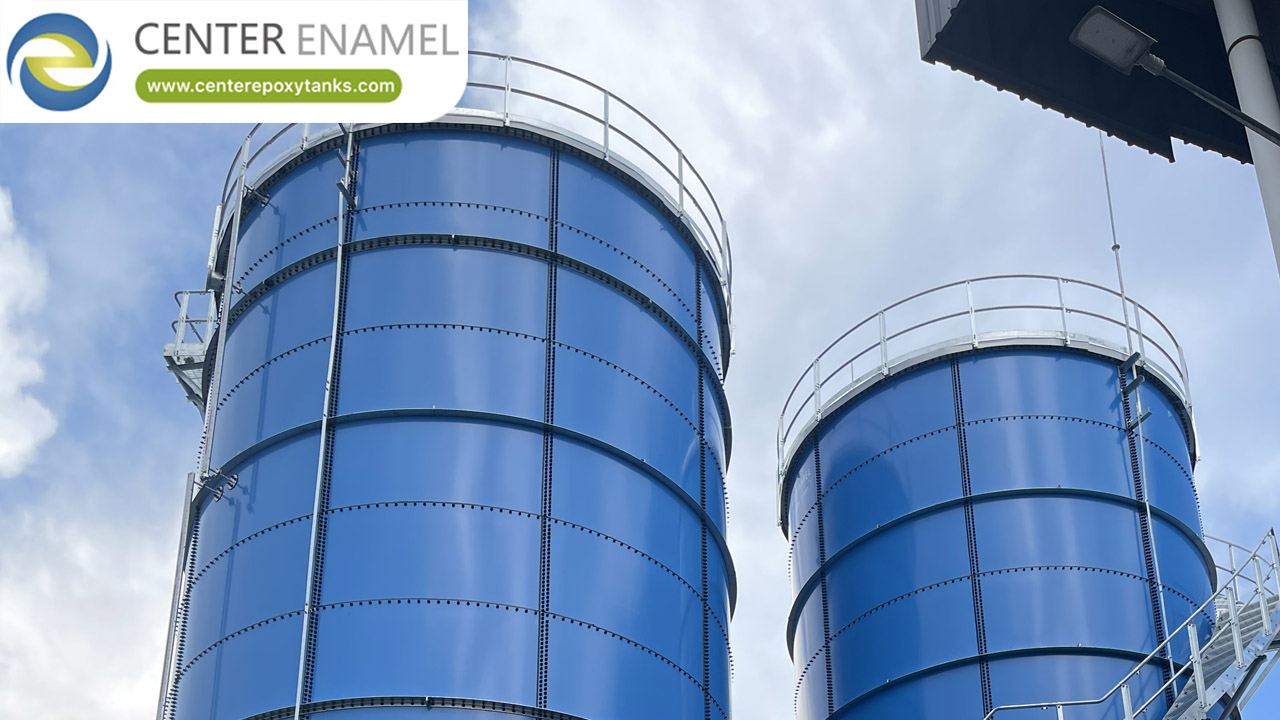
The Superior Choice for Dry Bulk Storage: Epoxy Coated Steel Tanks
Across industries such as agriculture, food processing, plastics manufacturing, chemicals, and minerals, efficient and contamination-free handling of dry bulk materials is vital to operational success. Storing powders, grains, pellets, and dry chemicals presents unique engineering challenges. Materials can pack tightly, bridge across discharge hoppers, or cause severe internal abrasion against container walls. Furthermore, any moisture ingress or chemical reaction can cause product caking, spoilage, or degradation.
To meet these demanding handling requirements, plant operators increasingly rely on epoxy coated steel tanks (specifically Fusion Bonded Epoxy or FBE bolted silos). Combining the immense structural strength of industrial steel with an advanced, factory-applied thermosetting polymer coating, these tanks provide the ultimate containment ecosystem for dry bulk goods. As a globally recognized leader in advanced storage technology, Shijiazhuang Zhengzhong Technology Co., Ltd. (Center Enamel) delivers precision-engineered epoxy-coated containment systems built for peak dry bulk performance.
Core Engineering Advantages for Dry Bulk Handling
Epoxy coated steel tanks out-perform traditional storage alternatives by addressing the core physical and chemical challenges of dry bulk storage:
Ultra-Smooth Interior Surfaces to Prevent Bridging: The factory-applied fusion bonded epoxy coating provides a dense, glossy, and chemically inert interior finish. This low friction coefficient prevents fine powders and sticky granules from clinging to walls, ensuring smooth, first-in-first-out (FIFO) mass flow and eliminating material bridging or rat-holing.
Superior Abrasion and Impact Resistance: Dry bulk materials act like natural sandpaper during continuous pneumatic filling and gravity discharge. High-performance FBE coatings undergo thermal curing at high temperatures, locking the polymer matrix into the steel substrate to create an exceptionally tough shield against particle scouring.
Absolute Contamination Defense and Purity: Unlike raw concrete silos that can dust or leak moisture, or uncoated steel that forms rust flakes, inert epoxy coatings prevent chemical leaching and protect sensitive stored goods—such as food-grade grains, plastic resins, and chemical powders—from particulate contamination.
Rapid Modular Bolted Erection: Utilizing precision-engineered steel panels bolted together on-site with high-tensile hardware, these silos eliminate the weather-dependent delays and curing times associated with concrete construction, allowing facilities to become operational faster.
Data Table: Comprehensive Comparison of Dry Bulk Storage Technologies
Technical Parameter | Center Enamel Epoxy Coated Steel Silos | Cast-in-Place Concrete Silos | Welded Carbon Steel Tanks |
Interior Surface Smoothness | Ultra-smooth; low friction coefficient prevents powder bridging | Porous and rough unless lined; prone to material buildup | Moderate; prone to weld seam irregularities and rust |
Installation & Erection Speed | Rapid modular bolted assembly completed in weeks | Extremely slow; multi-month pouring, framing, and curing phases | Moderate to slow; requires extensive field welding and inspection |
Corrosion & Abrasion Defense | Excellent; thermally cured FBE coating resists wear and chemical attack | Moderate; vulnerable to carbonation, cracking, and moisture seepage | Low; requires frequent abrasive blasting and exterior/interior repainting |
Expansion & Modularity | Highly scalable; easy to expand, disassemble, or relocate | Permanent monolithic structure; impossible to modify or move | Rigid structure; extremely difficult to alter post-construction |
Governing Standards | AWWA D103, ISO 28765, ISO 9001, OSHA | ACI Structural Concrete Standards | Standard industrial steel fabrication codes |
Key Industrial Applications for Dry Bulk Epoxy Silos
Center Enamel's fusion bonded epoxy dry bulk storage systems serve critical roles across diverse sectors:
Agriculture and Grain Processing: Storing grains, seeds, animal feed, and processed meals securely protected from ambient humidity and pest contamination.
Plastics and Polymer Manufacturing: Holding plastic pellets, PVC powders, and masterbatches cleanly without electrostatic buildup or wall adhesion.
Chemical and Mineral Powders: Containing dry chemical additives, detergents, cementitious powders, and fillers under chemically inert, abrasion-resistant conditions.
Frequently Asked Questions (FAQ)
Q: Why are epoxy coated steel tanks preferred for dry bulk storage?
A: Epoxy coated steel tanks offer an ultra-smooth, friction-resistant interior surface that prevents powder bridging and ensures smooth mass flow. They also provide exceptional resistance to particle abrasion, moisture ingress, and chemical corrosion.
Q: How does the fusion bonded epoxy (FBE) coating protect stored dry materials?
A: The FBE coating is applied in a controlled factory environment and thermally cured to form a continuous, inert barrier over the steel. This prevents the steel from rusting, eliminates flaking, and stops chemical leaching, keeping stored powders and grains completely pure.
Q: Can epoxy-coated bolted silos be expanded if storage needs increase?
A: Yes. Because they feature a modular bolted panel design, Center Enamel's epoxy storage systems offer unmatched scalability, allowing facilities to modify, expand, or even relocate tanks as operational demands evolve.
Q: What maintenance is required for epoxy coated dry bulk storage tanks?
A: Due to the high durability and chemical stability of the factory-applied epoxy coating, these tanks require minimal ongoing maintenance, eliminating the need for recurring interior repainting and significantly lowering long-term operating costs.


