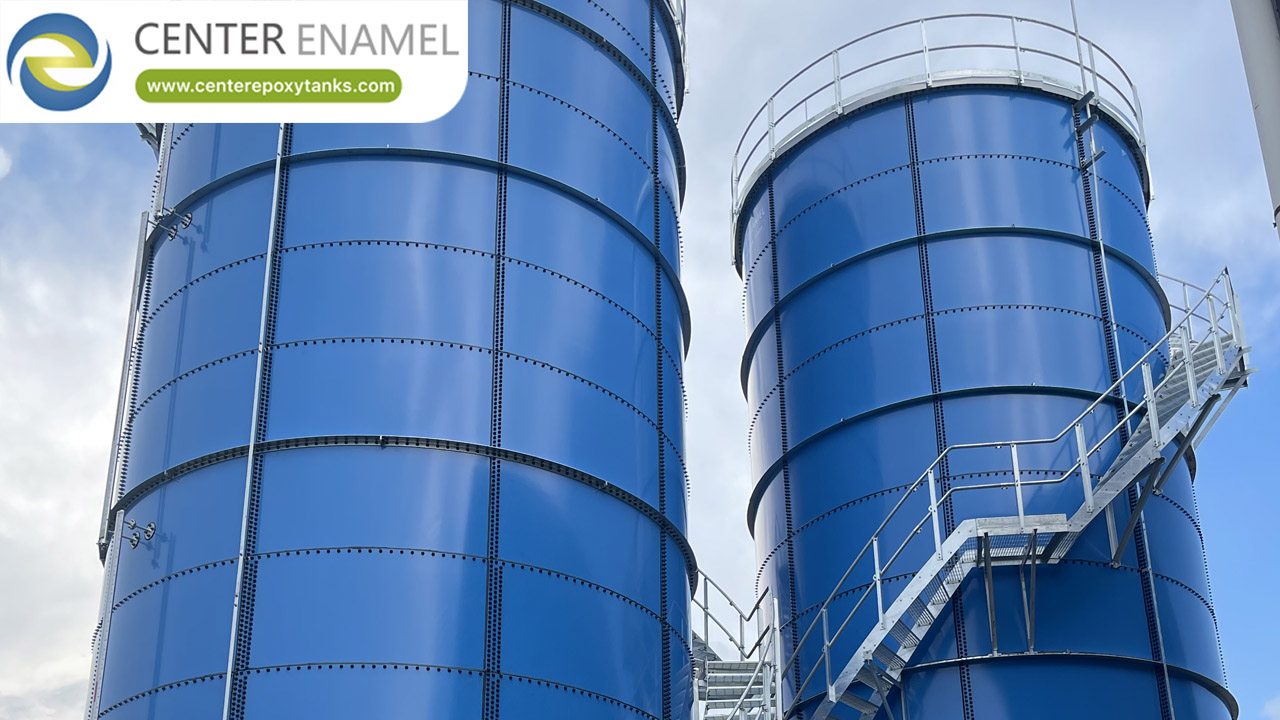
Epoxy-Coated Steel Tanks for Efficient Mesophilic Farm Digesters: Optimizing Agricultural Biogas Production
As modern agricultural enterprises face mounting economic and regulatory pressure to reduce carbon footprints, manage animal manure sustainably, and diversify revenue streams, mesophilic anaerobic digestion (AD) has become a pillar of green energy infrastructure. By transforming agricultural slurries, livestock manure, crop residues, and organic co-substrates into methane-rich biogas and high-nutrient organic fertilizers, farm-scale anaerobic digestion systems deliver reliable baseload renewable energy.
However, the biochemical environment inside an active farm digester is notoriously aggressive. Complex organic waste streams, volatile fatty acids, and dissolved hydrogen sulfide (H2S) gases combine to create a corrosive interior matrix that rapidly degrades conventional materials. To ensure uninterrupted biological activity, structural safety, and a multi-decade operating lifecycle, agricultural project developers increasingly rely on advanced epoxy-coated steel tanks for farm digesters, which offer a superior balance of chemical resistance, rapid installation, and structural integrity.
Core Operational Dynamics of Mesophilic Farm Digesters
Mesophilic anaerobic digestion typically operates within a stable temperature range of 35 °C to 38 °C (95°F to 100°F). While less sensitive to minor thermal fluctuations than thermophilic systems, mesophilic digesters demand precise thermal management, continuous hydraulic mixing, and absolute airtight containment to optimize methanogenic bacteria growth.
The interior of a farm digester splits into two distinct corrosive zones:
The Liquid Slurry Zone: Saturated with dense organic manure, suspended solids, active microbial biomass, and abrasive grit that challenge interior linings.
The Gaseous Headspace: Highly humid and rich in carbon dioxide (CO2) and hydrogen sulfide (H2S), which condense on upper walls to form weak sulfuric acids capable of destroying unprotected steel or deteriorating porous concrete.
Engineering Superiority: Fusion Bonded Epoxy (FBE) Technology
To protect containment walls from internal degradation without prohibitive capital expenditure, modern agricultural digesters utilize factory-applied fusion bonded epoxy biogas tanks:
Controlled Factory Application: High-tensile steel plates undergo automated abrasive grit-blasting followed by electrostatic powder spraying of specialized thermoset epoxy resins under strict, climate-controlled factory conditions.
Thermal Cross-Linking: The epoxy coating is baked at elevated temperatures to trigger an irreversible chemical cross-linking process, fusing the polymer directly into the steel substrate to create a smooth, non-porous, chemically inert barrier.
Chemical and Thermal Resilience: High-grade formulations maintain structural and chemical stability across a wide pH spectrum (typically pH 3 to 11) and withstand operational temperatures up to 60 °C (140°F), easily covering standard mesophilic and pasteurization requirements.
Technical Performance Matrix: Farm Digester Tank Options
Technical Parameter | Fusion Bonded Epoxy (FBE) Bolted Tanks | Cast-in-Place Concrete Digesters | Field-Welded Carbon Steel Tanks |
Coating Application & Curing | Factory-controlled electrostatic spray and thermal cross-linking | Porous bare concrete or field-applied sealants prone to micro-cracking | Field-applied liquid paints vulnerable to ambient humidity and application errors |
Construction Velocity & Modularity | Rapid modular bolted assembly completed in weeks by small crews | Slow civil construction requiring extensive formwork and multi-week curing cycles | Slow, labor-intensive field welding and complex coating inspections |
Chemical & Acid Resistance | High resistance to agricultural slurries, organic acids, and moderate H2S levels | Vulnerable to concrete carbonation and sulfuric acid attack over time | Prone to internal oxidation and weld-seam pitting without constant maintenance |
Relocation & Future Expansion | Modular design allows easy panel addition, capacity upgrades, or relocation | Permanent monolithic structure; impossible to modify, expand, or relocate | Fixed structure requiring complex cutting and re-welding |
Frequently Asked Questions (FAQ)
Q: Why are epoxy-coated steel tanks ideal for mesophilic farm digesters?
A: Epoxy-coated bolted steel tanks provide an optimal blend of cost-efficiency, chemical durability, and fast installation. Their factory-applied fusion bonded epoxy coating forms an impermeable barrier against abrasive agricultural slurries in the liquid zone and corrosive hydrogen sulfide gases in the headspace, ensuring a long operational lifespan.
Q: How do epoxy-coated digesters manage hydrogen sulfide (H2S) and organic acid corrosion?
A: High-grade fusion bonded epoxy coatings create a chemically inert, non-porous shield that isolates the underlying steel substrate from sulfurous gases, moisture, and volatile fatty acids generated during anaerobic digestion, preventing rust and pitting.
Q: Can epoxy-coated farm digester tanks be insulated to maintain mesophilic temperatures?
A: Yes. Because mesophilic digestion requires steady internal temperatures (35°C to 38°C), exterior insulation cladding—such as polyurethane foam panels protected by an outer weather jacket—can be seamlessly integrated onto modular bolted steel tanks to minimize heat loss in colder climates.
Q: How long does it take to construct an epoxy-coated bolted digester on a farm?
A: Unlike cast-in-place concrete tanks that require extensive civil work and weeks of concrete curing, modular bolted steel digesters are prefabricated off-site and can be erected by a compact specialist crew in a matter of weeks, significantly reducing site disruption and labor overhead.


