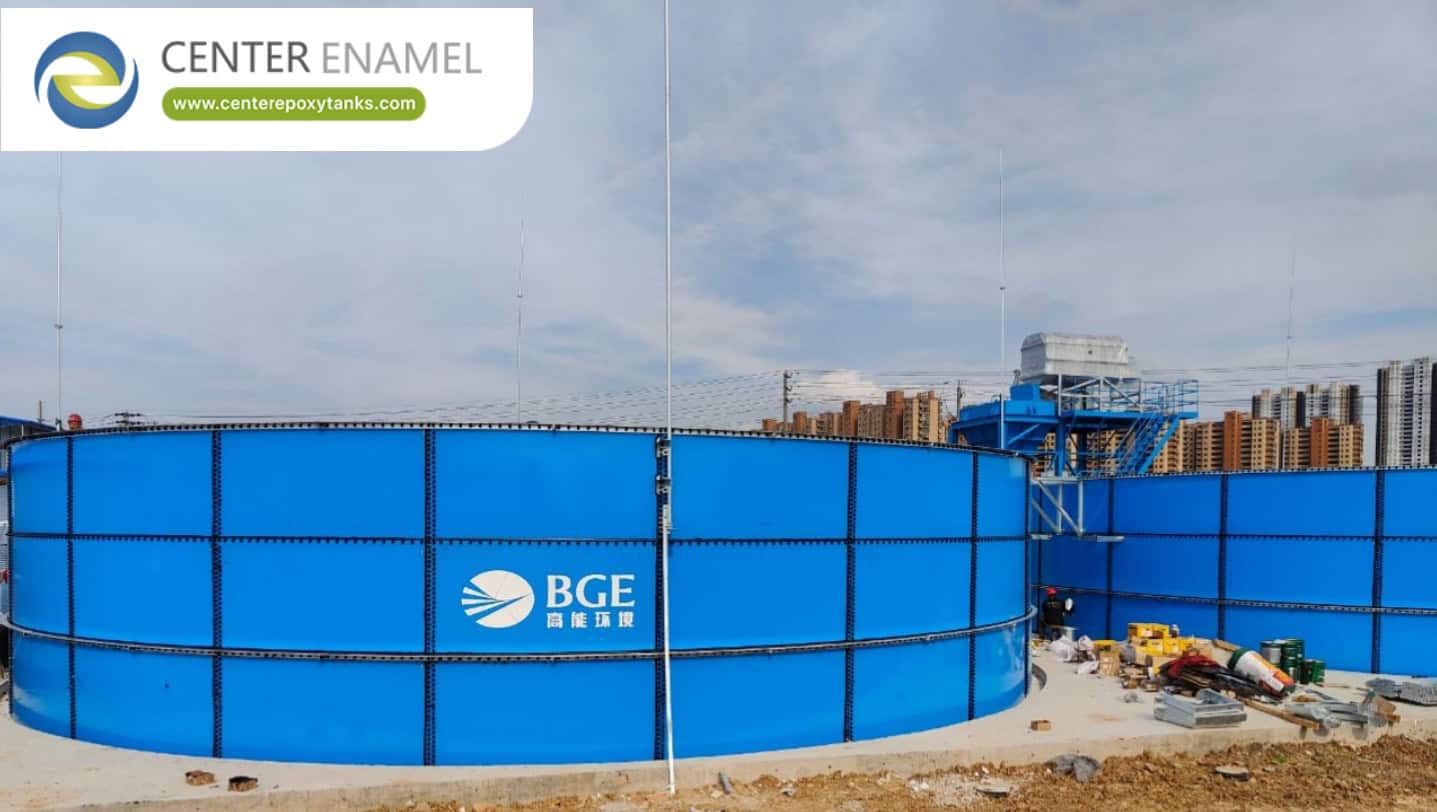
Innovative Fusion Bonded Epoxy (FBE) Tanks: Essential for Effective Industrial Wastewater Treatment
For industrial wastewater treatment facilities, the containment of corrosive effluents is not merely a storage requirement—it is a critical compliance mandate. Fusion Bonded Epoxy (FBE) tanks offer a sophisticated engineering solution by combining the structural strength of high-tensile steel with an electrostatically applied, thermally fused polymer barrier. This creates an impermeable, monolithic shell that resists chemical degradation, abrasion, and mechanical stress, making it an essential asset for modern wastewater treatment infrastructure.
1. The Science of Fusion Bonded Epoxy (FBE)
The effectiveness of FBE technology lies in the factory-controlled application process, which eliminates the inconsistencies inherent in field-applied linings.
Electrostatic Bonding: Epoxy powder is charged electrostatically and applied to the steel substrate. Unlike liquid paint, which settles, this process ensures total coverage, including edges, bolt holes, and complex geometries.
Thermal Fusion (Cross-Linking): The coated panels enter high-temperature curing ovens. This thermal process melts the powder into a continuous, non-porous film that cross-links chemically with the steel, creating a bond strength that exceeds standard mechanical adhesion.
Quality Assurance: Every FBE panel undergoes rigorous high-voltage "holiday testing" to detect microscopic defects. This ensures that the barrier remains 100% pinhole-free before the tank is even shipped to the job site.
2. Strategic Advantages for Wastewater Treatment
FBE tanks provide specific performance benefits that allow engineers to optimize treatment processes and reduce operational expenditure (OPEX).
Superior Chemical Resilience: FBE coatings are highly inert, preventing the substrate steel from contacting reactive effluents, acids, or alkalis often found in industrial wastewater (e.g., in mining, tannery, or petrochemical applications).
Field Repairability: Unlike glass-lined systems, which can be difficult to touch up on-site, FBE coatings allow for professional-grade, rapid field repairs if the surface is damaged during installation or maintenance, ensuring the tank's integrity is easily restored.
Modular Scalability: The bolted assembly design allows for the rapid construction of massive treatment basins without the need for on-site welding, which is fire-hazardous and time-consuming.
3. Comparative Material Performance
To assist in project procurement decisions, the following table compares FBE with other industry standards.
Feature | Fusion Bonded Epoxy (FBE) | Glass-Fused-to-Steel (GFS) | Concrete |
Chemical Resistance | High (Targeted) | Extreme (Universal) | Low (Needs Lining) |
Mechanical Impact | Excellent (Tough/Flexible) | Moderate (Brittle/Hard) | High (Structural) |
Installation Speed | Fast (Bolted/Modular) | Fast (Bolted/Modular) | Slow (Curing required) |
Field Repairability | High | Low | Moderate |
Primary Use Case | Industrial/Mining Effluent | Municipal/Biogas | General Storage |
4. Technical Standards and Compliance
For industrial facilities, reliability is measured by adherence to global engineering standards. FBE bolted steel tanks are designed to meet:
Coating Standards: Compliance with AWWA D103-09 and international coating specifications, ensuring that the FBE layer maintains elasticity and adhesion under thermal expansion and contraction.
Structural Integrity: Engineered for seismic zones and extreme wind-load environments, meeting or exceeding ISO and NFPA design criteria.
Operational Lifespan: Designed for a 30+ year service life, FBE tanks significantly reduce the Total Cost of Ownership (TCO) compared to traditional liquid-painted steel or maintenance-heavy concrete basins.
Summary for Procurement
The "essential" nature of FBE tanks stems from their ability to balance high-level protection with practical, rapid deployment. For projects that require a high degree of chemical resistance alongside the flexibility of modular bolted assembly, FBE offers a compelling, A-class industrial solution.


