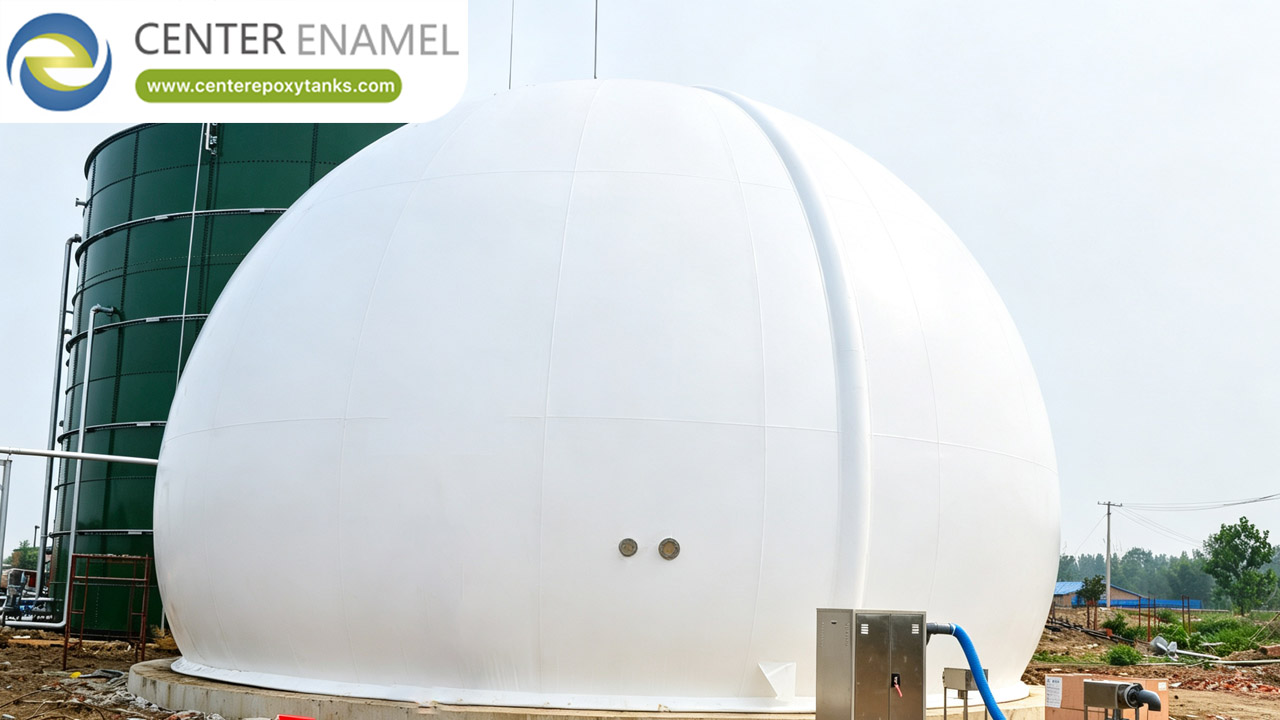
Double Membrane Biogas Holder for Efficient Wastewater Treatment on Livestock Farms: Maximizing Methane Recovery and Environmental Compliance
Intensive livestock farming operations—including dairy, swine, and poultry production facilities—generate immense volumes of high-strength organic wastewater and animal manure. Characterized by exceptionally high chemical oxygen demand (COD), biological oxygen demand (BOD), and suspended solids, untreated livestock effluent presents severe environmental challenges, ranging from groundwater contamination and severe odor emissions to fugitive greenhouse gas releases.
To convert environmental liabilities into a clean energy asset, modern livestock enterprises increasingly rely on anaerobic digestion (AD) systems paired with advanced containment infrastructure. At the heart of these modern waste-to-energy systems is the double membrane biogas holder, a specialized flexible storage solution designed to stabilize biogas output, safeguard conversion equipment, and streamline agricultural wastewater management.
The Role of Biogas Containment in Livestock Wastewater Treatment
When livestock manure and organic washwater undergo anaerobic digestion, specialized methanogenic bacteria break down complex organic compounds in an oxygen-free environment. This biological process yields a nutrient-rich digestate (ideal for organic crop fertilization) and a methane-rich biogas stream.
However, biological gas generation is continuous and variable, whereas farm energy equipment (such as combined heat and power [CHP] generators or boilers) operates on fluctuating demand cycles. Integrating a high-performance double membrane biogas holder provides essential operational benefits:
Intermediate Gas Buffering: It acts as a flexible buffer that accommodates daily volumetric peaks and troughs, ensuring a stable, uninterrupted fuel supply.
Pressure Stabilization: By utilizing an automated air-ballasting control system, it delivers a constant, uniform working pressure to downstream desulfurization units and generator sets.
Fugitive Emission Control: It provides a 100% hermetic seal that traps methane, mitigating farm-level carbon footprints and eliminating severe manure odors.
Engineering Superiority: Advanced Membrane Architecture
Unlike rigid steel or concrete gas storage tanks that suffer from severe sulfide corrosion, modern double membrane holders utilize high-strength, engineered technical textiles:
Inner Membrane: Directly seals and contains the raw biogas, expanding and contracting dynamically within the protective envelope based on current gas volumes.
Outer Membrane: Maintained under a constant, automated positive air pressure via an intelligent blower system, this external layer shields the inner gas chamber from wind, heavy rain, UV radiation, and snow loads.
Bottom Membrane (Floor-Standing Units): Provides an absolute ground-level or foundation seal when configured as an independent storage yard separate from the main digester or lagoon.
Corrosion-Proof Materials: Constructed from heavy-duty, PVC- or PVDF-coated polyester fabrics featuring high tear resistance, anti-fungal treatments, and certified resistance to trace hydrogen sulfide (H2S) concentrations up to 8,000 ppm.
Technical Performance Matrix: Livestock Biogas Storage Solutions
Technical Parameter | Double Membrane Biogas Holder | Legacy Fixed-Roof Steel Tanks | Wet-Seal Telescopic Gasholders |
Corrosion & Chemical Defense | Specialized PVDF/PVC coatings offer exceptional resistance to H2S and moisture | Prone to rapid internal oxidation, pitting, and structural thinning without repainting | High vulnerability to water-line corrosion and atmospheric oxidation |
Construction Velocity & Footprint | Rapid modular prefabrication and on-site assembly within 7 to 15 days | Slow, heavy civil and mechanical construction requiring extensive cranes | Complex mechanical installation requiring heavy civil foundations |
Operational Maintenance Overhead | Minimal upkeep; no sealing fluids or complex mechanical transmission parts | High ongoing maintenance requiring periodic sandblasting and protective recoating | Heavy maintenance involving water-seal sludge cleaning and seal oil management |
Pressure Regulation & Flexibility | Automated inter-membrane air balancing ensures smooth, constant output pressure | Rigid fixed capacity with zero allowance for dynamic volume buffering | Variable pressure dictated by liquid seal depth and mechanical weight |
Safety Systems and Environmental Compliance
Because agricultural biogas contains flammable methane gas, safety and operational reliability are paramount:
Multi-Tiered Safety Architecture: Integrated mechanical overpressure and underpressure relief valves protect structural integrity, while automated sensor arrays monitor blower status and gas levels in real-time.
Regulatory Alignment: Flame-retardant textiles conforming to DIN 4102 B1 standards ensure compliance with stringent agricultural and environmental safety codes.
Frequently Asked Questions (FAQ)
Q: How does a double membrane biogas holder improve livestock wastewater treatment efficiency?
A: By providing reliable intermediate gas storage and constant working pressure, it ensures that biogas captured from anaerobic digestion can be steadily fed into farm CHP engines or boilers without pressure drops or starvation issues, maximizing on-farm green energy utilization.
Q: Can double membrane gas holders withstand corrosive hydrogen sulfide (H2S) from livestock manure?
A: Yes. The inner and bottom membranes are manufactured from specialized polymer composites (such as high-density PVC/PVDF-coated polyester) engineered specifically to resist high concentrations of hydrogen sulfide, moisture, and organic acids typical of animal manure digestion, completely eliminating metal corrosion issues.
Q: Are double membrane gas holders mounted directly onto digesters or installed separately?
A: They offer complete installation flexibility. They can be mounted directly as integrated roofs on top of concrete or bolted steel anaerobic digester tanks, or they can be installed as independent, floor-standing units on concrete foundation pads depending on the farm layout.
Q: How does the outer membrane stay upright against severe weather and wind loads?
A: An automated support blower system maintains a constant, low-pressure air buffer in the space between the inner and outer membranes. This continuous positive pressure preserves the spherical contour of the holder and provides robust structural stability against wind, rain, and snow.


