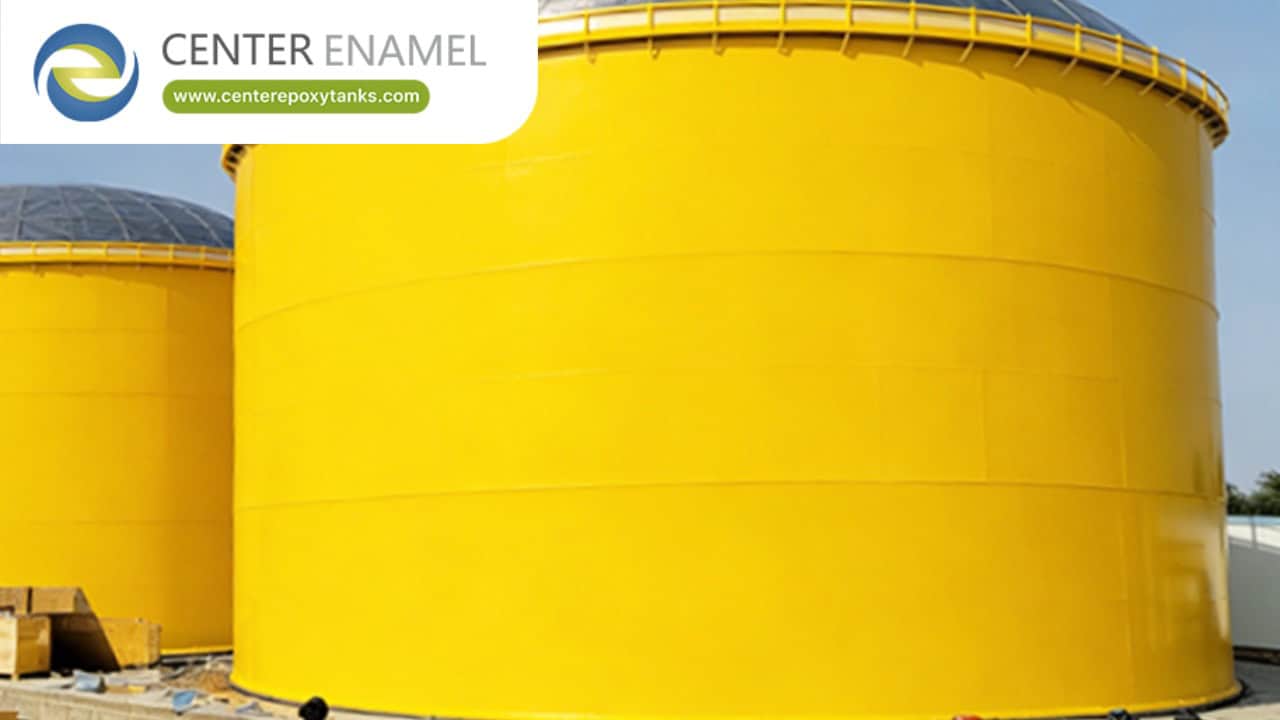
Do You Know the Advantages of Welded Steel Storage Tanks?
In industrial fluid containment—spanning petroleum bulk terminals, municipal water storage, chemical processing, and wastewater treatment—selecting the right tank construction method is critical to operational safety and long-term capital efficiency. Among industrial vessels, welded steel storage tanks represent the gold standard for high-capacity, heavy-duty liquid storage.
Unlike bolted tanks that rely on gaskets, sealants, and mechanical fasteners, welded tanks feature permanent, fused joints engineered to withstand immense hydrostatic pressures and aggressive environmental conditions. Understanding the core advantages of welded steel tanks explains why they remain the preferred choice for major industrial infrastructure worldwide.
1. Absolute Leak Prevention and Fluid Integrity
The most significant advantage of a welded steel storage tank is its continuous, impermeable shell structure.
·
Fused Metallic Seams: Plates are meticulously joined using certified welding procedures, creating a monolithic steel barrier. Because there are no gasketed seams, bolt holes, or sealant lines, the risk of joint weeping or product seepage is virtually eliminated.
·
·
Ideal for Hazardous and Volatile Media: For storing crude oil, refined fuels, aviation gasoline, and hazardous industrial chemicals, welded construction provides the absolute leak-tight containment required by strict environmental protection agencies.
·
2. Superior Structural Strength and Load-Bearing Capacity
Welded steel tanks offer exceptional structural rigidity capable of handling extreme external and internal forces:
·
Resistance to Hydrostatic Head Pressure: As tank diameters and heights increase to hold millions of gallons of liquid, the inward pressure on lower shell courses intensifies. Welded carbon steel plates (built to standards like API 650) provide the high tensile strength and yield capacity needed to withstand massive hydrostatic loads.
·
·
Seismic and Wind Resilience: Welded structures absorb and distribute wind shear loads and seismic energy more uniformly across the shell and foundation anchor rings, minimizing localized stress concentrations.
·
3. Lower Long-Term Maintenance and Lifecycle Costs
While field erection requires skilled welding labor, welded tanks offer superior economic value over their operational lifecycle:
·
Zero Bolt Maintenance: Bolted tanks require periodic inspection and torque re-tightening of thousands of individual bolts, alongside routine gasket replacements. Welded tanks eliminate fastener maintenance entirely.
·
·
Streamlined Coating and Lining Integrity: Smooth interior and exterior welded surfaces simplify the application and upkeep of high-performance epoxy linings and exterior protective paint systems, reducing corrosion risks.
·
Data Table: Welded Steel Tanks vs. Bolted Steel Tanks Matrix
Evaluation Parameter | Welded Steel Storage Tanks | Bolted Steel Storage Tanks |
Seam Construction | Fused steel plates via continuous welding | Mechanically fastened plates with gaskets and sealants |
Leakage Risk | Extremely low (Monolithic, leak-tight barrier) | Moderate (Dependent on gasket and sealant longevity) |
Structural Capacity | High; ideal for massive field-erected multi-million gallon tanks | Moderate; frequently used for smaller or modular capacities |
Maintenance Overhead | Minimal fastener upkeep; routine coating and UT inspections | Requires periodic bolt torque checks and gasket replacements |
Governing Standards | API 650, API 620, AWWA D100 | AWWA D103, ISO |
Frequently Asked Questions (FAQ)
Q: What is the main advantage of a welded steel storage tank over a bolted tank?
A: The primary advantage is absolute leak prevention. Welded tanks use continuous, fused metal joints that eliminate gaskets and mechanical fasteners, providing superior fluid integrity for hazardous or high-volume liquids.
Q: Are welded steel tanks built on-site or in a factory?
A: Smaller welded tanks can be shop-fabricated and transported intact, while large-scale industrial storage tanks are field-erected, meaning steel plates are shipped to the site and welded together by certified technicians.
Q: What engineering standards govern welded steel storage tanks?
A: Welded metallic storage tanks are primarily designed, fabricated, and tested in accordance with international standards such as API 650 (for atmospheric petroleum tanks) and AWWA D100 (for municipal water storage).
Q: Do welded steel tanks require less maintenance than bolted tanks?
A: Yes. Because welded tanks have no bolts or gaskets, they eliminate fastener torque maintenance, leaving operators to focus primarily on routine exterior coatings, cathodic protection, and periodic ultrasonic thickness testing.


