How Does a Floating Roof Tank Work? Mechanics, Operation, and Design
In industrial bulk storage—spanning crude oil terminals, petroleum refineries, and chemical processing plants—managing volatile liquids requires advanced engineering. Traditional fixed-roof tanks leave an empty air pocket (ullage) above the liquid, which triggers dangerous vapor accumulation, evaporative product loss, and harmful emissions.
To solve this, industry standards rely on floating roof tanks. But exactly how does a floating roof tank work? By combining simple fluid buoyancy with sophisticated mechanical sealing systems, these tanks create a dynamic barrier that eliminates vapor space entirely.
1. The Core Operating Principle: Buoyancy and Dynamic Movement
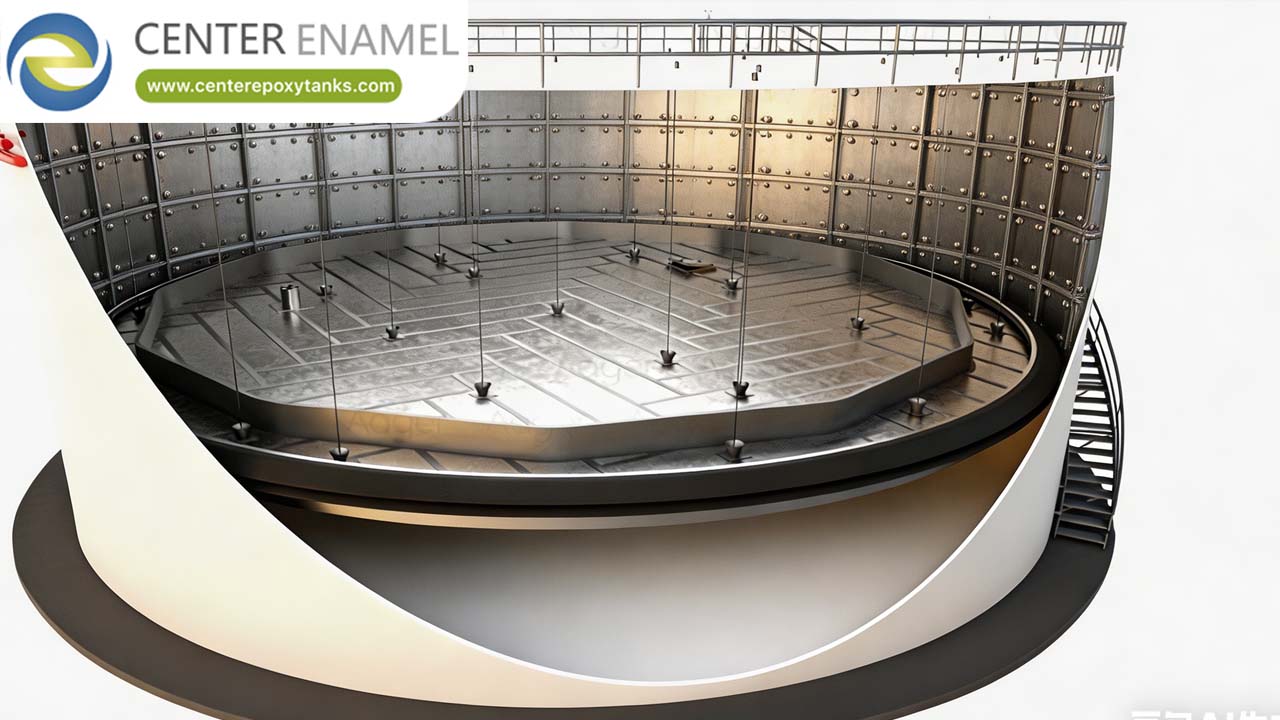
The fundamental mechanism of a floating roof tank is straightforward: the roof floats directly on top of the liquid product, rising and falling dynamically as fluid is pumped in or drawn out.
·
Filling Phase: As liquid is pumped into the tank from the bottom, the fluid level rises. The buoyant deck lifts off its support legs and floats upward on the liquid surface, maintaining constant, direct contact with the product.
·
·
Storage Phase: The roof remains stationary relative to the fluid level, completely eliminating the vapor headspace (ullage) where volatile organic compounds (VOCs) would otherwise form.
·
·
Draining Phase: As product is withdrawn for processing or distribution, the liquid level drops. The floating roof slides downward smoothly along the tank shell, guided by anti-rotation devices until it rests back on its support legs at the tank bottom.
·
2. Key Mechanical Components That Enable Operation
To function safely and efficiently under heavy industrial duty, a floating roof relies on several integrated mechanical subsystems governed by API 650 standards:
·
The Buoyant Deck (Pontoons or Double-Deck): Engineered with internal air-tight compartments (pontoons) or continuous double-deck plates that provide sufficient buoyancy to keep the entire structure afloat without tilting or submerging.
·
·
Rim Seals (Primary and Secondary): The narrow gap between the floating roof's outer edge and the inner tank shell is sealed using flexible mechanical shoes, resilient foam logs, and wiper blades. These seals trap escaping vapors while allowing the roof to slide up and down freely.
·
·
Rolling Ladders and Roof Drains (External Roofs): For external floating roofs (EFRs), articulating rolling ladders provide safe operator access regardless of roof height, while flexible internal drainage pipes safely channel accumulated rainwater off the deck and out of the tank.
·
·
Anti-Rotation Systems: Guide poles or cable systems prevent the circular roof from twisting or rotating within the vertical cylindrical shell as it moves.
·
Data Table: Floating Roof Tank Component Mechanics Matrix
Tank Component | Mechanical Function | Engineering Design Consideration |
Buoyant Deck Plate | Floats directly on liquid, eliminating vapor headspace | Designed for specific product specific gravity (e.g., $0.7text{ to }1.0$) |
Primary & Secondary Rim Seals | Seals the annular gap between roof edge and tank shell | Prevents VOC emissions and withstands continuous sliding wear |
Flexible Roof Drain | Channels rainwater off external floating decks | Prevents water accumulation and potential roof sinking |
Rolling Stairway / Ladder | Provides constant physical access to the moving deck | Articulating hinge joints accommodate full vertical travel |
Support Legs | Holds the roof stationary during complete tank emptying | Adjustable pin-height settings for maintenance access |
Frequently Asked Questions (FAQ)
Q: How does a floating roof move up and down without mechanical motors?
A: A floating roof operates entirely through fluid buoyancy and gravity. As liquid is added, the upward pressure of the rising fluid lifts the buoyant roof; as liquid is withdrawn, gravity pulls the roof downward, requiring no external electric motors or hydraulic drives.
Q: What prevents liquid from leaking through the gap around the edges of the roof?
A: A specialized rim seal system (comprising primary shoes/seals and secondary weather wipers) bridges the narrow gap between the floating deck and the tank shell, maintaining a tight barrier that prevents vapors from escaping.
Q: What happens to rainwater that falls onto an external floating roof?
A: Rainwater collects on the central deck of an external floating roof and is safely channeled away through a flexible, articulated drainage pipe system connected to a sump valve on the outside of the tank.
Q: What engineering standards govern the operation and design of floating roof tanks?
A: Floating roof tanks are strictly engineered, fabricated, and operated in accordance with international standards, primarily API 650 (specifically Annex C for external roofs and Annex H for internal floating roofs).


