Difference Between Fixed and Floating Roof Tanks: Comprehensive Engineering Comparison
In the design, engineering, and operation of industrial bulk liquid terminals, selecting the correct tank architecture is critical for safety, environmental compliance, and capital efficiency. The fundamental distinction between industrial storage vessels lies in how they manage the headspace above the stored liquid.
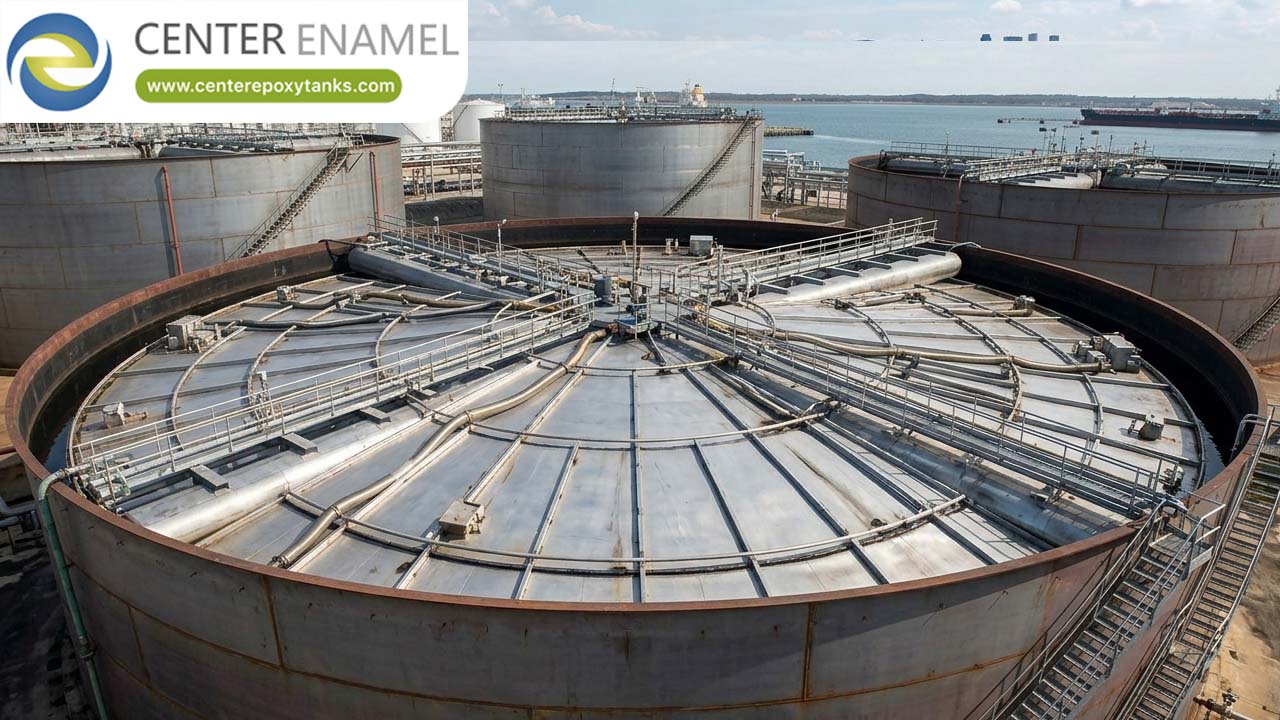
Fixed roof tanks feature a permanently attached roof structure welded or bolted to the tank shell, leaving a large vapor space (ullage) between the liquid surface and the roof. In contrast, floating roof tanks utilize a movable deck that rests directly on the liquid surface, rising and falling dynamically with inventory levels to eliminate this vapor space entirely.
1. Overview of Fixed Roof Tanks
A fixed roof tank is an atmospheric storage vessel featuring a permanently attached roof—typically conical, domed, or flat—secured directly to the top of the cylindrical tank shell in compliance with standards like API 650.
·
Vapor Space Mechanics: Because the roof is static, a large air pocket (ullage) exists above the liquid. As ambient temperatures fluctuate or tanks are filled and emptied, this vapor space expands and contracts, driving "breathing losses" and "working losses" that vent hydrocarbon gases into the atmosphere.
·
·
Primary Applications: Ideal for storing low-volatility liquids, heavy fuel oils, lubricants, industrial wastewater, and non-hazardous products like water or dry bulk aggregates.
·
2. Overview of Floating Roof Tanks
A floating roof tank is engineered specifically to contain volatile organic liquids by eliminating the internal vapor space. The roof floats directly on the liquid product, utilizing perimeter rim seals to close the gap between the deck and the tank shell wall. Floating roofs are categorized into Internal Floating Roofs (IFRs) housed beneath a fixed outer roof and External Floating Roofs (EFRTs) exposed directly to the open atmosphere.
·
Vapor Space Mechanics: By resting directly on the liquid surface, floating roofs suppress evaporation, drastically cutting volatile organic compound (VOC) emissions by up to 99%.
·
·
Primary Applications: Mandatory for storing highly volatile products such as crude oil, aviation jet fuel, gasoline, and petrochemical solvents.
·
Data Table: Fixed-Roof vs. Floating-Roof Tanks Technical Comparison
Technical Parameter | Fixed Roof Tank | Floating Roof Tank (IFR / EFRT) |
Roof Structure | Permanent static roof (Cone, dome, or flat plate) | Movable deck resting directly on liquid surface |
Vapor Space (Ullage) | Large air pocket between liquid and roof | Virtually zero vapor space |
VOC & Evaporative Loss | High (Vulnerable to breathing and working losses) | Extremely low (Suppressed by deck and rim seals) |
Explosion / Fire Risk | Higher (Accumulates flammable vapor-air mixtures) | Minimized (No headspace vapor pocket to ignite) |
Suitable Product Volatility | Low volatility (Water, heavy oil, diesel, asphalt) | High volatility (Crude oil, gasoline, aviation fuel, solvents) |
Capital & Maintenance Cost | Low initial cost; higher environmental compliance overhead | Moderate to high initial investment; minimal product loss |
Frequently Asked Questions (FAQ)
Q: What is the fundamental difference between fixed and floating roof tanks?
A: The core difference lies in the roof configuration. A fixed roof tank has a static, permanently attached roof that leaves a large air space (ullage) above the liquid, whereas a floating roof tank features a movable deck that rests directly on the liquid surface, eliminating the headspace.
Q: Why do floating roof tanks provide superior VOC emission control?
A: In fixed-roof tanks, temperature changes cause the vapor space to expand and push hydrocarbon gases out of the tank. By keeping the deck in direct contact with the liquid surface, floating roof tanks eliminate this vapor pocket, drastically curbing evaporative losses.
Q: Can a fixed roof tank be retrofitted into a floating roof tank?
A: Yes. Many industrial facilities perform cost-effective retrofits by installing an internal floating deck inside an existing fixed-roof tank shell, creating an internal floating roof tank (IFRT) to improve VOC emission compliance without building a new vessel.
Q: Are fixed roof tanks safe for storing volatile crude oil?
A: Generally, no. Storing crude oil or gasoline in a standard fixed-roof tank creates a hazardous, flammable vapor-air mixture in the headspace, requiring continuous vapor recovery units, inert gas blanketing, or upgrading to a floating roof design.


