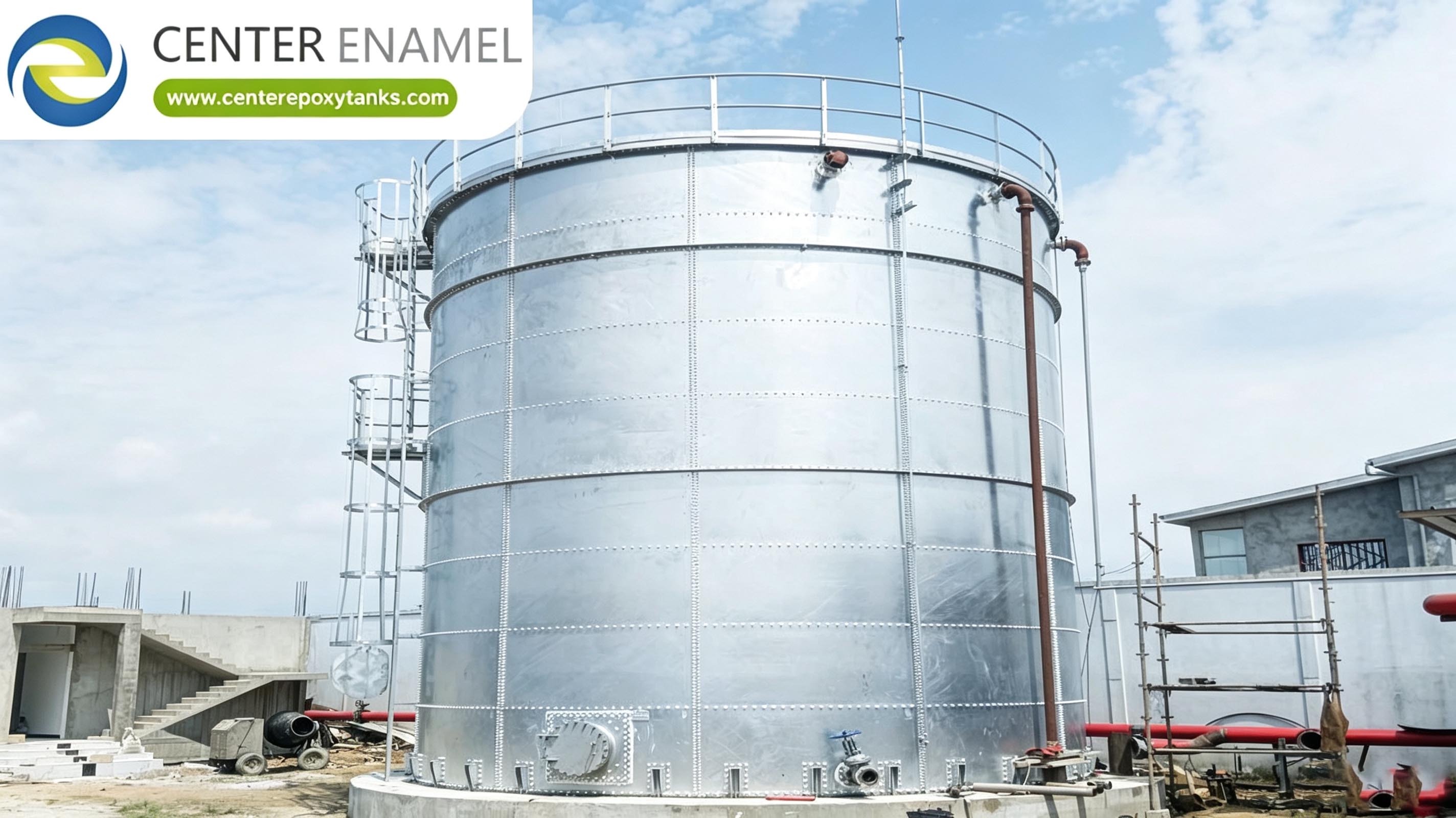
Data Centre Water Tank Supplier: Scope, Lead Time And Technical Support
A data centre water tank delivery date follows from where the scope boundary is drawn: design, supply and installation each carry their own activities and float. Compare suppliers on the same scope, write the boundary and the interface responsibilities into the contract, and treat supplier technical support as design-backup with clear limits, not as a substitute for the engineer of record or the site contractor.
Introduction
The risk in buying a data centre water tank is rarely the steel; it is the boundary between what the supplier does and what the site does. A proposal that says tank supplied can mean a shell on a truck, a shell with coating and roof, or a shell erected, tested and handed over complete, and each boundary changes the lead time, the interface risk and the price in ways a single line item hides.
This article treats scope as the main risk and works through it from the buyer's side. It separates design, supply and installation, states what a supplier normally commits to in each, shows how the scope boundary moves the delivery date, builds a realistic programme from those pieces, sets the limits of supplier technical support, explains what happens when the ground differs from the drawing, and shows how to write the boundary into the contract so two suppliers are compared on the same promise.
The three scopes: design, supply and install
Three scopes sit inside any tank purchase, and confusion starts when they are not named separately. Design covers the tank calculation, the structural and seismic basis, the nozzle and appurtenance schedule and the drawings. Supply covers the fabricated and coated tank, the roof, the appurtenances and the hardware that arrives on site. Installation covers unloading, erection, anchorage to the foundation, piped connections, testing and handover.
A supplier may take one, two or all three, and the same word, supply, can mean a shell only or a complete erected tank depending on who writes the order. The first discipline in procurement is to state which of the three you are buying before you ask for a price, because a number that looks low often simply excludes a scope the other bid included. The boundary also decides who carries the interface risk between the tank and the foundation, the pipework and the controls.
What the supplier commits to in each scope
In a design scope the supplier commits to calculations and drawings it can defend, to the named standard, and to the loading and seismic basis the site data provides. In a supply scope it commits to delivering the tank and its appurtenances to the approved drawings, coated to specification, with the material and weld records that prove it. In an installation scope it commits to erecting the tank on the prepared foundation, making the connections, testing and handing over a working asset.
The commitment that matters most is the one at the boundary. A supply-only supplier should still provide the foundation loading schedule and the anchorage details, because the site engineer cannot design the foundation without them, and an install supplier should commit to the test and the as-built record. Read the commitment clause, not the headline, and list what is explicitly excluded, because exclusion is where disputes begin.
How scope changes the lead time
The delivery date is the sum of the longest path through the three scopes, and moving the boundary moves the date. A supply-only tank that the buyer erects adds the buyer's erection and test float to the critical path; a turnkey tank bundles those inside the supplier's programme. The activities that dominate are engineering release, shop fabrication and coating, transport, and site erection and test, and each has its own minimum duration set by the volume and the method.
A referenced export project in Fujian, China, completed in 2019, illustrates supply-scope delivery at distance, though the recorded application differs from this article's subject and the volumes were not published. The lesson from such references is about the supply sequence, not a specific duration. When you compare lead times, confirm each supplier counted the same activities; a short date that omits transport, coating cure or the acceptance test is not a fast programme, it is an incomplete one.
The structure of a realistic delivery programme
A defensible programme lists the activities in sequence with their dependencies, not a single promised month. Engineering and drawing approval run first and gate fabrication; shop fabrication and factory coating run in parallel where the method allows; transport is booked against the fabrication finish; site erection, anchorage and piped connections follow the foundation being ready; and the acceptance test closes the work. Each handover between parties is a milestone with an owner.
Build the programme with float shown, because the date you are promised is only as good as the activity it sits on. A realistic plan also names the long-lead items, coatings with cure time, heavy transport, and any code-stamped items, and it states who releases each gate. When a supplier cannot show this level of detail, the date is a hope; when it can, the date is something the project schedule can be built around.
Technical support and its limits
Supplier technical support is real but bounded. Before order it helps with selection, sizing basis, nozzle schedules and the interface with the foundation and the pipework. During fabrication it answers queries on the drawings and the standard. During erection it sends supervisors or responds to field questions, and after handover it supports maintenance and any coating repair. This support is valuable because the supplier knows the tank it built.
The limit is authority. Supplier technical support does not replace the engineer of record, who signs the foundation and anchorage design, or the site contractor, who owns the erection safety and the means and methods. A supplier that offers to design the foundation or to approve the site installation is taking a role the project's professional boundaries assign elsewhere. Use the support for clarification and coordination, and keep the sign-offs where the codes and the contract put them.
What happens when site conditions differ from the drawing
Site reality diverges from the drawing often enough that the contract should say what happens when it does. The common gaps are the foundation not matching the loading schedule, the anchor bolt pattern off, the access or crane path different from assumed, or the water source and connection points moved. Each is a change that touches cost, date or both, and the absence of a clause turns it into a dispute.
The clean handling is a defined variation process: the supplier notifies the discrepancy, both parties assess the impact on scope, date and price, and the change is agreed before the work proceeds. Where the tank design itself must change, the revision is re-issued and the relevant test or inspection updated. The drawing is the contract baseline, so anything that departs from it needs a recorded decision, not a verbal fix at the site fence.
Comparing supplier commitments
Two programmes that arrive with different scope boundaries cannot be compared on price or date until you normalise them. Put each supplier's commitment into one table: which of design, supply and install it takes, the standard and calculations it provides, the appurtenances included, the test and acceptance it performs, the technical support it offers and the exclusions it lists. The date then means the same thing for both.
A lower price that stops at supply, or a shorter date that omits the acceptance test or the coating cure, is not a better bid, it is a narrower one. Score the commitments against your required scope and let the differences show. The supplier whose commitment matches your actual need, with the interface responsibilities written down, is the one whose number you can trust, even if it is not the lowest on the page.
Writing the scope into the contract
The contract is where the scope stops being ambiguous. State explicitly which of design, supply and install the supplier performs, list the deliverables for each with the standard named, set the interface responsibilities, the foundation loading schedule, the anchorage details, the test and acceptance, and the document register, and define the variation process for site divergence. Name the milestones and who releases each gate.
Keep the exclusions visible rather than buried, because an exclusion the buyer did not read is a risk the buyer accepted. Require the supplier's technical support scope and limits in writing, and confirm that sign-offs for foundation and site safety remain with the engineer of record and the site contractor. A contract written this way lets two suppliers be compared on one promise and lets the project execute without a scope argument every time the ground differs from the drawing.
Lead-Time Decomposition By Scope
Phase | Activity | Scope owner | Typical driver |
Engineering | Calc + drawings release | Design | Volume, standard |
Fabrication | Shell + coating in shop | Supply | Volume, coating cure |
Transport | Delivery to site | Supply / Install | Logistics, access |
Erection | Assemble + anchor | Install | Foundation ready |
Test | Acceptance test | Install | Named hold point |
Supplier Commitment Comparison
Commitment | Supplier A | Supplier B | Notes |
Design | Yes / No | Yes / No | Calcs + standard named |
Supply | Yes | Yes | Coated shell + appurtenances |
Install | Yes / No | Yes | Erection + test |
Tech support | Defined | Defined | Limits stated |
Exclusions | Listed | Listed | Compare like-for-like |
Date basis | Same activities | Same activities | Else not comparable |
Location | Service | Total Storage Volume | Year |
Fujian, China | application not stated in source | volume not stated in source | 2019 |
About Center Enamel
Center Enamel (Shijiazhuang Zhengzhong Technology Co., Ltd.) designs and fabricates bolted steel storage tanks, welded steel tanks, fusion-bonded epoxy tanks, galvanized tanks, stainless steel vessels, pressure vessels, aluminum geodesic dome roofs and floating roofs. The company has more than 30 years of production experience and has supplied equipment to projects in more than 100 countries. Aluminum geodesic dome roofs are designed and fabricated to API 650 Appendix G, AWWA D108, the Aluminum Design Manual, ASCE 7 and IBC, and the company developed and exported a 72 m diameter aluminum dome roof in 2023. Engineering, fabrication, coating, quality control and site service are handled as one scope, which is why the drawings, the calculation basis and the delivered hardware can be reconciled against each other.
Frequently Asked Questions
What is included in a water tank supply scope?
A supply scope normally covers the fabricated and coated tank shell, the roof, the appurtenances and the hardware delivered to site to the approved drawings, with the material, weld and coating records that prove it. It usually excludes the foundation, the site erection and the piped connections unless the order states otherwise. Even supply-only, the supplier should provide the foundation loading schedule and anchorage details, because the site engineer cannot design the foundation without them.
How long does a data centre water tank take to deliver?
The date is the longest path through engineering release, shop fabrication and coating, transport, and site erection and test, and each activity has a minimum set by the volume and method. A supply-only tank adds the buyer's erection float; a turnkey tank bundles it inside the supplier's programme. Compare dates only after confirming each supplier counted the same activities, because a short date that omits transport, coating cure or the acceptance test is an incomplete programme, not a fast one.
What is the difference between supply and installation scope?
Supply delivers the tank and hardware to site; installation erects it on the prepared foundation, makes the connections, tests and hands it over. The boundary decides who carries the interface risk with the foundation and the pipework and who owns the erection safety. A supply-only price is lower precisely because it excludes those activities, so the comparison with an installed price must add the buyer's own erection, test and commissioning cost to be fair.
What technical support should a supplier provide?
Expect support through selection and sizing, nozzle and appurtenance schedules, the foundation and pipework interface, drawing queries during fabrication, site supervision or field responses during erection, and maintenance and coating-repair guidance after handover. This support does not replace the engineer of record, who signs the foundation and anchorage, or the site contractor, who owns erection means and methods. Use it for coordination and clarification, and keep the professional sign-offs where the codes place them.
How do I compare two supplier programmes?
Normalise the scope first: state which of design, supply and install each takes, the standard and calculations provided, the appurtenances and test included, the technical support offered and the exclusions listed, then the dates mean the same thing. A lower price that stops at supply or a shorter date missing the acceptance test is a narrower scope, not a saving. Score commitments against your required scope and trust the supplier whose promise matches your need with interfaces written down.
What happens if site conditions differ from the drawings?
The contract should define a variation process: the supplier notifies the discrepancy, both parties assess the impact on scope, date and price, and the change is agreed before work proceeds. If the tank design itself must change, the revision is re-issued and the affected test or inspection updated. The drawing is the baseline, so any departure needs a recorded decision, not a verbal fix at the site fence, or it becomes a dispute later.
How should the scope be written into the contract?
State explicitly which of design, supply and install the supplier performs, list the deliverables and the named standard for each, set the interface responsibilities, the foundation loading schedule, the anchorage details, the test and acceptance and the document register, and define the variation process. Keep exclusions visible, put the supplier's support scope and limits in writing, and confirm that foundation and site-safety sign-offs stay with the engineer of record and the site contractor.
The date you are promised for a data centre water tank is an output of the scope boundary, not a number attached to the steel. Draw the line between design, supply and installation deliberately, because each boundary sets who carries the interface risk, how long the critical path runs and what the price actually covers. A programme that names its activities, its gates and its long-lead items is a date the project can plan around.
Write the boundary into the contract, name the exclusions, define the variation process for when the ground disagrees with the drawing, and keep supplier technical support in its proper place beside the engineer of record and the site contractor. Send us the scope you want and the site constraints, and we will return a commitment table and a delivery programme that two bidders can be measured against on equal terms.
Talk To Our Engineering Team
Send the duty, the volume basis, the governing code and the site constraints, and our engineering team will come back with a specification that a supplier can price and a reviewer can approve. We will also tell you plainly when a different tank type or a different scope is the better answer.


