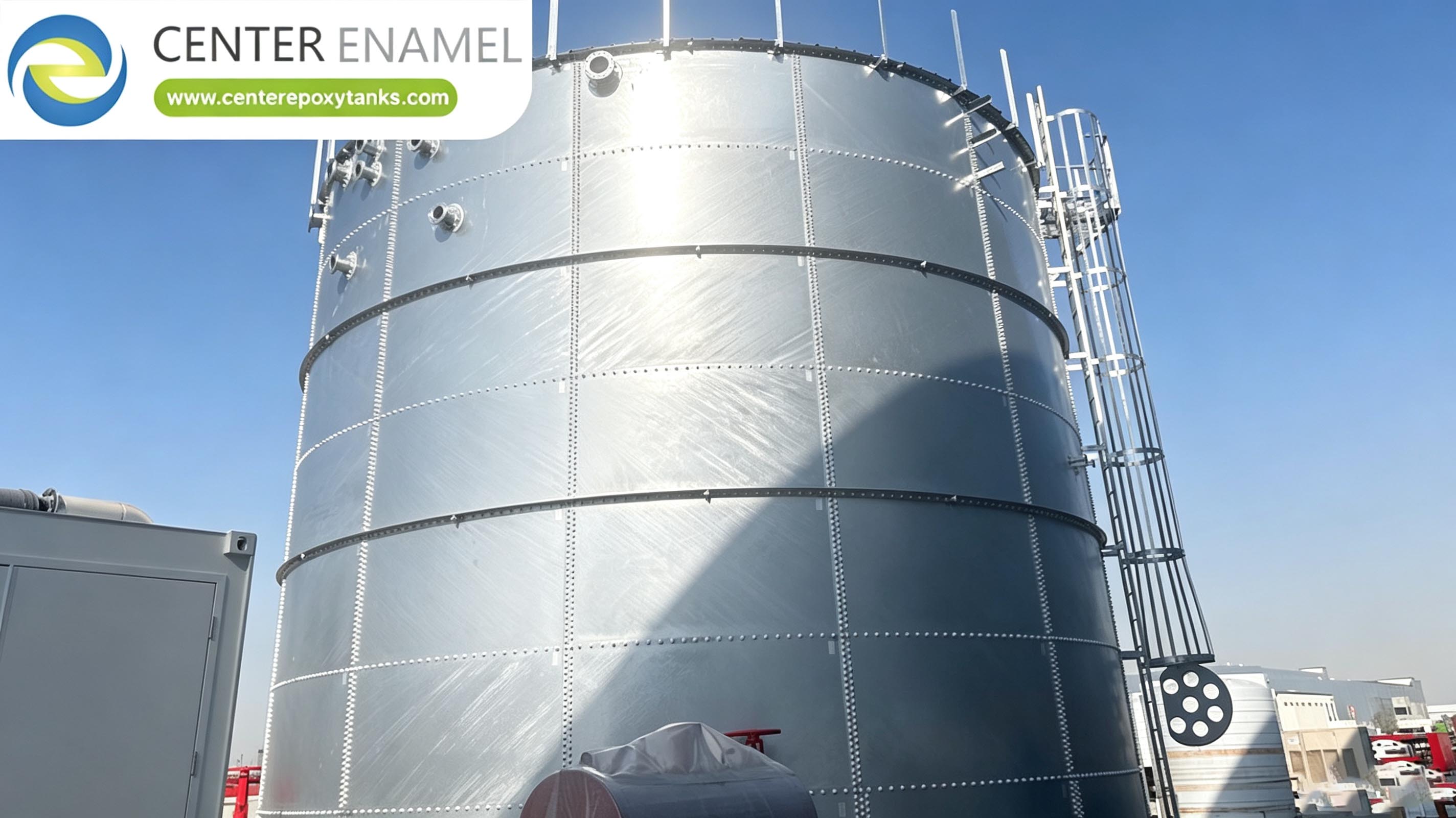
Diesel Storage Tank: Selection, Siting, Containment And Compliance
Start a diesel storage selection from the duty - the volume and refill strategy that meet the required run time - then choose listed or unlisted and aboveground or underground construction, and let the code set the separation, containment volume and spill-plan threshold. NFPA 30 governs siting and venting, EPA 40 CFR 112 triggers a written spill plan once aggregate aboveground storage passes 1,320 U.S. gallons, and the operating records are what keep the system compliant after handover.
Selecting a diesel storage tank for standby power starts with the duty and ends with the paperwork, and most of the decisions in between are governed by codes the tank itself does not mention. The vessel is one component of a system that also includes piping, containment, venting, overfill protection and the records a regulator or insurer will ask for years after installation.
This article works outward from the duty: the storage volume and the refill strategy that support the required run time, then the construction choice between a listed and an unlisted tank and between aboveground and underground, then the siting, separation and containment a site has to provide. It closes on the environmental threshold that triggers a written spill plan and the operating records that follow.
The governing references are NFPA 30 for flammable and combustible liquid storage, NFPA 110 for emergency power, UL 142 for the tank construction and EPA 40 CFR Part 112 for spill prevention. A standard is not a certification, and the listing is one layer of a compliant installation rather than the whole of it.
What the diesel storage system consists of
A diesel storage system is the tank plus everything attached to it and the ground it sits on. The tank is the vessel; the system is the tank, the piping to and from it, the secondary containment, the vent and overfill protection, any monitoring, and the foundation or basin that supports it. Specifying one part and ignoring the rest is how a compliant-looking tank fails at the boundary.
The boundary also includes the loading arrangement - how fuel arrives from the delivery truck - and the connection to the day tank or engine that draws from it. Each of those connections is a place where a leak, a vapour path or an overfill can occur, so the system definition should name them. The construction standard for the tank and the installation standard for the system are different documents, and both apply.
The duty: volume, turnover and refill
The duty sets the volume. The required on-site run time from the emergency power design, multiplied by the engine consumption, gives the usable storage the site must hold; the nominal tank volume then adds margin for unusable volume at the bottom of the tank and for the level the pump cannot draw below.
The refill strategy is the second half. A site that can be replenished quickly by regular deliveries can hold less than one that must ride out a long supply interruption, and the delivery frequency also affects fuel quality, because fuel that turns over stays fresher than fuel that sits. The volume and the refill plan are decided together, not sequentially, because each constrains the other.
Listed versus unlisted construction
A listed tank is built to a published product standard - for an aboveground diesel tank that is UL 142 - and produced under a follow-up program, so the delivered unit can be verified against the listed model. An unlisted tank may be built to a construction code or a custom specification, often field-erected, and its compliance is demonstrated through the design and fabrication records rather than a product listing.
The choice is a trade-off, not a quality ranking. A listed tank gives a verifiable, repeatable basis and is what most generator fuel specifications ask for; an unlisted or field-built tank may be needed for a size or configuration a listed product does not cover. Either way the listing, where present, proves the tank construction - it does not by itself satisfy the installation rules of NFPA 30.
Aboveground versus underground
Aboveground storage is the common choice for generator fuel because the tank is visible, inspectable and serviced without excavation, and leaks are apparent. Aboveground tanks fall under UL 142 for construction and NFPA 30 for installation. Underground storage uses different construction (UL 58 for the tank) and brings cathodic protection, leak-detection and registration obligations that aboveground tanks do not.
The decision turns on site constraints and risk tolerance. Underground tanks save footprint and reduce fire-exposure concerns at the surface, but they hide the vessel and shift the failure mode from visible spill to concealed release that must be detected. Aboveground places the tank where you can see it and contain it, at the cost of surface separation and freeze protection. Neither is universally correct; the site data decides.
Siting and separation distances
Siting is where NFPA 30 and the fire code take over from the tank standard. Separation distances from buildings, property lines, ignition sources and other tanks scale with the stored quantity and with whether the tank is protected, and the code tables assign the actual numbers for the capacity you specify. The listed tank does not set these distances; the fire code does.
The practical task is to read the relevant table for your capacity and tank type, apply any reductions the code allows for protected construction or fire protection, and lay the tank out so the distances are real on the site plan, not just on paper. Ignition sources nearby - vehicles, equipment, electrical classification - are part of the same siting calculation, because the separation is from hazards, not just from walls.
Containment volume and the options for providing it
Secondary containment catches what the tank wall does not. The volume to provide is set by the code or the environmental rule for the stored quantity: a common basis is containment equal to the full tank volume, and some provisions require more where multiple containers share a area. The containment can be a diked or curbed region around an aboveground tank, a basin under it, or the integral interstitial space of a double-wall tank.
The option you choose depends on the site. A diked area is simple and inspectable but uses footprint; a double-wall tank builds the containment into the vessel and frees surface area but still may need further site containment depending on the rule. The containment must also be drained or removed of any accumulated liquid, so the design includes how a captured release is recovered, not only how it is caught.
The environmental threshold and the written plan
The environmental threshold arrives through EPA 40 CFR Part 112, the Spill Prevention, Control and Countermeasure rule. A facility with a reasoned possibility of discharging oil to navigable waters, and with aggregate aboveground oil storage capacity above 1,320 U.S. gallons (about 5,000 L), is brought into the SPCC program and must prepare a written plan.
The plan is not a form; it is an engineered document describing the containment, the transfer procedures, the personnel and the response measures that prevent and control a spill. A diesel reserve that crosses the threshold cannot be operated on the tank submittal alone - the SPCC plan is a separate deliverable, typically prepared by a qualified preparer and kept current as the site changes. Below the threshold the general duty to prevent spills still applies, just without the formal plan.
Fire code quantity limits
The fire code also places quantity limits on how much flammable or combustible liquid may be stored, and those limits frame the whole selection. NFPA 30 and the adopted fire code set maximum allowable quantities by liquid class and by location - indoors, outdoors, in protected enclosures - and the diesel reserve has to fit inside them or be justified by the code's provisions for protected storage.
Where the required run time pushes the volume past a limit, the answer is usually a protected tank, a separated or detached location, or a partitioned storage arrangement the code permits, rather than simply exceeding the limit. The quantity limits are why the duty and the siting have to be solved together: the volume you need determines where and how you may keep it.
Vent, overfill and the loading arrangement
Venting protects the tank from pressure and vacuum during fill, draw and thermal cycling, and NFPA 30 and UL 142 set the requirements for normal and emergency vents sized to the flow. An undersized or blocked vent can collapse or rupture the tank, so the vent is a safety device, not a detail.
Overfill protection stops the delivery from exceeding the tank. That means a high-level alarm and an automatic shutoff at the fill, with the delivery operator able to stop the flow, and a means to know the tank level during transfer. The loading arrangement - the connector, the fill pipe and the dry-break or tight connection - keeps vapour and spill out of the environment during the delivery that refills the system.
Inspection and operating records
Compliance does not end at handover; it is maintained by inspection and records. Periodic inspection of the tank, containment, vent and overfill devices, and of any leak detection, keeps the system in the condition it was approved in, and the SPCC plan calls for training and for response measures that are exercised, not just written.
The records a site should keep include the tank construction and listing evidence, the installation and acceptance documentation, the spill plan where required, the inspection and maintenance log, and the fuel quality testing history. Years later, when an inspector or insurer asks, those records are what demonstrate the system was and is compliant - the tank alone cannot answer that question.
Diesel Storage Tank Selection Criteria
Criterion | Question to answer | Drives the choice |
Duty | Run time x consumption, plus refill interval | Usable and nominal volume |
Construction | Listed (UL 142) or unlisted / field-built | Verification basis |
Location | Aboveground or underground | Inspection, leak detection, footprint |
Siting | Separation per NFPA 30 for the capacity | Site layout and exposures |
Containment | Volume to contain per code / rule | Dike, basin or double-wall |
Environment | SPCC threshold crossed? | Written spill plan required |
Siting And Compliance Criteria For Diesel Storage
Element | Governing reference | Design action |
Separation distances | NFPA 30 and fire code tables | Lay out real distances on site plan |
Containment volume | Code / EPA 40 CFR 112 basis | Provide dike, basin or double-wall |
Spill plan threshold | EPA 40 CFR 112 (1,320 gal aboveground) | Prepare written SPCC plan if triggered |
Quantity limits | NFPA 30 max allowable quantities | Fit volume or use protected storage |
Vent and overfill | NFPA 30 / UL 142 | Size vents; high-level alarm and shutoff |
Records | SPCC and inspection duty | Keep construction, plan and test logs |
About Center Enamel
Center Enamel (Shijiazhuang Zhengzhong Technology Co., Ltd.) designs and fabricates bolted steel storage tanks, welded steel tanks, fusion-bonded epoxy tanks, galvanized tanks, stainless steel vessels, pressure vessels, aluminum geodesic dome roofs and floating roofs. The company has more than 30 years of production experience and has supplied equipment to projects in more than 100 countries. Aluminum geodesic dome roofs are designed and fabricated to API 650 Appendix G, AWWA D108, the Aluminum Design Manual, ASCE 7 and IBC, and the company developed and exported a 72 m diameter aluminum dome roof in 2023. Engineering, fabrication, coating, quality control and site service are handled as one scope, which is why the drawings, the calculation basis and the delivered hardware can be reconciled against each other.
Frequently Asked Questions
How far must a diesel fuel tank be from a building?
The separation distance is set by NFPA 30 and the adopted fire code, and it scales with the stored quantity and with whether the tank is protected. The code tables assign the actual distance for your capacity and tank type, and they may allow reductions for protected construction or on-site fire protection. Read the table for your volume and lay the tank out so the distance is real on the site plan, including separation from ignition sources.
How do you size a diesel storage tank?
Size from the duty: the required on-site run time from the emergency power design multiplied by the engine consumption gives the usable storage, and the nominal tank volume adds margin for the unusable volume at the bottom and the level the pump cannot draw below. Then set the refill strategy - how often fuel can be delivered - because a site that turns fuel over regularly can hold less than one that must ride out a long interruption, and turnover also protects fuel quality.
What containment is required for a generator fuel tank?
Containment is sized to the stored quantity by the applicable code or environmental rule, commonly equal to the full tank volume and sometimes more where multiple containers share an area. It can be a diked or curbed region around an aboveground tank, a basin beneath it, or the integral interstitial space of a double-wall tank, and the design must also provide a way to remove any liquid the containment captures.
What is the difference between a listed and unlisted tank?
A listed tank is built to a published product standard - UL 142 for an aboveground diesel tank - and produced under a follow-up program, so the delivered unit is verifiable against the listed model. An unlisted tank may be built to a construction code or custom specification, often field-erected, with compliance shown through design and fabrication records. The listing proves the tank construction; it does not by itself satisfy NFPA 30 installation rules.
When does a formal oil spill prevention plan become necessary?
A formal Spill Prevention, Control and Countermeasure plan becomes necessary under EPA 40 CFR Part 112 when a facility has a reasoned possibility of discharging oil to navigable waters and aggregate aboveground oil storage capacity above 1,320 U.S. gallons (about 5,000 L). The plan is an engineered document covering containment, transfer procedures, personnel and response, typically prepared by a qualified preparer and kept current as the site changes.
What are the fire code limits on fuel storage quantity?
The fire code sets maximum allowable quantities of flammable and combustible liquids by liquid class and by location - indoors, outdoors or in protected enclosures - through NFPA 30 and the adopted code. The diesel reserve must fit inside those limits or be justified by provisions for protected or separated storage. When the required run time pushes volume past a limit, the usual answer is a protected tank or a detached, code-permitted arrangement.
What venting is required on an aboveground diesel tank?
Aboveground diesel tanks require venting to protect against pressure and vacuum during fill, draw and thermal cycling, with normal and emergency vents sized to the flow per NFPA 30 and UL 142. An undersized or blocked vent can collapse or rupture the tank. The vent is a safety device sized to the transfer and draw rates, not a minor detail, and it must stay clear and monitored as part of inspection.
What records must be kept for a fuel storage system?
Keep the tank construction and listing evidence, the installation and acceptance documentation, the SPCC plan where the threshold is passed, the inspection and maintenance log, and the fuel quality testing history. Those records are what demonstrate ongoing compliance years after handover, when an inspector or insurer asks; the tank alone cannot answer that question, and the SPCC rule expects training and response measures to be exercised, not merely written.
Should a data centre diesel tank be aboveground or underground?
Aboveground is the usual choice for generator fuel because the tank stays visible, inspectable and easy to service, and leaks are apparent and containable; it falls under UL 142 and NFPA 30. Underground saves footprint and reduces surface fire exposure but hides the vessel and brings cathodic protection, leak detection and registration obligations. The decision follows site constraints and risk tolerance, with the data centre's layout and exposure driving the choice rather than a fixed rule.
A diesel storage tank is selected from the duty outward: the volume and refill strategy that meet the required run time, the construction choice between listed and unlisted and between aboveground and underground, and then the siting, containment and spill-plan obligations the codes attach to that choice.
The codes do the heavy lifting on the parts the tank standard does not - NFPA 30 on siting, venting and quantity limits, EPA 40 CFR 112 on the spill plan once the threshold is crossed, and NFPA 110 on the emergency power the fuel serves. Keep the records current and the system stays compliant long after handover. Send us the duty, the site plan and the governing code, and we will return a diesel storage specification with the construction, containment and compliance steps defined as one scope.
Talk To Our Engineering Team
Send the duty, the volume basis, the governing code and the site constraints, and our engineering team will come back with a specification that a supplier can price and a reviewer can approve. We will also tell you plainly when a different tank type or a different scope is the better answer.


