 Data Centre Water Risk And Drought Resilience: WUE, Contingency And Alternate Sources
Treat water as a measured site dependency: account for every cubic metre the cooling duty draws, report it through the water use efficiency metric with its limits understood, rank alternate sources by the lead time to bring them online, and hold storage that buys hours or days when the municipal supply fails. Resilience is a calculation, not a hope, and the dry season is the design case.
Introduction
A data centre's dependence on water is easy to overlook because the pipes are buried and the cooling tower is out of sight, but for many sites water is as much a continuity risk as power. A drought, a restricted municipal supply or a failed treatment works can take the cooling plant offline as surely as a loss of feed, and the site that has not planned for it discovers the gap under exactly the wrong conditions.
This article treats water as a site dependency that can be measured, ranked and buffered. It covers how to account for consumption, what the water use efficiency metric does and where it stops, how to rank alternate sources by the time they take to bring online, how storage buys time when the main supply fails, where reclaimed and harvested water fit the cooling duty, how the risk is reported, and how to design for the dry season rather than against it.
Water as a site dependency
Water enters a data centre mainly through the cooling system, as make-up to replace what the cooling towers evaporate and blow down, and a smaller amount for humidification and general use. The dependency is continuous: the plant draws water whenever it is rejecting heat, and an interruption stops the rejection path, which forces load reduction or shutdown. For a site in a water-stressed region, that interruption is not hypothetical.
Treating water as a dependency means giving it the same risk treatment as power: a single point of failure analysis, a continuity plan and a buffer. The difference is that the buffer is a volume of water rather than a battery, and the alternate sources are local rather than grid-connected. The analysis starts by measuring what the site actually uses, because a risk you cannot size is a risk you cannot buffer.
Accounting for consumption
Consumption accounting starts with the cooling duty, because that is where the volume is. The make-up demand equals the evaporation loss plus the blowdown that controls the concentration factor plus any drift, and for an open tower the evaporation is set by the heat rejected and the latent heat of vaporisation. Humidification and other uses are added on top, and the total is the site water draw for the period.
Account for it by metered supply at the site boundary and, better, by sub-metering the cooling make-up separately from domestic and irrigation use, so the cooling number is clean. The site water balance, make-up in, evaporation and blowdown out, and any reuse, is the basis for every other decision in this article. A number taken from a generic assumption is not accounting; a metered, sub-metered balance is, and only the latter supports a resilience case an insurer or auditor will accept.
The water use efficiency measure and its limits
Water use efficiency, or WUE, is the metric published by The Green Grid: annual site water usage divided by the IT equipment energy, expressed in litres per kilowatt-hour. It lets a buyer compare sites on water intensity the way PUE compares them on energy. A lower WUE means less water per unit of IT load, and the figure improves with air-side economisation, higher tower approach and any reuse that displaces municipal make-up.
The limit is that WUE is an intensity, not a risk measure. A site with excellent WUE in a water-rich region faces less continuity risk than a site with the same WUE in a stressed basin, because the metric says nothing about supply reliability or drought exposure. Use WUE for efficiency comparison and reporting, and use the consumption accounting and the alternate-source ranking for resilience. The two answer different questions, and conflating them hides the risk the dry season will expose.
Alternate supply sources ranked by lead time
Alternate sources are most usefully ranked by the time each takes to bring online, because in a supply failure the clock is the constraint. The fastest to activate is on-site storage already filled, then a second on-site tank or a reclaimed-water connection if it exists, then a trucked or hauled supply that depends on road and vendor availability, and finally a new well or a mains diversion that needs drilling, permitting and commissioning over weeks or months.
The ranking drives the plan: storage is the first line because it is instant, hauled supply is the bridge while a permanent alternate is built, and a new source is the strategic reserve. Each source also carries a water-quality question, because what is acceptable for cooling make-up depends on the treatment programme, and a reclaimed or harvested supply needs its own quality control. Rank by lead time first, then resolve quality, and the contingency plan becomes operable rather than aspirational.
Storage as contingency
Storage is the only supply that is available the instant the main one fails, which is why it sits first in the ranking. The volume that buys time is the one that covers the cooling make-up demand for the duration you choose to ride through, the hours or days until an alternate source is online, sized from the metered make-up rate rather than a guess. A second full tank or a bundled buffer extends that window.
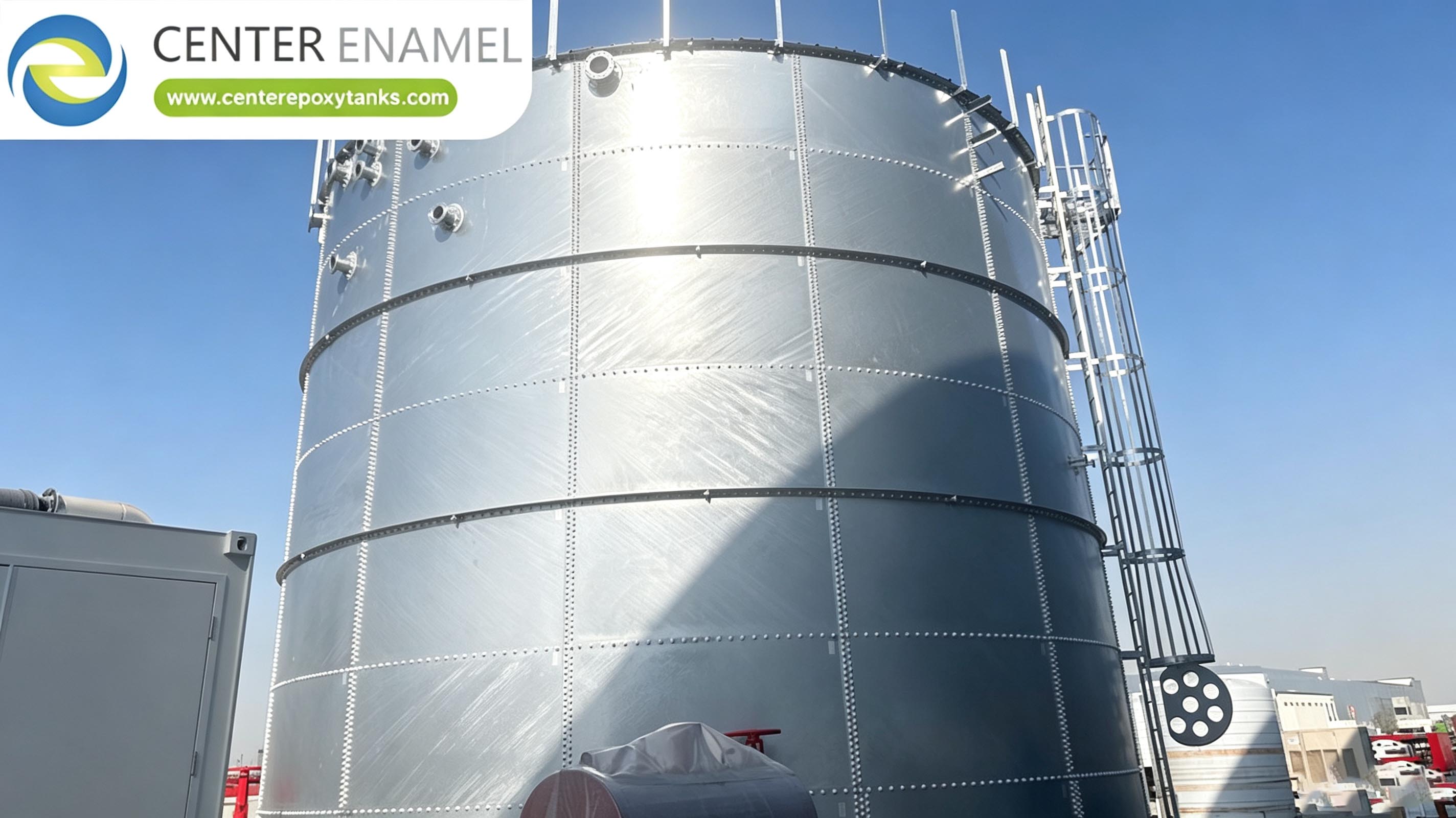
The storage tank itself is a standard water-storage vessel, and the design question is the volume and the draw arrangement that keeps the make-up available to the plant while the buffer is drawn down. The contingency value is the time bought, so size the tank to the ride-through target and locate it so it can be filled from whichever alternate source the plan activates. Resilience here is an auditable volume calculation, not a vague reserve.
Reclaimed and harvested water for the cooling duty
Reclaimed water, treated effluent from a municipal works, and harvested rainwater are the two reuse streams that can displace municipal make-up for cooling, and both reduce the draw on the stressed supply. Reclaimed water is the larger and more reliable of the two where a treatment works exists nearby, because its volume does not depend on rainfall. Harvested water depends on catchment and season, so it is a supplement rather than a base load.
Both must meet the cooling loop's quality bar, which means the treatment programme has to be set for the incoming chemistry, and the source needs its own monitoring. Reclaimed water can carry higher nutrient and solids loads that shift the scaling and biological balance, so the biocide and dispersant programme is adjusted accordingly. Using either stream for cooling make-up is a water-risk decision first and a sustainability gain second; the risk reduction is the reason it earns a place in the contingency plan.
Reporting and disclosure
Water risk is reported on two tracks. Internally and to stakeholders, WUE gives a comparable intensity figure, and the consumption accounting gives the absolute volume and its trend. Externally, frameworks such as the Uptime Institute tier considerations and corporate sustainability disclosures expect sites to report water usage, source and any stress exposure, and auditors increasingly ask for the basin context, not just the site number.
The discipline that makes reporting honest is the metered balance from section two: report the cooling make-up separately, state the source and its reliability, and disclose the reuse and the contingency storage as part of the resilience story. A site that reports WUE alone, without the supply context, understates or obscures its risk. The report should let a reader see both the efficiency and the exposure, because an insurer or a regulator will read it that way.
Designing for the dry season
Designing for the dry season means taking the worst credible supply condition as the design case rather than the annual average. Size the contingency storage to ride through the dry-season supply interruption, set the reuse and hauled-supply arrangements to operate when the mains is constrained, and confirm the cooling plant can run at the reduced make-up the plan allows without exceeding the tower's concentration-factor limit.
The dry season also stresses water quality, because lower flows concentrate constituents in the source, so the treatment programme is set for the dry-season chemistry, not the wet-season average. The Uptime Institute tier framework and the ASHRAE guidance both push sites to understand their operating envelope, and the dry-season design is where that understanding becomes hardware: storage volume, reuse connection and an alternate-source plan that is exercised, not just written. Resilience is designed in the dry month and validated by the plan, not discovered during the drought.
Site Water Consumption Accounting
Stream | What it is | How measured | Role in balance |
Make-up | Evaporation + blowdown + drift | Sub-metered | Main demand |
Evaporation | Heat rejected / latent heat | From duty | Largest loss |
Blowdown | Controls concentration factor | Metered | Tied to make-up |
Reuse | Reclaimed / harvested | Metered | Displaces mains |
Total | Site draw | Boundary meter | Reporting basis |
Alternate Source Ranking By Lead Time
Source | Lead time to activate | Reliability | Quality action |
On-site storage (filled) | Instant | High | None |
Second tank / reclaimed link | Hours | High if exists | Monitor |
Hauled supply | Hours to days | Vendor-dependent | Treat on arrival |
New well | Weeks to months | High once built | Test |
Mains diversion | Weeks to months | High | Permit + test |
Project Reference
No verified project record in the published library matches this topic. Rather than attach a case that does not fit, this article stands on the technical analysis it carries: the consumption accounting method, the water use efficiency metric and its limits, the alternate-source ranking by lead time, and the storage volume calculation that sizes contingency. The figures in the tables are derived from the cited standards and a stated site basis, and they are offered as a framework you can run with your own metered data, not as a record of a delivered installation.
About Center Enamel
Center Enamel (Shijiazhuang Zhengzhong Technology Co., Ltd.) designs and fabricates bolted steel storage tanks, welded steel tanks, fusion-bonded epoxy tanks, galvanized tanks, stainless steel vessels, pressure vessels, aluminum geodesic dome roofs and floating roofs. The company has more than 30 years of production experience and has supplied equipment to projects in more than 100 countries. Aluminum geodesic dome roofs are designed and fabricated to API 650 Appendix G, AWWA D108, the Aluminum Design Manual, ASCE 7 and IBC, and the company developed and exported a 72 m diameter aluminum dome roof in 2023. Engineering, fabrication, coating, quality control and site service are handled as one scope, which is why the drawings, the calculation basis and the delivered hardware can be reconciled against each other.
Frequently Asked Questions
How is data centre water consumption measured?
Start with a metered supply at the site boundary and, preferably, sub-meter the cooling make-up separately from domestic and irrigation use so the cooling number is clean. The cooling demand itself equals evaporation plus blowdown plus drift, with evaporation set by the heat rejected and the latent heat of vaporisation. Build a site water balance, make-up in against evaporation and blowdown out plus any reuse, from metered data; a number taken from a generic assumption is not accounting and will not support a resilience case.
What is water use efficiency in a data centre?
Water use efficiency, or WUE, is The Green Grid metric of annual site water usage divided by IT equipment energy, in litres per kilowatt-hour; a lower value means less water per unit of load. It improves with air-side economisation, a higher tower approach and any reuse that displaces municipal make-up. Its limit is that it is an intensity, not a risk measure, so it says nothing about supply reliability or drought exposure, and must be paired with consumption accounting for resilience.
What are the options for an alternate water supply?
Rank them by lead time to activate: on-site storage already filled is instant, a second tank or an existing reclaimed connection is next, a trucked or hauled supply depends on road and vendor availability, and a new well or mains diversion needs drilling, permitting and commissioning over weeks or months. Each also carries a water-quality question resolved by the treatment programme. Storage is the first line, hauled supply the bridge, and a new source the strategic reserve.
How much storage should a site hold as contingency?
Size it from the metered make-up rate to cover the ride-through duration you choose, the hours or days until an alternate source is online, not from a generic guess. A second full tank or a bundled buffer extends that window. The tank is a standard water-storage vessel whose draw arrangement keeps make-up available while the buffer is drawn down. The contingency value is the time bought, so express the tank as an auditable volume calculation against the ride-through target.
Can reclaimed water be used for cooling?
Yes, reclaimed water, treated municipal effluent, is the larger and more reliable reuse stream where a treatment works is nearby, because its volume does not depend on rainfall. It can carry higher nutrient and solids loads that shift the scaling and biological balance, so the biocide and dispersant programme is adjusted for the incoming chemistry and the source is monitored. Using it for cooling make-up is primarily a water-risk decision that also yields a sustainability gain.
How is water risk reported?
Report on two tracks: WUE for comparable intensity and the consumption accounting for absolute volume and trend, plus the source and its reliability and the reuse and contingency storage as part of the resilience story. Frameworks such as Uptime Institute tier considerations and sustainability disclosures expect water usage and stress exposure to be stated, and auditors increasingly ask for basin context. Report the cooling make-up separately so efficiency and exposure are both visible.
How should a site plan for a dry season?
Take the worst credible supply condition as the design case. Size contingency storage to ride through the dry-season interruption, set reuse and hauled supply to operate under mains constraint, and confirm the plant runs at the reduced make-up the plan allows without exceeding the tower concentration-factor limit. Expect lower source flows to concentrate constituents, so set the treatment programme for dry-season chemistry. The Uptime Institute and ASHRAE guidance both point to knowing the operating envelope and designing hardware, storage and an exercised alternate-source plan, for it.
Conclusion
Water resilience for a data centre is built from measurement first: a metered consumption account, an honest WUE figure with its limits understood, and an alternate-source plan ranked by the time each option takes to reach the plant. Storage is the anchor of that plan because it is the only supply that responds the instant the mains fails, and its volume is a calculation of ride-through time, not a notional reserve.
Design for the dry season, set the treatment programme for the dry-season source chemistry, and report both the efficiency and the exposure so the risk is visible to whoever reads the file. Send us the site water balance and the supply context, and we will return a contingency storage volume and an alternate-source ranking you can defend to an insurer and an auditor.
Talk To Our Engineering Team
Send the duty, the volume basis, the governing code and the site constraints, and our engineering team will come back with a specification that a supplier can price and a reviewer can approve. We will also tell you plainly when a different tank type or a different scope is the better answer.
Sources And References
1. Uptime Institute, Tier Standard: Design Requirements
2. The Green Grid, Water Usage Effectiveness (WUE) Metric
3. ASHRAE Handbook - HVAC Systems and Equipment


