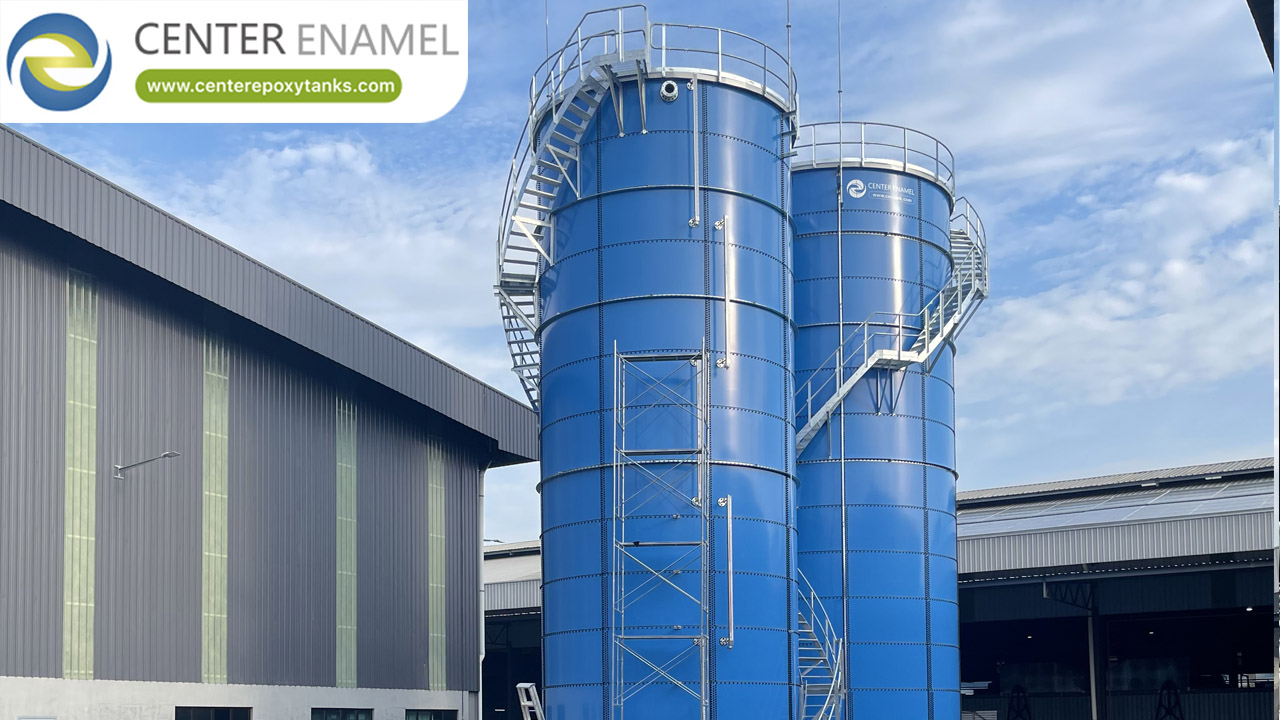
Data Center Fire Suppression Water Tank: Systems, Codes and Storage
A data center fire suppression water tank stores the water required by the suppression systems serving the site - typically automatic sprinklers, sometimes water mist, and occasionally foam-water systems - plus the hose stream allowance and any exposure protection. The volume is calculated from each system's design density or flow rate multiplied by its operating area or number of nozzles, then multiplied by the required duration, and finally checked against the fire protection requirements and the insurer's conditions. The tank does not determine the volume; the suppression design does, and the tank specification follows from it.
Suppression water demand on a data center is a calculation, not a judgement. The suppression systems define how much water is needed, for how long and at what rate; the tank's job is to hold that water in a condition where it will be available when called upon.
This article explains how suppression demand is assembled into a storage volume, which systems contribute to it, and what the tank has to provide so that the stored water is usable. It covers sprinkler, water mist and foam-water arrangements and the allowances that are frequently overlooked.
Technical Explanation
The systems that draw on the tank
A data center usually has more than one suppression water demand, and they add up:
• Automatic sprinklers: the primary water demand in most sites, calculated from design density over an operating area for the hazard classification, or from a specified number of sprinkler heads where a density-area approach is not used.
• Water mist systems: where installed for specific areas, with demand taken from the system design rather than from a density-area calculation.
• Foam-water systems: used in limited applications, where the foam concentrate and its compatibility with system materials add a separate consideration.
• Exposure protection: where site conditions require protection of external structures or adjacent buildings, which adds a demand often overlooked at the storage sizing stage.
Assembling the demand, then the volume
The calculation follows a defined sequence, and the sequence matters:
• Establish each system's flow demand at the design condition, including the pressure required at the most remote area.
• Add the hose stream allowance, which is required in addition to the sprinkler or mist demand and is often the term that is forgotten.
• Add any exposure protection demand where applicable.
• Identify the largest combined demand, since not all systems necessarily operate simultaneously.
• Multiply the governing flow by the required duration to obtain the volume, then confirm against the fire protection requirements and insurer conditions.
What the tank has to provide
Suppression duty imposes specific requirements on the vessel beyond volume:
• Immediate availability: the water must be usable at full demand without preparation, which means the tank is maintained at its design level.
• Suction conditions: pumps drawing on the tank need the outlet, anti-vortex and submergence arrangements appropriate to the design flow.
• Water quality: water standing for long periods must be kept in a condition that will not foul sprinkler pipework or clog nozzles, which is a treatment and inspection commitment.
• Venting and access: adequate venting for the fill and drawdown rates, and access for the internal inspection that suppression systems require.
• Coating: an internal coating appropriate for long-term storage of standing water, so that corrosion products do not enter the suppression pipework.
Integration and testing
The tank is one part of a system, and its commissioning is tied to the rest:
• Pump and tank tested together at the design flow, with the tank at the minimum operating level to prove the worst case.
• Alarm and indication tested to show low level and any loss of the reserve.
• Foam proportioning tested where a foam-water system is installed, with the tank's water quality confirmed as compatible with the foam concentrate.
• Records retained, since suppression systems are subject to periodic inspection and the tank's test data form part of that history.
Technical Specifications
Table 1 - Suppression water demand terms and their storage implication
Demand term | How it is established | Effect on stored volume | Common oversight |
Sprinkler design demand | Density over operating area, or specified number of heads | Principal volume term | Using a nominal figure instead of the design calculation |
Water mist demand | System design data | Adds to the governing demand where it applies | Assumed to be covered by the sprinkler calculation |
Hose stream allowance | Fire protection requirement for the occupancy | Required in addition to the system demand | Frequently omitted from the volume |
Exposure protection | Site layout and adjacent structures | Adds demand where required | Overlooked in early sizing |
Duration | Fire protection requirement for the occupancy | Multiplies the governing flow into volume | Duration not confirmed with the authority |
Water quality management | Storage conditions and treatment | No direct effect on volume | Neglected, leading to fouled pipework |
Project Case Study
Project Case Summary - firefighting water storage delivered
The deliveries below are firefighting water tanks supplied for suppression systems, with the coating, capacity and completion date of each recorded order.
Project | Application | Capacity | Construction | Roof | Completion |
Saudi Arabia | Firefighting water | 492 m3 | Fusion bonded epoxy | Aluminium flat roof | 2024-11 |
Guatemala | Firefighting water | 598 m3 | Glass-fused-to-steel bolted | Aluminium flat roof | 2024-12 |
India | Firefighting water | 12,261 m3 | Glass-fused-to-steel bolted | Flat | 2024-06 |
Company Expertise
Center Enamel manufactures fire water storage tanks in glass-fused-to-steel, fusion bonded epoxy and hot-dip galvanized steel, with coatings applied and tested in the factory and design to AWWA D103-09, supplied with the nozzle, venting and access provisions that suppression systems require.
As an outstanding containment and cover system provider with decades of industry experience, Center Enamel sincerely expects to establish long-term cooperation with local partners throughout the world and to make continuous contribution to the development of the industry.
Shijiazhuang Zhengzhong Technology Co., Ltd is not only the first manufacturer in China to produce Glass-Fused-to-Steel tanks, but also the most experienced professional bolted tank manufacturer in Asia. The engineering, design, product testing and quality system of Center Enamel Glass-Fused-to-Steel tanks are in strict accordance with AWWA D103-09, OSHA, ISO 28765, NSF/ANSI 61 and NFPA. By 2023, Center Enamel bolted tanks had been exported to more than 100 countries, including the USA, Australia, Canada, Malaysia, Indonesia, Russia, the UAE, Panama, Brazil and South Africa.
Shijiazhuang Zhengzhong Technology Co., Ltd (Center Enamel) is a professional manufacturer dedicated to the design and fabrication of bolted storage tanks since 2008. Our product range includes Glass-Fused-to-Steel (GFS) tanks, fusion bonded epoxy tanks, stainless steel tanks, galvanized steel tanks and aluminum geodesic dome roofs. With a professional enameling R&D team and nearly 200 enameling patents, Center Enamel has become a leader in the bolted tank industry in Asia. Our products are certified to ISO 9001, NSF 61, EN 1090, ISO 28765, WRAS, FM, LFGB, BSCI and ISO 45001.
Shijiazhuang Zhengzhong Technology Co., Ltd (Center Enamel) is a professional manufacturer dedicated to the design and fabrication of bolted storage tanks since 2008. Our product range includes Glass-Fused-to-Steel (GFS) tanks, fusion bonded epoxy tanks, stainless steel tanks, galvanized steel tanks and aluminum geodesic dome roofs. With a professional enameling R&D team and nearly 200 enameling patents, Center Enamel has become a leader in the bolted tank industry in Asia. Our products are certified to ISO 9001, NSF 61, EN 1090, ISO 28765, WRAS, FM, LFGB, BSCI and ISO 45001.
Shijiazhuang Zhengzhong Technology Co., Ltd is not only the first manufacturer in China to produce Glass-Fused-to-Steel tanks, but also the most experienced professional bolted tank manufacturer in Asia. The engineering, design, product testing and quality system of Center Enamel Glass-Fused-to-Steel tanks are in strict accordance with AWWA D103-09, OSHA, ISO 28765, NSF/ANSI 61 and NFPA. By 2023, Center Enamel bolted tanks had been exported to more than 100 countries, including the USA, Australia, Canada, Malaysia, Indonesia, Russia, the UAE, Panama, Brazil and South Africa.
As an outstanding containment and cover system provider with decades of industry experience, Center Enamel sincerely expects to establish long-term cooperation with local partners throughout the world and to make continuous contribution to the development of the industry.
Frequently Asked Questions (FAQ)
Q: How is the fire suppression water volume calculated?
A: From the suppression design: each system's flow demand at the design condition, plus the hose stream allowance and any exposure protection, multiplied by the required duration. The largest combined demand governs, and the result is normally confirmed with the fire protection authority and the insurer.
Q: Does the hose stream allowance count towards the stored volume?
A: Yes, and it must be added to the suppression system demand rather than assumed to be included. It is one of the most frequently omitted terms when a tank volume is estimated early in a project.
Q: Can a water mist and a sprinkler system share one tank?
A: They can share the water storage, provided the volume is sized for the largest combined demand and the water quality suits both systems. Water mist nozzles are sensitive to particulates, so stored water quality and filtration provisions matter more than they would for sprinklers alone.
Q: What water quality does a fire suppression tank need?
A: Water that will not foul pipework, corrode internally or clog nozzles over years of storage. That means an appropriate internal coating, a covered tank, and management of the stored water through treatment or periodic turnover, with inspection records kept.
Q: How often does a fire suppression water tank need inspection?
A: The tank should receive an annual external inspection covering coating condition, seals, vents and access, plus a periodic internal inspection whose interval follows the coating system, the water quality and the applicable inspection requirements. Records support both the inspection regime and any insurer review.
Q: Does a foam-water system change the tank specification?
A: It can. Foam concentrate compatibility has to be checked against every wetted material - coating, sealant, gaskets and fittings - and the water quality must be suitable for the proportioning equipment. That review should be completed before the tank is fabricated.
Suppression water storage follows the suppression design: system demands, hose stream allowance, exposure protection and duration combine into the required volume, and the tank must then hold that water in usable condition with the suction, venting and access provisions the system needs. Calculate first, then specify the vessel.
Talk to the Engineering Team
Send the suppression system demands, the required duration and the site layout, and we will confirm the storage volume basis and provide the tank configuration with coating, venting and suction provisions for the systems installed.


