Data Center Construction Cost: Where the Facility Budget Goes
Data center construction cost divides into the IT load (servers, storage, network), the power train (utility connection, switchgear, generators, UPS), the cooling plant (chillers, towers, pumps, pipework, water storage), the building and civil works, and the controls and commissioning scope. The cooling plant and its water systems are among the largest non-IT cost centres, and the decision that shifts them most is how much of the cooling load is served by evaporative equipment, because that choice drives both plant size and water storage volume.
Construction cost discussion about data centers tends to concentrate on the per-megawatt number. That number is a summary, and summaries hide the decisions a project team can actually influence. The water system is one of the areas where design choices still make a measurable difference late in the design process.
This article sets out the main cost blocks of a data center build, explains where water storage sits within them, and identifies the decisions that move the total. It deliberately avoids quoting a market price, because construction costs vary widely by market, specification and year, and a figure lifted from one project is not a basis for another.
Technical Explanation
The main cost blocks
A facility budget is normally structured along the following lines. The proportions shift with climate, redundancy level and cooling strategy, but the categories are stable:
• Land, permitting and site infrastructure: acquisition, access, utilities to the boundary.
• Shell and core: structure, envelope, raised floor or slab, security and access.
• Power train: utility supply, substations, switchgear, generators, fuel storage, UPS and batteries.
• Cooling plant: chillers or direct expansion plant, cooling towers or dry coolers, pumps, headers, pipework, insulation.
• Water systems: incoming supply, treatment, storage tanks, fire reserve and pumps, drainage and reuse.
• IT fit-out: racks, power distribution, containment, structured cabling, and on liquid-cooled designs the CDU and manifold scope.
• Controls and commissioning: BMS, EPMS, integration testing and the commissioning programme itself.
Where the water system sits
Water storage is a modest line in the budget and a disproportionate line in the risk register, because the tanks serve fire protection, cooling continuity and domestic supply at once. The cost elements are:
• Raw or municipal water intake and any pretreatment.
• Storage tanks for makeup, fire reserve, process water and domestic supply.
• Pumping, headers and the connection to the cooling plant.
• Water treatment for scale, corrosion and biological control.
• Reuse infrastructure where harvested or reclaimed water is part of the water strategy.
The decisions that actually move the number
Within the water and cooling scope, four decisions change cost materially:
• Evaporative versus dry cooling. Evaporative equipment has a lower electrical load but requires a continuous water supply, treatment and storage volume; dry cooling removes the water demand and raises electrical consumption.
• Cooling strategy at the rack: air, direct-to-chip liquid, or immersion. Liquid cooling changes the plant architecture and the auxiliary water and coolant storage that accompanies it.
• Redundancy level: N+1, 2N or a hybrid arrangement determines how much of the cooling plant and how much stored water must be duplicated.
• Water source strategy: municipal supply, on-site wells, harvested rainwater or reclaimed water. Each carries different intake, treatment, storage and reporting obligations.
Cost control levers that do not compromise the design
Projects that hold their budget usually do the same things well:
• Sizing storage from a documented water balance rather than from a round number, which avoids both shortage risk and unnecessary tank volume.
• Standardising tank specifications across the site, so that one coating system and one appurtenance package serve several duties where the water chemistry allows.
• Phasing capacity: bolted tanks can be extended as the campus load grows, deferring capital until the load exists.
• Fixing drawing approvals early, since late changes to foundations, nozzles or roofs are the most common source of water system cost overrun.
Technical Specifications
Table 1 - Cost blocks and the design decisions that influence them
Cost block | Main components | Influenced by | Effect of a water-efficient design |
Shell and core | Structure, envelope, slab | Redundancy level, rack density | Limited direct effect |
Power train | Switchgear, generators, UPS | Redundancy, load profile | Lower electrical load where evaporative cooling is used |
Cooling plant | Chillers, towers, pumps, pipework | Cooling strategy, climate | Plant size falls where thermal storage shifts load |
Water systems | Intake, treatment, storage tanks, fire reserve | Water source strategy, water balance | Storage sized from the balance instead of a nominal figure |
Controls and commissioning | BMS, EPMS, integration testing | Scope split, phasing | Instrumentation standardised on one tank platform |
Company Expertise
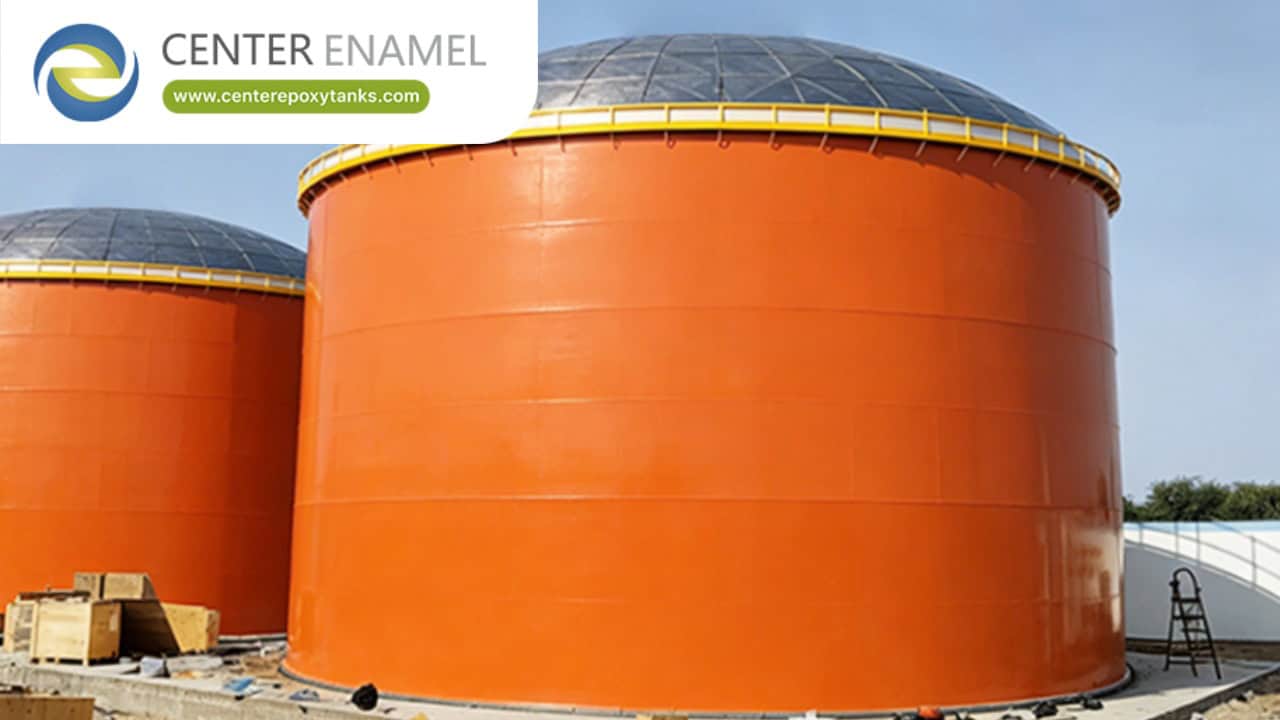
Center Enamel supplies the water storage vessels that sit inside the facility budget: fire reserve tanks, cooling makeup tanks, process water tanks and potable water tanks, in glass-fused-to-steel, fusion bonded epoxy, stainless steel and galvanized steel. Tanks are designed to AWWA D103-09 and can be phased and extended as a campus grows.
As an outstanding containment and cover system provider with decades of industry experience, Center Enamel sincerely expects to establish long-term cooperation with local partners throughout the world and to make continuous contribution to the development of the industry.
Shijiazhuang Zhengzhong Technology Co., Ltd is not only the first manufacturer in China to produce Glass-Fused-to-Steel tanks, but also the most experienced professional bolted tank manufacturer in Asia. The engineering, design, product testing and quality system of Center Enamel Glass-Fused-to-Steel tanks are in strict accordance with AWWA D103-09, OSHA, ISO 28765, NSF/ANSI 61 and NFPA. By 2023, Center Enamel bolted tanks had been exported to more than 100 countries, including the USA, Australia, Canada, Malaysia, Indonesia, Russia, the UAE, Panama, Brazil and South Africa.
Shijiazhuang Zhengzhong Technology Co., Ltd (Center Enamel) is a professional manufacturer dedicated to the design and fabrication of bolted storage tanks since 2008. Our product range includes Glass-Fused-to-Steel (GFS) tanks, fusion bonded epoxy tanks, stainless steel tanks, galvanized steel tanks and aluminum geodesic dome roofs. With a professional enameling R&D team and nearly 200 enameling patents, Center Enamel has become a leader in the bolted tank industry in Asia. Our products are certified to ISO 9001, NSF 61, EN 1090, ISO 28765, WRAS, FM, LFGB, BSCI and ISO 45001.
Shijiazhuang Zhengzhong Technology Co., Ltd (Center Enamel) is a professional manufacturer dedicated to the design and fabrication of bolted storage tanks since 2008. Our product range includes Glass-Fused-to-Steel (GFS) tanks, fusion bonded epoxy tanks, stainless steel tanks, galvanized steel tanks and aluminum geodesic dome roofs. With a professional enameling R&D team and nearly 200 enameling patents, Center Enamel has become a leader in the bolted tank industry in Asia. Our products are certified to ISO 9001, NSF 61, EN 1090, ISO 28765, WRAS, FM, LFGB, BSCI and ISO 45001.
Shijiazhuang Zhengzhong Technology Co., Ltd is not only the first manufacturer in China to produce Glass-Fused-to-Steel tanks, but also the most experienced professional bolted tank manufacturer in Asia. The engineering, design, product testing and quality system of Center Enamel Glass-Fused-to-Steel tanks are in strict accordance with AWWA D103-09, OSHA, ISO 28765, NSF/ANSI 61 and NFPA. By 2023, Center Enamel bolted tanks had been exported to more than 100 countries, including the USA, Australia, Canada, Malaysia, Indonesia, Russia, the UAE, Panama, Brazil and South Africa.
As an outstanding containment and cover system provider with decades of industry experience, Center Enamel sincerely expects to establish long-term cooperation with local partners throughout the world and to make continuous contribution to the development of the industry.
Frequently Asked Questions (FAQ)
Q: What is the largest single cost in a data center build?
A: The power train and the IT fit-out are usually the two largest blocks, with the cooling plant close behind and heavily influenced by the cooling strategy chosen. Costs vary so much between markets and specifications that any single percentage should be treated as project-specific.
Q: How much of the budget is water storage?
A: The tanks themselves are a small fraction of the build. Their significance lies in what they protect: fire compliance and cooling continuity. Under-sizing storage creates operational and compliance risk that costs far more than the tank volume saved.
Q: Does liquid cooling raise or lower construction cost?
A: It changes the architecture. Direct-to-chip liquid cooling can reduce air handling scope and improve rack density, but it adds CDU, manifold, fluid storage and fluid management provisions. The net effect depends on the rack density target and how much of the facility is liquid cooled.
Q: Why not size all storage tanks generously to avoid risk?
A: Oversized storage raises civil and foundation cost, increases the volume of water to treat and keep in condition, and in fire reserves can create stagnation. Sizing from a documented water balance with defined redundancy gives a defensible number.
Q: How does climate affect the budget?
A: Cooling strategy is the mechanism. In cooler climates, dry or hybrid cooling can reduce water demand substantially; in hot and humid climates, evaporative cooling dominates and the water supply, treatment and storage scope expands accordingly.
Q: Can phasing reduce the first-phase cost?
A: Yes, and bolted tank construction supports it well. A first phase sized to the initial hall load can be extended with additional shell courses or additional tanks when the next phase is committed, provided the foundation and header design anticipate the expansion.
Data center construction cost is a stack of system decisions rather than a single benchmark number. Within the water scope, the decisions that matter are the cooling strategy, the redundancy level, the water source and the storage sizing method. Getting those four right produces a defensible budget; quoting a peer project's number does not.
Talk to the Engineering Team
If you need the water storage scope defined for a facility budget, send the expected IT load, cooling strategy and water source options. We will return the tank scope, capacities and phasing logic that go with each option.


