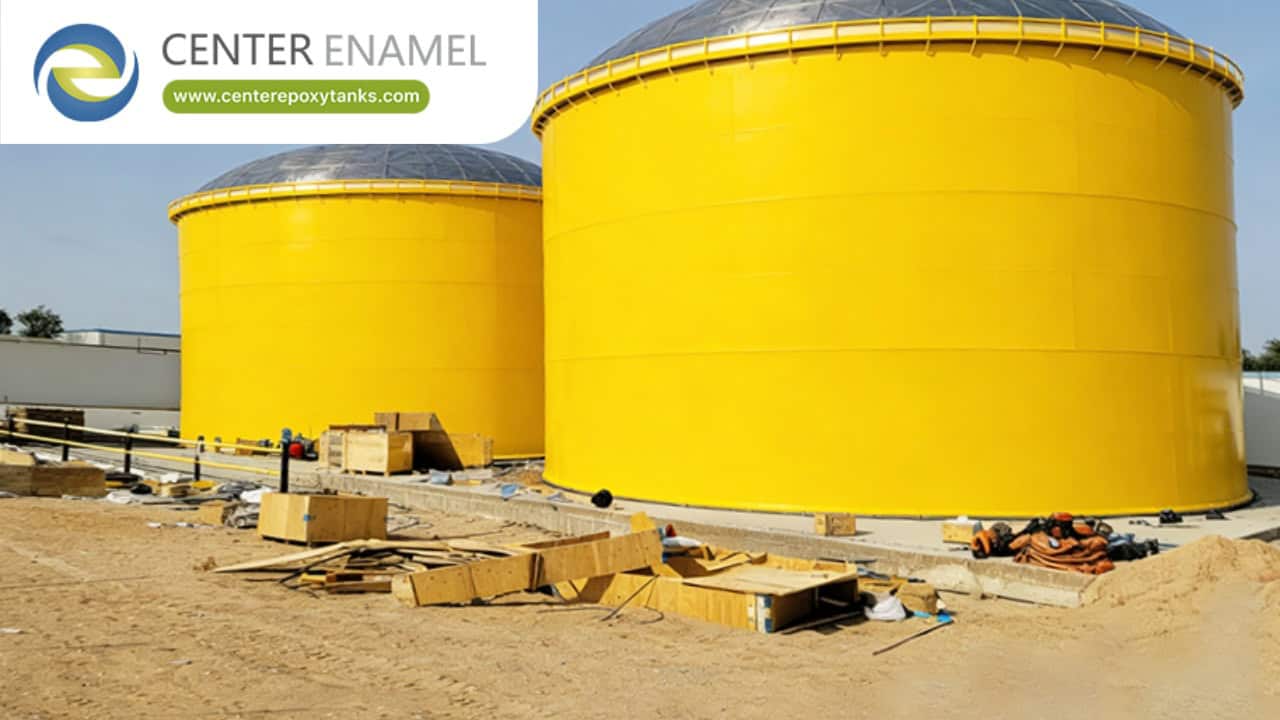
Data Center Coolant Storage Tank: Capacity Planning and Containment
A data center coolant storage tank holds bulk fluid for loop fill, top-up and refill maintenance on a liquid-cooled hall. Capacity is planned from three quantities: the total loop volume, a refill allowance equal to the loop volume for maintenance drain-down, and a top-up reserve covering normal losses between bulk deliveries. Because coolants such as propylene glycol mixtures carry handling, environmental and in some cases safety obligations, the storage is normally segregated from other water systems in a bunded or double-wall arrangement sized to contain the largest single volume stored.
Liquid cooling turns fluid into a consumable. Every loop must be filled, topped up as small losses accumulate, and drained and refilled when maintenance requires it. The plant therefore needs somewhere to keep that fluid, in quantities that were probably not in the original building design.
This article deals with the storage side of coolant management: how much inventory a hall requires, how it should be segregated and contained, and what provisions make the storage practical to operate. It complements the article on coolant material compatibility, which covers the tank itself.
Technical Explanation
Sizing bulk coolant storage
Three quantities determine the stored volume, and each comes from an engineering take-off rather than a rule of thumb:
• Loop fill volume: calculated from pipework, manifolds, CDU internal volumes, cold plates and heat exchangers. This is the volume consumed on first commissioning.
• Refill allowance: the practical approach is to hold at least one additional loop volume, because maintenance drain-down empties the loop before it is refilled.
• Top-up reserve: normal losses over the interval between bulk deliveries, which depends on the fluid quality programme, pump seal performance and the frequency of sampling and maintenance.
• Where the hall is built in phases, the storage should be sized for the final built-out volume rather than re-planned at each phase - the containment and access requirements do not scale down well.
Segregation and containment
Coolant is not another water stream, and treating it as one creates avoidable environmental and safety exposure:
• Segregation: store coolant away from potable and process water systems, with no shared pipework that could allow cross-contamination.
• Segregation from electrical plant: locate storage so that a leak cannot reach switchgear, UPS or busway, which is a layout decision rather than an equipment one.
• Secondary containment: bunding or a double-wall tank sized to hold the largest single stored volume, so a container or tank failure is contained in place.
• Drainage: containment discharge routed to a controlled point rather than to storm drainage, with the discharge path identified for emergency response.
• Labelling and access control: contents, volume and hazard information on the containment, plus restricted access where the fluid requires it.
Storage format options
Bulk coolant is stored in one of three ways, and the choice affects both containment design and operating effort:
• Intermediate bulk containers: low capital, flexible and easy to replace, but they occupy floor space, need manual handling and require bunded storage of a volume equal to the largest container.
• Bulk tank: less floor area for the same volume, with fixed piping to a transfer point, but it requires its own containment and a fixed location.
• Drum storage for specialised fluids: appropriate where the fluid is used in small quantities, such as dielectric fluids for immersion systems, with bunding per the container volume.
Provisions that make storage workable
Four provisions distinguish a compliant store from one that creates work every time it is used:
• Transfer: a pump and hose arrangement, or dedicated piping, so the fluid moves from store to loop without manual lifting.
• Monitoring: level indication on bulk tanks, so inventory is visible before a maintenance activity depends on it.
• Quality protection: kept closed and clean, because stored fluid that takes on water or contamination causes a loop problem when it is used.
• Documentation: labels, safety information and a record of quantities received and issued, which supports both the maintenance plan and environmental reporting.
Technical Specifications
Table 1 - Bulk coolant storage planning inputs
Quantity | How it is established | Sizing implication | Provision required |
Loop fill volume | Take-off from pipework, CDU, manifolds and cold plates | Sets the minimum inventory for commissioning | Bulk tank and transfer arrangement |
Refill allowance | One additional loop volume for maintenance | Doubles the bulk requirement | Containment for the largest stored volume |
Top-up reserve | Losses between deliveries | Adds a working margin | Level indication and reorder point |
Phase growth | Final built-out hall volume | Size once rather than repeatedly | Space and containment allowances |
Containment volume | Largest single stored volume | Bunding or double-wall construction | Controlled drainage route |
Company Expertise
Center Enamel fabricates bolted and welded steel tanks with factory-applied coatings and stainless steel options, and can supply double-wall or bunded arrangements where the stored fluid requires secondary containment. Tanks are manufactured to client specifications for fluid compatibility and containment volume.
As an outstanding containment and cover system provider with decades of industry experience, Center Enamel sincerely expects to establish long-term cooperation with local partners throughout the world and to make continuous contribution to the development of the industry.
Shijiazhuang Zhengzhong Technology Co., Ltd is not only the first manufacturer in China to produce Glass-Fused-to-Steel tanks, but also the most experienced professional bolted tank manufacturer in Asia. The engineering, design, product testing and quality system of Center Enamel Glass-Fused-to-Steel tanks are in strict accordance with AWWA D103-09, OSHA, ISO 28765, NSF/ANSI 61 and NFPA. By 2023, Center Enamel bolted tanks had been exported to more than 100 countries, including the USA, Australia, Canada, Malaysia, Indonesia, Russia, the UAE, Panama, Brazil and South Africa.
Shijiazhuang Zhengzhong Technology Co., Ltd (Center Enamel) is a professional manufacturer dedicated to the design and fabrication of bolted storage tanks since 2008. Our product range includes Glass-Fused-to-Steel (GFS) tanks, fusion bonded epoxy tanks, stainless steel tanks, galvanized steel tanks and aluminum geodesic dome roofs. With a professional enameling R&D team and nearly 200 enameling patents, Center Enamel has become a leader in the bolted tank industry in Asia. Our products are certified to ISO 9001, NSF 61, EN 1090, ISO 28765, WRAS, FM, LFGB, BSCI and ISO 45001.
Shijiazhuang Zhengzhong Technology Co., Ltd (Center Enamel) is a professional manufacturer dedicated to the design and fabrication of bolted storage tanks since 2008. Our product range includes Glass-Fused-to-Steel (GFS) tanks, fusion bonded epoxy tanks, stainless steel tanks, galvanized steel tanks and aluminum geodesic dome roofs. With a professional enameling R&D team and nearly 200 enameling patents, Center Enamel has become a leader in the bolted tank industry in Asia. Our products are certified to ISO 9001, NSF 61, EN 1090, ISO 28765, WRAS, FM, LFGB, BSCI and ISO 45001.
Shijiazhuang Zhengzhong Technology Co., Ltd is not only the first manufacturer in China to produce Glass-Fused-to-Steel tanks, but also the most experienced professional bolted tank manufacturer in Asia. The engineering, design, product testing and quality system of Center Enamel Glass-Fused-to-Steel tanks are in strict accordance with AWWA D103-09, OSHA, ISO 28765, NSF/ANSI 61 and NFPA. By 2023, Center Enamel bolted tanks had been exported to more than 100 countries, including the USA, Australia, Canada, Malaysia, Indonesia, Russia, the UAE, Panama, Brazil and South Africa.
As an outstanding containment and cover system provider with decades of industry experience, Center Enamel sincerely expects to establish long-term cooperation with local partners throughout the world and to make continuous contribution to the development of the industry.
Frequently Asked Questions (FAQ)
Q: How much coolant should be kept on site?
A: Take the loop fill volume from a proper take-off and hold at least one additional loop volume for maintenance refills, plus a top-up reserve for normal losses between deliveries. That gives a defensible figure; holding only the fill volume means every maintenance event depends on a new delivery arriving on time.
Q: Does coolant storage need secondary containment?
A: Where the fluid carries environmental or handling obligations, yes, and bunding or a double-wall tank is the normal way to provide it. The containment volume should be capable of holding the largest single stored volume, with drainage routed to a controlled point rather than to storm drainage.
Q: Can coolant be stored in the same tank as cooling water?
A: It should not be. Coolant chemistry is different from treated water, and mixing streams creates fluid quality problems and eliminates any chance of reusing water circuits for other duties. Keep the systems hydraulically separate.
Q: What fluid is typically stored for direct liquid cooling?
A: Many deployments use water with a propylene glycol fraction for freeze protection, while immersion systems use engineered dielectric fluids. Fluid selection affects storage material, labelling, containment and disposal arrangements, so it should be confirmed before the storage is designed.
Q: How is stored coolant protected from contamination?
A: Keep storage closed and clean, use dedicated transfer equipment for each fluid, and avoid sharing hoses or containers between different fluids. Sampling on delivery and before use is a practical way to catch a problem before it reaches the loop.
Q: Is a bulk tank better than containers?
A: A bulk tank uses less floor area for the same volume and allows fixed transfer piping, which reduces manual handling. Containers are cheaper to start with and easier to rotate, but they require bunded storage and more labour per unit of fluid. The decision usually follows the volume consumed and the available plant space.
Coolant storage is an inventory and containment problem before it is a tank problem. Work out the fill volume, add a refill allowance and a top-up reserve, then design the containment around the largest volume held and keep the fluid away from potable water and electrical plant.
Talk to the Engineering Team
If you are planning coolant storage for a liquid-cooled hall, send the loop volume, the fluid type and the available plant space. We will advise on storage configuration, containment volume and the tank material compatible with the fluid.


