Data Center Condensate Tank: Recovery, Water Quality and Materials
A data center condensate tank collects condensate from steam humidifiers, coils and other sources so that it can be reused or discharged in a controlled way rather than dumped. Condensate is not clean water: it is low in dissolved solids, which makes it aggressive, and it absorbs carbon dioxide from the air, forming carbonic acid and dropping the pH into the acidic range. That combination makes corrosion the design driver, so the tank is usually specified in stainless steel or with a factory-applied epoxy coating, with venting, sampling and drainage provisions that allow water quality to be monitored.
Condensate is the by-product of humidification and dehumidification on a data center site, and it is valuable water that is often simply drained away. Recovering it reduces water consumption and can return usable water to the plant, but only if the tank that stores it is designed for the chemistry involved.
This article explains where condensate comes from, why it attacks steel, which materials and coatings suit it, and what provisions the tank needs so that recovered condensate can actually be used rather than becoming a maintenance problem.
Technical Explanation
Where condensate comes from
Several streams on a data center site produce condensate, and they differ in quality:
• Steam humidifier condensate: the cleanest stream, close to distilled water quality and the most attractive for recovery.
• Cooling coil condensate: produced when air is cooled below its dew point, carrying any contaminants present in the air or on the coil surface.
• Dehumidification condensate: similar in origin to coil condensate and often the largest volume in humid climates.
• Drainage and drip streams: lower quality, and generally routed to discharge rather than recovery.
Why condensate is aggressive
Two properties make condensate more demanding than most water duties:
• Low dissolved solids: with almost no buffering capacity, condensate is easily driven to an acidic or alkaline condition by small amounts of dissolved gas or contamination.
• Carbon dioxide uptake: exposed to air, condensate absorbs carbon dioxide and forms carbonic acid, which lowers pH and attacks carbon steel directly.
• Oxygen content: air-saturated condensate carries dissolved oxygen to any wetted steel surface.
• The practical consequence is that carbon steel without an adequate coating corrodes quickly in condensate service, which is why material selection comes before tank sizing in this duty.
Material and coating options
The choice follows the condensate quality and the intended use of the recovered water:
• Stainless steel: the conventional choice for condensate and high-purity water, and inherently tolerant of the low-conductivity conditions that make some other materials behave poorly.
• Fusion bonded epoxy coated steel: appropriate where volumes are larger and the recovered water is not required to meet a high-purity specification, with the coating verifying continuity by holiday testing.
• Covered or closed tanks: keeping air out of the stored condensate limits carbon dioxide uptake and slows the pH drift.
• Vent detailing: the tank needs to breathe, but the vent should exclude rainwater, debris and insects while allowing the volume to change without pressurising the shell.
Provisions that make recovery work
Recovered condensate is only useful if the tank keeps it usable and the operator can verify it:
• Sampling point: a dedicated sample connection for conductivity and pH checks, so the quality of the recovered water can be confirmed before it is routed to the plant.
• Overflow and drainage: sized and routed so that a high condensate rate discharges safely rather than overflowing the tank area.
• Level indication and control: condensate arrives at a rate that depends on ambient conditions, so the tank needs reliable level monitoring and a controlled discharge or transfer.
• Turnover and hygiene: provisions to drain and clean the tank, since biological growth is a risk in any stored water that contains organic contamination.
Technical Specifications
Table 1 - Condensate streams and the storage specification they imply
Stream | Relative quality | Typical use | Tank implication |
Steam humidifier condensate | High, close to distilled | Recovery to the plant | Closed or covered tank, stainless or coated steel |
Cooling coil condensate | Moderate, variable | Non-potable reuse or discharge | Covered tank, filtration, drainage |
Dehumidification condensate | Moderate, larger volume | Non-potable reuse | Larger volume, level control, overflow sizing |
Drainage streams | Low | Discharge | Typically not stored |
Project Case Study
Project Case Summary - high water quality duty delivered
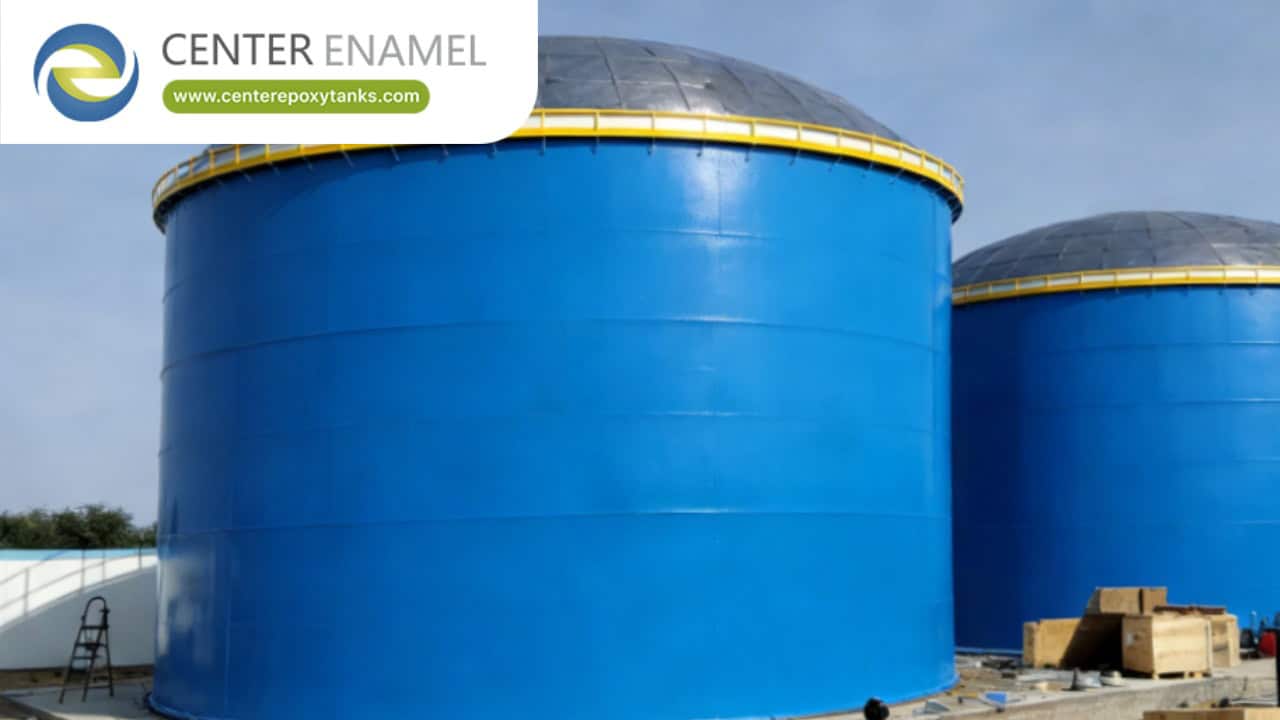
The project below was delivered with a fusion bonded epoxy coating for a treated water stream where water quality is the governing requirement. It is cited because condensate duty places comparable demands on the storage material.
Project | Application | Capacity | Construction | Roof | Completion |
Chile | Desalinated water | 6,578 m3 | Fusion bonded epoxy | Aluminium dome | 2025-03 |
Malaysia | Industrial water | 815 m3 | Stainless steel | Not applicable | 2026-04 |
Company Expertise
Center Enamel fabricates stainless steel tanks and fusion bonded epoxy coated tanks for water and process duties where water quality governs the material choice, with coatings applied and tested in the factory and stainless grades including 304, 316 and 316L.
As an outstanding containment and cover system provider with decades of industry experience, Center Enamel sincerely expects to establish long-term cooperation with local partners throughout the world and to make continuous contribution to the development of the industry.
Shijiazhuang Zhengzhong Technology Co., Ltd is not only the first manufacturer in China to produce Glass-Fused-to-Steel tanks, but also the most experienced professional bolted tank manufacturer in Asia. The engineering, design, product testing and quality system of Center Enamel Glass-Fused-to-Steel tanks are in strict accordance with AWWA D103-09, OSHA, ISO 28765, NSF/ANSI 61 and NFPA. By 2023, Center Enamel bolted tanks had been exported to more than 100 countries, including the USA, Australia, Canada, Malaysia, Indonesia, Russia, the UAE, Panama, Brazil and South Africa.
Shijiazhuang Zhengzhong Technology Co., Ltd (Center Enamel) is a professional manufacturer dedicated to the design and fabrication of bolted storage tanks since 2008. Our product range includes Glass-Fused-to-Steel (GFS) tanks, fusion bonded epoxy tanks, stainless steel tanks, galvanized steel tanks and aluminum geodesic dome roofs. With a professional enameling R&D team and nearly 200 enameling patents, Center Enamel has become a leader in the bolted tank industry in Asia. Our products are certified to ISO 9001, NSF 61, EN 1090, ISO 28765, WRAS, FM, LFGB, BSCI and ISO 45001.
Shijiazhuang Zhengzhong Technology Co., Ltd (Center Enamel) is a professional manufacturer dedicated to the design and fabrication of bolted storage tanks since 2008. Our product range includes Glass-Fused-to-Steel (GFS) tanks, fusion bonded epoxy tanks, stainless steel tanks, galvanized steel tanks and aluminum geodesic dome roofs. With a professional enameling R&D team and nearly 200 enameling patents, Center Enamel has become a leader in the bolted tank industry in Asia. Our products are certified to ISO 9001, NSF 61, EN 1090, ISO 28765, WRAS, FM, LFGB, BSCI and ISO 45001.
Shijiazhuang Zhengzhong Technology Co., Ltd is not only the first manufacturer in China to produce Glass-Fused-to-Steel tanks, but also the most experienced professional bolted tank manufacturer in Asia. The engineering, design, product testing and quality system of Center Enamel Glass-Fused-to-Steel tanks are in strict accordance with AWWA D103-09, OSHA, ISO 28765, NSF/ANSI 61 and NFPA. By 2023, Center Enamel bolted tanks had been exported to more than 100 countries, including the USA, Australia, Canada, Malaysia, Indonesia, Russia, the UAE, Panama, Brazil and South Africa.
As an outstanding containment and cover system provider with decades of industry experience, Center Enamel sincerely expects to establish long-term cooperation with local partners throughout the world and to make continuous contribution to the development of the industry.
Frequently Asked Questions (FAQ)
Q: Why does condensate corrode steel?
A: Because it contains almost no dissolved solids to buffer its chemistry, absorbs carbon dioxide from the air to form carbonic acid, and carries dissolved oxygen. The result is acidic, aerated water that attacks carbon steel quickly unless the surface is protected by a suitable coating or the tank is made of a corrosion-resistant alloy.
Q: Should condensate be recovered or discharged?
A: It depends on the stream and the site. Steam humidifier condensate is clean enough to recover and return to the plant; coil and dehumidification condensate is better suited to non-potable reuse. Recovery reduces water consumption and, in steam systems, returns heat as well as water.
Q: What material should a condensate tank be?
A: Stainless steel is the conventional choice, especially where the recovered water has to meet a quality specification. A fusion bonded epoxy coated steel tank is suitable where volumes are larger and the water is not required to meet high-purity limits.
Q: Does the tank need to be closed?
A: A covered or closed tank is preferable, because excluding air limits carbon dioxide uptake and slows the pH drift that makes condensate aggressive. The tank still needs a vent for volume changes, with the vent arranged to keep out rain, debris and insects.
Q: How is recovered condensate monitored?
A: With a sampling point on the tank so conductivity and pH can be checked, plus level indication to see how much water is available. Monitoring matters because condensate quality varies with ambient conditions and with the equipment producing it.
Q: Can condensate be used for cooling makeup?
A: It can, where the quantity and quality suit the loop and the water is compatible with the treatment programme. Blending with the makeup supply is common, because condensate volume varies with weather and the loop demand does not.
Condensate is valuable water with difficult chemistry: low in dissolved solids, aerated and prone to acidification through carbon dioxide uptake. That makes material selection the first decision, not the volume, and it makes sampling, venting and drainage provisions essential to a recovery system that actually works.
Talk to the Engineering Team
If you are planning condensate recovery or high-quality process water storage, send the stream quality and the intended reuse. We will recommend a tank material and coating system with the sampling, venting and drainage provisions for the duty.


