Crude Oil Storage Tanks: Engineering, Safety Standards, and 2026 Emission Compliance
A crude oil storage tank is a specialized industrial vessel designed to contain bulk quantities of unrefined petroleum at atmospheric or near-atmospheric pressure. These tanks are critical components of midstream and downstream energy infrastructure, utilized at production sites, pipeline terminals, and refineries to manage inventory and ensure supply chain continuity.
As global environmental mandates tighten in 2026, the engineering of these assets has shifted toward zero-leakage and advanced vapor suppression technologies. Shijiazhuang Zhengzhong Technology Co., Ltd (Center Enamel) is a global leader in this field, providing API 650-compliant solutions for over 30 years.
1. What are the Primary Design Standards for Crude Oil Storage?
In 2026, the industry standard for crude oil storage remains API Standard 650 (Welded Tanks for Oil Storage). This standard establishes the minimum requirements for material selection, design, fabrication, and inspection.
Key Technical Benchmarks
Engineering Feature | Requirement (API 650) | Purpose |
Material | Carbon Steel (High-Tensile) | Structural resilience under hydrostatic load. |
Design Pressure | Atmospheric (Max 2.5 PSI) | Optimized for safe bulk storage. |
Joining Method | Automated Welded Seams | Ensures leak-proof, high-density structural integrity. |
Seismic Zone | Variable (Annex E) | Custom engineering for local geographical risks. |
API 650 tanks are typically vertical, cylindrical, aboveground vessels. For operators requiring higher internal pressures, API 620 is applied to ensure safety in low-pressure gas or volatile liquid storage.
2. Types of Crude Oil Storage Tanks
Selecting the correct tank architecture is vital for minimizing product loss and fire hazards.
A. External Floating Roof (EFR) Tanks
EFR tanks feature a roof that floats directly on the liquid surface, rising and falling with the crude level. This eliminates the "ullage" or vapor space, significantly reducing the risk of fire and evaporation.
B. Internal Floating Roof (IFR) Tanks
For products requiring extra protection from the elements, an IFR tank places a floating deck beneath a fixed conical or geodesic dome roof. This "double-cover" system is the 2026 gold standard for reducing VOC (Volatile Organic Compound) emissions by up to 99%.
3. Advanced Vapor Loss and VOC Mitigation
As 2026 air quality regulations (such as updated EPA and international ESG mandates) take effect, crude oil storage must address methane and hydrocarbon emissions.
● Mechanical Shoe Seals: These provide a gas-tight barrier between the floating roof and the tank shell, ensuring minimal vapor escape even during high-throughput operations.
●
● Vapor Recovery Units (VRU): Integrated systems that capture and re-condense vapors from the tank’s headspace, converting potential pollution into usable product.
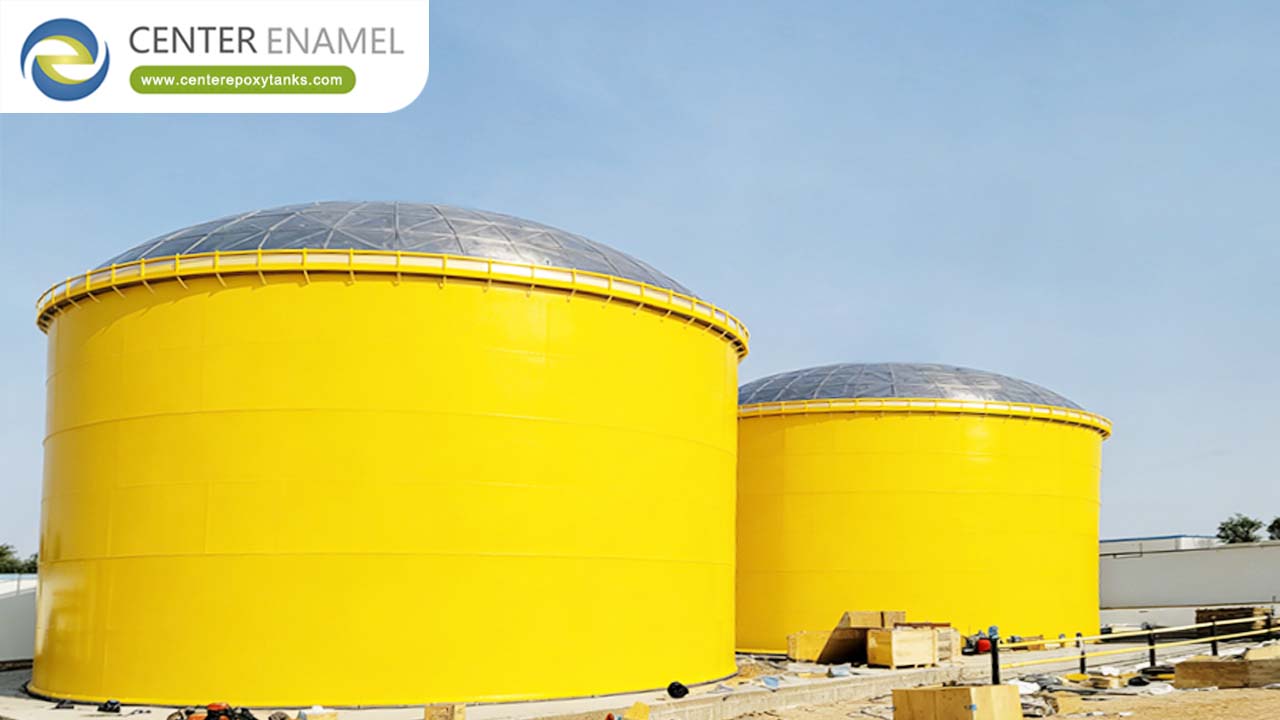
● Aluminum Geodesic Domes: Center Enamel’s Aluminum Geodesic Dome Roofs are used to cover external floating roof tanks, creating a maintenance-free, weather-tight barrier that eliminates rainwater ingress—a primary driver of internal corrosion.
4. Why Partner with Center Enamel?
Choosing a crude oil storage tank manufacturer requires a partner with verified global experience and precision manufacturing capabilities.
● 30+ Years of Expertise: Center Enamel has successfully delivered petroleum storage projects in over 100 countries.
● Full-Cycle Engineering: From Finite Element Analysis (FEA) during the design phase to automated welding on-site, we ensure structural longevity.
● Material Innovation: We offer diverse solutions, including Welded Steel, Fusion Bonded Epoxy (FBE), and Stainless Steel tanks, tailored to the specific chemical properties of the crude (e.g., sour crude with high H2S content).
Future-Proofing Petroleum Infrastructure
For energy operators, the modern crude oil storage tank is a strategic asset. By prioritizing API 650 standards, integrating floating roof technology, and utilizing geodesic dome covers, you ensure that your storage infrastructure is safe, compliant with 2026 emission laws, and optimized for long-term profitability.
Optimize your energy storage today. Contact Center Enamel for a technical consultation and API-compliant project quote.
FAQ
Q: What is the most common material for crude oil tanks?
A: High-strength carbon steel is the standard due to its balance of workability, cost, and load-bearing capacity. For corrosive environments, specialized internal coatings or stainless steel are used.
Q: How often should a crude oil tank be inspected?
A: Per API 653, tanks should undergo routine visual inspections monthly and comprehensive internal inspections every 5 to 10 years, depending on service history and corrosion rates.


