Crude Oil Storage Tank Design Standards: Engineering Global Energy Security
Crude oil storage tank design standards provide the structural and safety framework for the midstream and downstream petroleum sectors. The primary global benchmark is API 650, which governs the design, fabrication, and inspection of welded steel tanks for atmospheric pressure. These standards dictate critical factors such as plate thickness, welding metallurgy (ASME IX), and Internal Floating Roof (IFR) integration to minimize Volatile Organic Compound (VOC) emissions. Compliance with these codes is mandatory for leak prevention, fire safety, and seismic resilience in the global energy supply chain.
1. Primary Global Design Standards Matrix
This matrix compares the leading codes used in modern crude oil storage engineering.
Standard | Scope of Application | Key Regulatory Focus |
API 650 | Atmospheric Storage | The "Gold Standard" for welded tanks; focuses on leak-proof integrity. |
API 620 | Low-Pressure Storage | For large, field-welded tanks with pressures up to 15 lbf/in². |
API 653 | Tank Inspection & Repair | Standards for maintaining, altering, and re-rating existing assets. |
EN 14015 | European Standards | Ambient temperature storage; European material and safety compliance. |
NFPA 30 | Fire Protection Code | Safeguards for the storage of flammable and combustible liquids. |
2. Core Engineering Pillars of Crude Oil Containment
A. Material Selection & Brittle Fracture Defense
Crude oil tanks are often located in extreme climates. Standards specify steel grades (such as ASTM A36, A516, or A573) based on the "Design Metal Temperature."
● Fracture Toughness: API 650 requires impact testing for plates in colder regions to prevent "brittle fracture," a catastrophic failure mode where the steel cracks like glass under stress.
● Corrosion Allowance: Designing for a 50-year service life requires adding a sacrificial thickness (typically 1.5mm to 3mm) to account for internal shell thinning caused by the sulfur and moisture content in crude oil.
B. Vapor Control & Emission Mitigation (Appendix H)
Environmental and Social Governance (ESG) mandates in 2026 require zero-emission performance.
● Internal Floating Roofs (IFR): Most crude tanks utilize an IFR that floats on the liquid surface. This eliminates the vapor space, reducing VOC emissions by up to 98%.
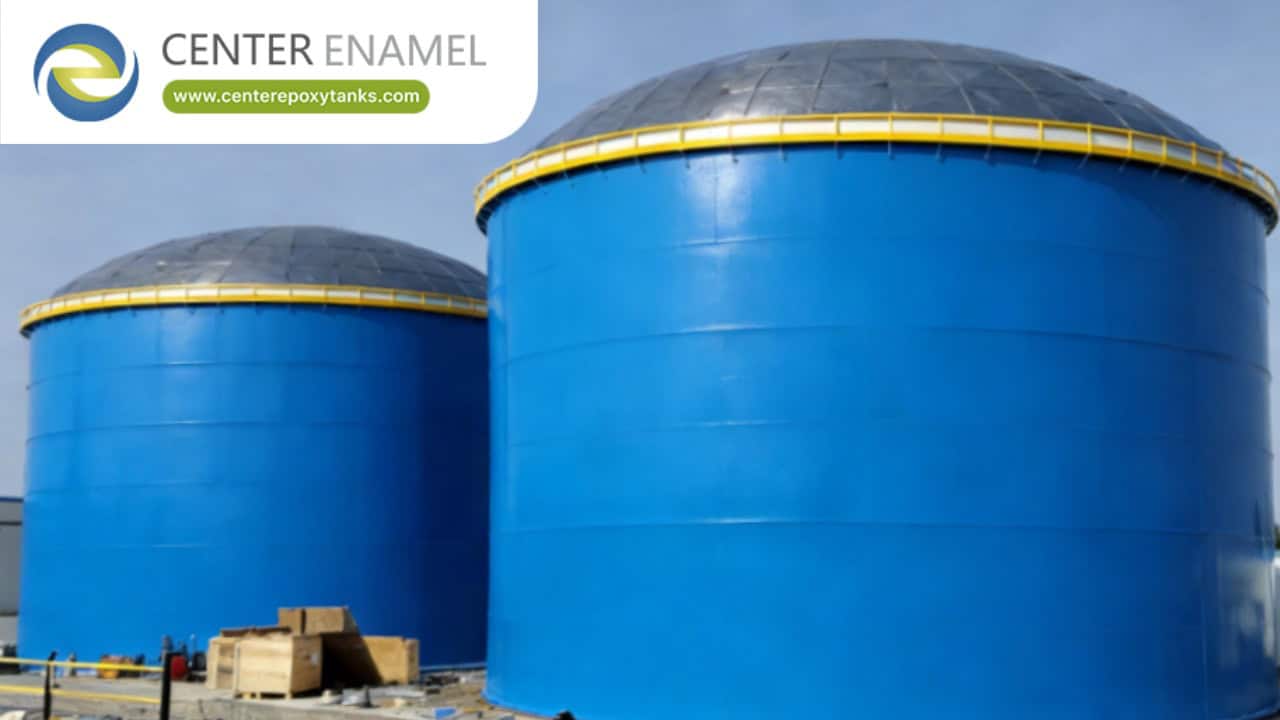
● Aluminum Geodesic Domes: Often used as fixed covers over floating roofs, these clear-span domes provide weather protection and further reduce breathing losses without requiring internal support columns.
C. Structural Loading & Seismic Resilience (Appendix E)
Crude oil tanks represent massive hydrostatic loads. The "Hoop Stress" calculation determines the thickness of each shell course, with the bottom rings being the thickest.
● Seismic Design: In high-activity zones, tanks are engineered with "Self-Anchoring" or "Mechanical Anchoring" logic to prevent "Elephant’s Foot" buckling—the localized bulging at the base of the tank during ground movement.
3. Mandatory Inspection & Verification (NDT)
● Radiographic Testing (RT): Utilizing X-rays to detect internal weld defects (porosity, slag inclusions). Full Radiography is required for high-risk crude assets.
● Hydrostatic Testing: Filling the tank to its maximum design level to verify structural stability and leak-proof performance under 100% load.
● Vacuum Box Testing: Ensuring the floor-plate lap welds are 100% airtight, as the floor is the most common point for environmental contamination.
4. Why Compliance is a Strategic Asset
Adhering to API 650 and related standards is not just a regulatory hurdle; it is a strategic investment in Asset Security:
1. Environmental Stewardship: Standardized designs prevent catastrophic shell failures that lead to soil contamination and massive financial liability.
2. Global Interchangeability: Using API standards allows international oil majors to use a universal "engineering language," simplifying global procurement and maintenance.
3. Insurance & ESG Ratings: Most industrial insurers require proof of design compliance for coverage. High-standard tanks improve corporate ESG scores by minimizing carbon and chemical footprints.
5. Technical FAQ: Crude Oil Tank Design
Q: Can I use a bolted tank for crude oil?
A: While bolted tanks are excellent for water and some chemicals, welded steel tanks (API 650) are the industry standard for large-scale crude storage due to their superior monolithic integrity and safety in high-volume, volatile environments.
Q: What is the difference between API 650 and API 620?
A: API 650 is for "atmospheric" tanks (minimal pressure). API 620 is designed for tanks that handle higher internal pressures (up to 15 lbf/in²) and is often used for refrigerated or cryogenic storage.
Q: How often should a crude tank be inspected?
A: Per API 653, tanks should have a visual external inspection every year and a comprehensive internal "out-of-service" inspection every 10 to 20 years to verify shell thickness and floor integrity.


