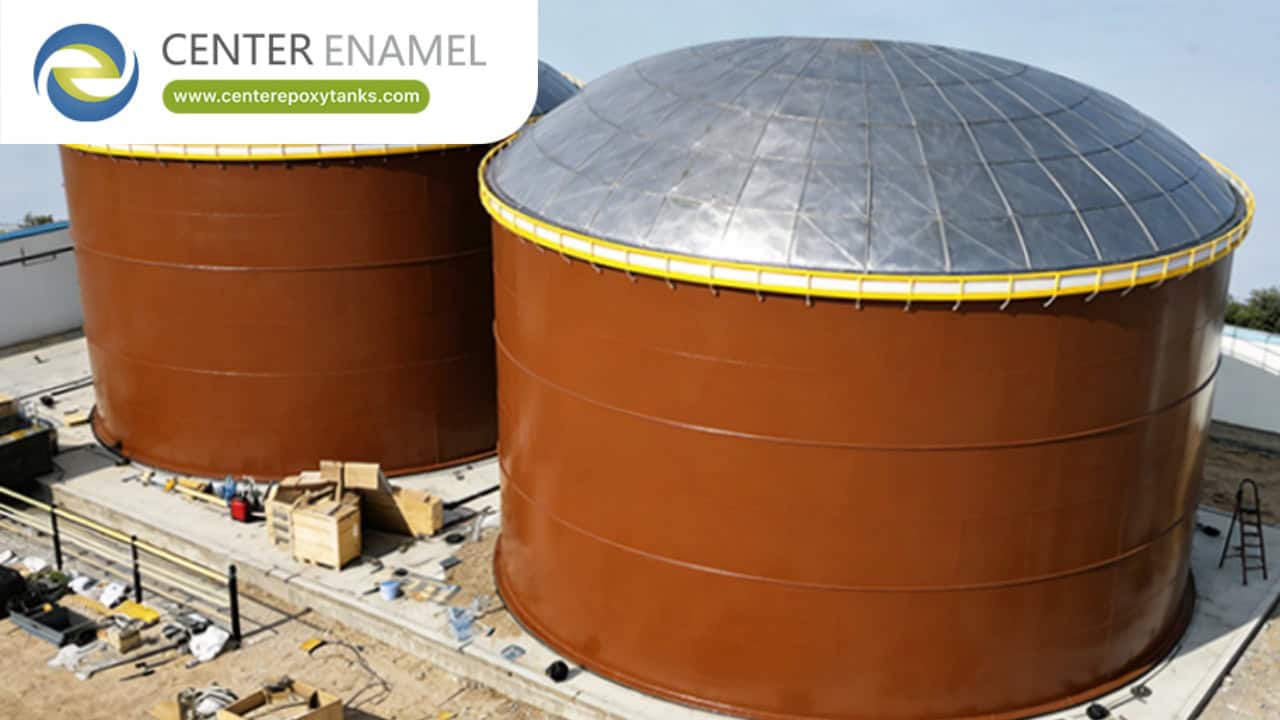
API 650 Design Standards: The Global Benchmark for Welded Steel Tanks
API 650 is the internationally recognized standard governing the design, fabrication, erection, and inspection of welded steel atmospheric storage tanks. Primarily utilized in the petroleum, chemical, and industrial sectors, it ensures structural integrity for tanks operating at internal pressures not exceeding 2.5 PSI (17.2 kPa). Key engineering focuses include material toughness, weld metallurgy, and seismic resilience. Compliance with API 650 is a mechanical prerequisite for environmental safety, fire protection, and long-term asset reliability in global liquid containment.
1. Technical Compliance Matrix: Core API 650 Requirements
Feature | API 650 Requirement | Engineering Objective |
Operating Pressure | > 2.5PSI (Atmospheric) | Prevents shell deformation in non-pressurized vessels. |
Design Temperature | Based on "Design Metal Temperature" | Prevents brittle fracture in cold-climate installations. |
Material Grades | ASTM A36, A516, A573 | Ensures predictable yield strength and weldability. |
Welding Code | ASME Section IX | Standardizes joint penetration and structural fusion. |
Inspection (NDT) | Radiographic (RT) / Vacuum Testing | Verifies 100% leak-proof integrity of shell and floor. |
Seismic Design | Appendix E | Mitigates "Elephant's Foot" buckling during ground motion. |
2. Structural Engineering Pillars of API 650
ll Design & Hoop Stress Logic
The shell is the most critical component. API 650 uses the One-Foot Method or the Variable-Design-Point Method to calculate plate thickness.
● Hydrostatic Pressure: Thickness is calculated course-by-course. The bottom ring (First Course) is the thickest to handle the maximum hydrostatic head, with thickness decreasing toward the top.
● Corrosion Allowance: Engineers must add a "sacrificial" thickness (e.g., 1.5mm to 3.0mm) to ensure the tank remains structurally sound even after decades of internal surface oxidation.
B. Welding Metallurgy & Heat-Affected Zones (HAZ)
A tank is only as strong as its joints. API 650 mandates:
● WPS/PQR Certification: Every weld must follow a Welding Procedure Specification and be backed by a Procedure Qualification Record to prove the weld metal's mechanical properties match the base steel.
● Submerged Arc Welding (SAW): For large-diameter tanks, automated SAW is preferred for its deep penetration and uniform, high-quality beads that minimize localized stress concentrations.
C. Foundation and Floor Integrity (Appendix B)
Environmental contamination most often occurs at the tank floor.
● Annular Plates: For large or high-stress tanks, thickened annular plates are required to distribute the shell's downward load.
● Leak Detection: API 650 Appendix B provides guidelines for "Release Prevention Barriers" (RPB) to detect floor leaks before they reach the groundwater.
3. Specialized Appendices: Customizing the Standard
● Appendix E (Seismic Design): Dictates anchoring requirements and "Freeboard" heights to prevent liquid "sloshing" from damaging the roof during an earthquake.
● Appendix G (Aluminum Geodesic Domes): Standardizes the interface between the steel shell and a clear-span aluminum dome, a common upgrade for VOC emission control.
● Appendix H (Internal Floating Roofs): Governs the design of roofs that float on the liquid surface to eliminate vapor space and reduce fire risks.
4. Mandatory Verification: Non-Destructive Testing (NDT)
Design standards are incomplete without the verification protocols required to prove compliance.
1. Radiographic Testing (RT): X-ray inspection of butt-welded shell joints to detect internal defects like porosity or slag inclusions.
2. Hydrostatic Testing: Filling the tank to its maximum design level to verify structural stability and leak-proof performance under 100% load.
3. Vacuum Box Testing: Ensuring floor-plate lap welds are 100% airtight, as the floor is the most common point for environmental risk.
5. Technical FAQ: API 650 Implementation
Q: Can API 650 tanks be used for pressurized gases?
A: No. API 650 is for atmospheric storage. For internal pressures above 2.5 PSI but below 15 PSI, API 620 is the correct design standard.
Q: What is the benefit of using "Full Radiography" (RT)?
A: Full RT allows for a higher Joint Efficiency ($E=1.00$), which can lead to thinner, more cost-effective shell plates while maintaining the same safety factor as a thicker tank with only "Spot Radiography."
Q: How does API 650 handle high-wind environments?
A: The standard includes wind-load calculations that determine if "Wind Girders" (stiffening rings) are needed to prevent the top of the tank shell from buckling inward under high-velocity wind pressure.


