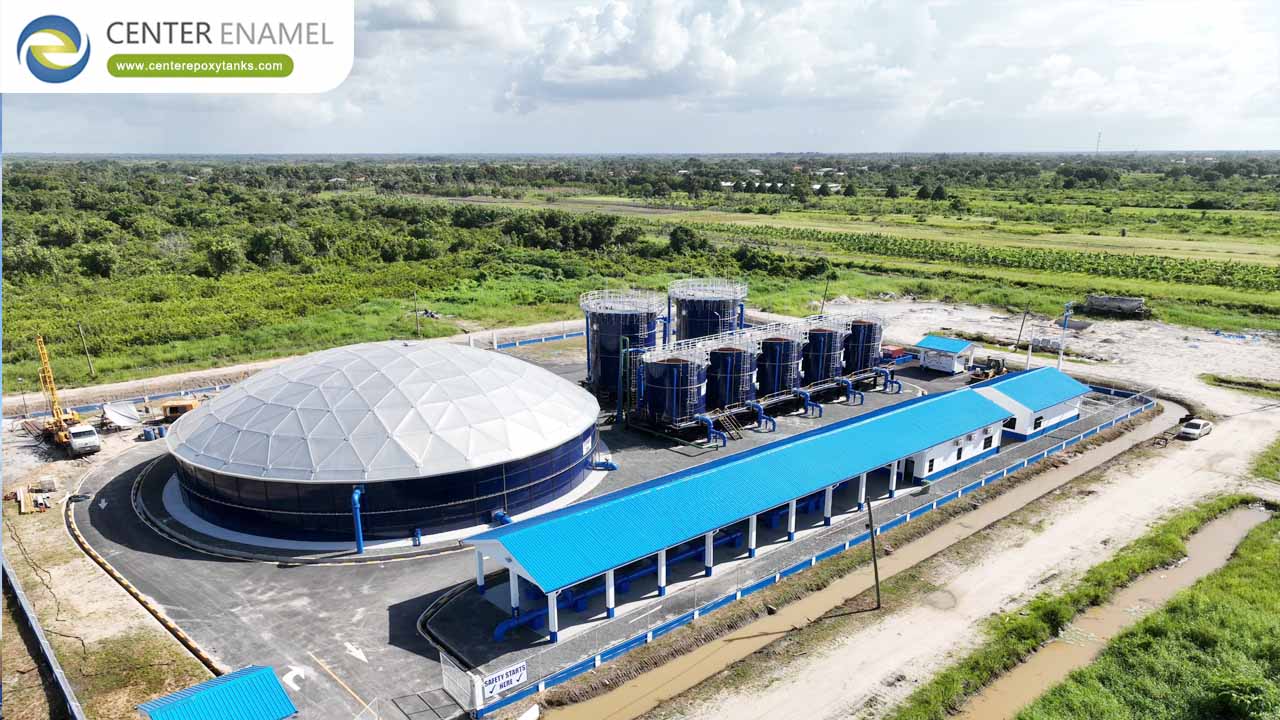
 AWWA D100-11 Design Standards: Engineering Global Water Infrastructure
AWWA D100-11 is the definitive American Water Works Association standard for the design, fabrication, and installation of welded carbon steel tanks for water storage. Unlike API standards for petroleum, AWWA D100-11 specifically addresses hydrostatic stability, potable water purity, and seismic resilience for municipal and industrial water systems. Key engineering requirements include Section 3 (General Design) for shell thickness, Section 13 (Seismic Design) for ground motion, and Section 10 (Testing) for leak-proof certification. Compliance is the global benchmark for ensuring safe, long-term drinking water supply and fire protection reserves.
1. Technical Compliance Matrix: Core AWWA D100-11 Requirements
Feature | AWWA D100-11 Requirement | Engineering Objective |
Operating Pressure | Atmospheric Only | Designed for liquid head pressure without internal gas pressure. |
Material Grades | ASTM A36, A283, A573 | Ensures predictable yield strength and metallurgical weldability. |
Welding Code | AWS D1.1 / ASME Section IX | Standardizes structural fusion and joint penetration. |
Inspection (NDT) | Radiographic (RT) / Visual (VT) | Verifies weld integrity based on chosen Joint Efficiency. |
Seismic Design | Section 13 (ASCE 7 Alignment) | Mitigates "Elephant’s Foot" buckling and sloshing damage. |
Sanitary Security | Screened Vents / Airtight Roofs | Prevents contamination from insects, birds, and pathogens. |
2. Structural Engineering Pillars of AWWA D100-11
A. Shell Design & Allowable Stress Logic
The AWWA D100-11 standard uses a conservative Safety Factor to ensure a 50-year service life.
● Hydrostatic Pressure: Shell thickness is calculated ring-by-ring. The bottom ring handles the maximum hydrostatic pressure, while upper rings are thinner but must meet Minimum Thickness requirements to prevent wind-induced buckling.
● Corrosion Allowance: While not always mandatory for water, engineers often specify a sacrificial thickness (e.g., 1.5mm) to account for internal oxidation before the protective lining is applied.
B. Seismic Resilience & Section 13 Logic
Water tanks are critical infrastructure during and after an earthquake. AWWA D100-11 provides rigorous formulas for:
● Impulsive vs. Convective Loads: Distinguishing between the "sloshing" water (convective) and the water moving with the tank (impulsive).
● Anchorage Systems: Specifying anchor bolt size and spacing to prevent the tank from lifting off its foundation during high-velocity ground motion.
C. Foundation and Floor Integrity
● Section 12 (Foundations): Provides detailed requirements for concrete ring-walls or crushed stone headers to ensure uniform load distribution.
● Leak Detection: Modern AWWA designs often incorporate a leak-detection system under the floor plates to catch potential issues before they reach the water table.
3. Protective Coatings & Potable Safety
● NSF/ANSI 61 Compliance: While AWWA D100 governs the steel, the internal coating must be NSF/ANSI 61 certified to ensure no toxic chemicals leach into the drinking water.
● Cathodic Protection: Many AWWA D100 tanks utilize sacrificial anodes or impressed current systems to prevent the electrochemical corrosion of the steel interior in contact with water.
4. Mandatory Verification: Non-Destructive Testing (NDT)
1. Radiographic Testing (RT): X-raying butt-welded joints. The degree of RT performed (Full, Spot, or None) determines the Joint Efficiency (E) used in the thickness calculations.
2. Hydrostatic Testing: The tank is filled to the maximum overflow level to verify that the structure and all welds can handle the 100% design load without leakage or excessive settlement.
3. Vacuum Box Testing: Every inch of the floor-plate lap welds is tested under vacuum to ensure a 100% airtight seal.
5. Technical FAQ: AWWA D100-11 Implementation
Q: Can I use AWWA D100-11 for industrial wastewater?
A: Yes. While designed for potable water, the structural principles are excellent for wastewater. However, if the wastewater is highly corrosive, additional material considerations or GFS (Glass-Fused-to-Steel) tanks might be more appropriate.
Q: What is the benefit of a "Ring-Wall" foundation in D100?
A: A concrete ring-wall foundation provides a stable, level surface for the shell, reducing the risk of differential settlement and allowing for the secure installation of anchor bolts required for high-wind or seismic zones.
Q: How does D100-11 handle high-wind loads?
A: The standard includes wind-pressure calculations based on local wind speeds (ASCE 7). If the tank height-to-diameter ratio is high, "Wind Girders" (stiffening rings) are added to the top of the shell to prevent inward buckling.


