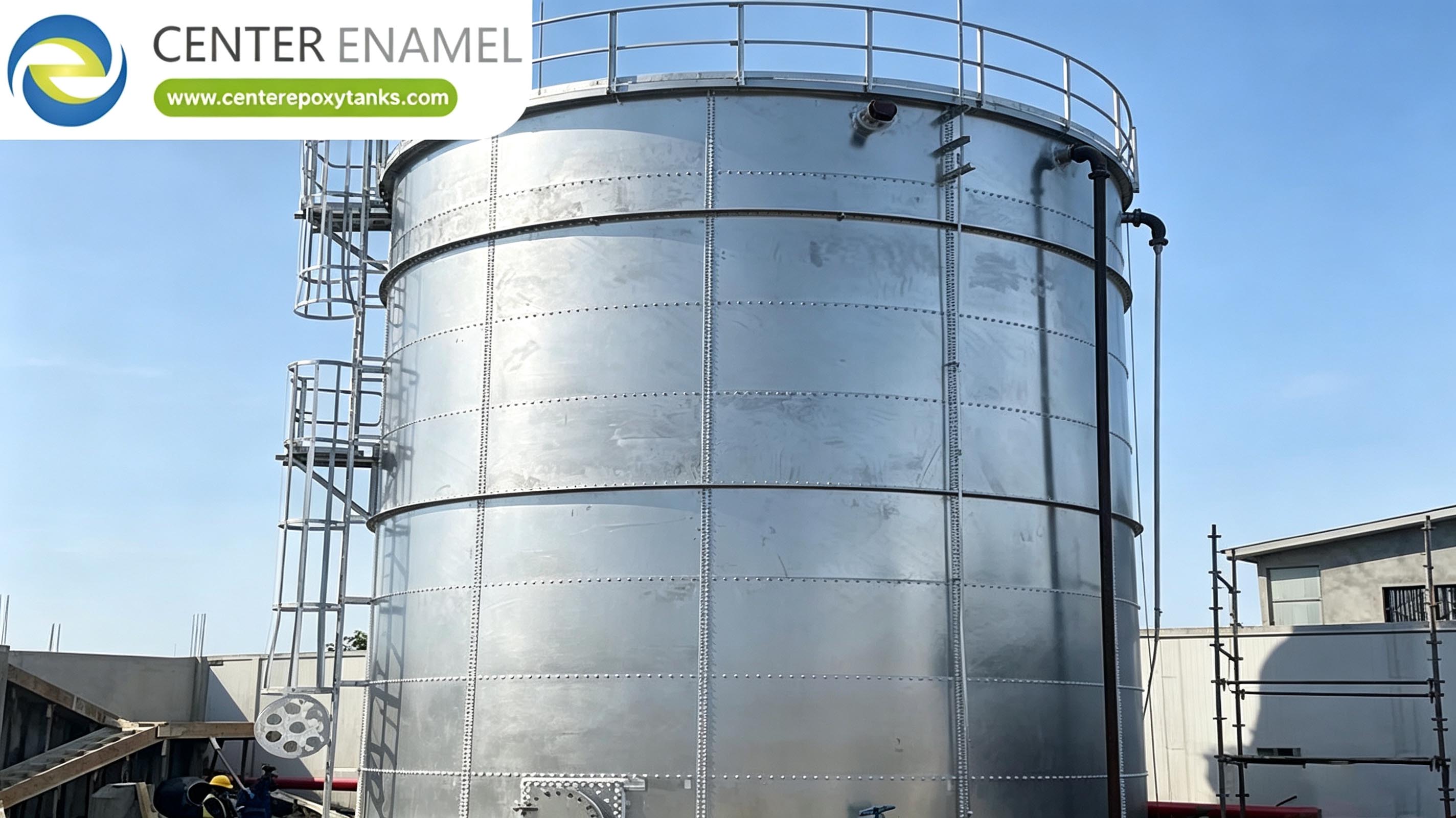
Condenser Water Storage Tank For Data Centres
A condenser water storage tank holds the loop inventory and buffers the chiller-to-tower flow rather than supplying fresh make-up; its temperature sets the entering condenser water temperature, which moves the chiller approach and the coefficient of performance. The reservoir is sized for thermal expansion, surge and pump suction stability, commissioned against the wet-bulb-based tower approach and the chiller approach in the AHRI ratings.
Introduction
A water-cooled data centre chiller rejects its heat through a condenser water loop, and that loop needs a reservoir. The reservoir is not the make-up tank and it is not the cooling tower basin by default — it is the buffer that holds the loop inventory, stabilises pump suction, absorbs the volume swings as the loop heats and cools, and decouples the chiller flow from the tower flow. Getting the reservoir wrong shows up as unstable chiller approach temperatures and lost efficiency.
This article explains the condenser side of a water-cooled plant, the hydraulics of the loop, how the reservoir temperature feeds back into the chiller approach, how wet-bulb control sets the condenser duty, and how the reservoir is sized, placed and commissioned. It cites the ASHRAE Handbook — HVAC Systems and Equipment, the AHRI 550/590 and 550/591 chiller rating standards, and CIBSE Guide B.
The condenser side of a water-cooled plant
The condenser side is where the chiller dumps the heat it lifted from the data hall. The compressor raises the refrigerant pressure, the condenser rejects that heat to the condenser water loop, and the loop carries it to the cooling tower or dry cooler, which finally rejects it to atmosphere. The condenser water is the working fluid of this side, and it is a closed-or-open loop inventory that has to stay full, stable and at a controlled temperature.
The reservoir sits in this loop as the inventory buffer. In many plants it is the tower basin itself; in others, particularly where the tower is remote or the loop is long, a separate tank is added to hold volume and stabilise suction. Either way its job is to keep the loop from running short during flow transients, to absorb expansion as the water warms, and to give the pumps a steady suction rather than one that sees air when the loop level dips. It is a loop component, not a supply component.
Condenser loop hydraulics
The hydraulics are governed by the mismatch between chiller flow and tower flow. The chiller wants a steady flow at its condenser; the tower flow varies with fan and pump control as the load and wet-bulb change. The reservoir is what lets those two flows be momentarily unequal without starving either side. When the chiller pumps more than the tower returns, the reservoir drops; when the reverse happens, it rises, and the reservoir volume is the slack that absorbs that difference.
The suction condition is the hydraulic constraint that sizes the reservoir's lower limit. The pump needs a stable, air-free suction with enough submergence to protect its net positive suction head, and the reservoir has to hold that level through the worst transient, not just at steady state. The reservoir also damps pressure surges from pump start-stop and from tower fan cycling, so the chiller and its controls see a calm loop rather than one that pulses. A loop without enough buffer transmits every transient to the chiller head and flow.
How reservoir temperature affects the approach
The reservoir temperature is the entering condenser water temperature the chiller sees, and that temperature drives the chiller approach and efficiency. The approach on the chiller side is the gap between the refrigerant condensing temperature and the condenser water temperature; raise the entering water temperature and the condensing temperature must rise to reject the same heat, which raises the lift, lowers the coefficient of performance and widens the approach. Conversely, a cooler reservoir lets the chiller condensing temperature fall and the efficiency rise.
The reservoir temperature is not free to sit where it likes — it is set by the tower performance and by what returns to it. But the reservoir adds its own effects: solar gain on an exposed tank, recirculation of warm discharge near the tank, or poor mixing that lets a hot layer form all raise the temperature the chiller actually receives. So the reservoir has to be placed and detailed to return to the chiller the temperature the tower produced, not a warmer one of its own making, because every degree of entering condenser water temperature is paid for in chiller energy.
Wet-bulb control and the condenser duty
The tower can only cool the condenser water toward the entering wet-bulb, and the gap between the leaving water temperature and the wet-bulb is the tower approach. As the wet-bulb falls, the tower can deliver cooler water, the entering condenser water temperature drops, and the chiller runs at a lower condensing temperature and a higher coefficient of performance. The condenser duty itself is the chiller's heat rejection, which equals the cooling capacity plus the compressor power, and it is the load the tower and the reservoir have to manage.
Wet-bulb control is the strategy of tracking this: tower fans modulate (often with variable-frequency drives) to hold the condenser water temperature setpoint as the wet-bulb and load move, rather than running flat out. The reservoir supports that control by giving the loop thermal inertia, so a step change in wet-bulb or load is absorbed gradually instead of slamming the chiller. The interplay is why the reservoir temperature and the wet-bulb control are designed together: the control sets the target, and the reservoir gives the loop the mass to hit it stably.
Sizing the condenser reservoir
The reservoir is sized for three things: thermal expansion of the loop as it warms, the surge volume from flow mismatch between chiller and tower, and the minimum suction level the pumps need at the worst transient. Thermal expansion is small per degree but real over a large loop; the dominant term is usually the surge and the suction-stability volume, which is set by the pump run-on time and the loop's flow difference, not by a daily demand.
Unlike a make-up tank, the condenser reservoir is not sized for hours of supply — the loop is closed and recirculates — so the figure is a fraction of the loop volume, often expressed as the minutes of pump operation or the tower manufacturer's minimum sump requirement plus expansion. The usable volume, not the gross, is what counts, and the design should state which. The chiller's minimum flow and the tower's minimum sump both set a floor, and the reservoir is sized to clear the higher of the two while leaving margin for the transient.
Placement and connection
Placement decides much of the temperature behaviour covered earlier. The reservoir should sit where its contents are not heated by the tower discharge or by direct sun, and where the returning condenser water mixes rather than stratifying into a hot top layer the pump then draws. A shaded, well-mixed tank or a basin with proper baffling returns the tower-produced temperature to the chiller instead of adding heat.
The connection detail matters as much as the location. The tower return should enter away from the pump suction, with the suction drawing from the cool, settled bottom, and any overflow should be sized for the maximum make-up plus surge so it does not lift the level into the structure. The reservoir should be isolated from the make-up function — they are different roles — and the connections should let either the chiller or the tower side be worked on without draining the whole loop. Good placement and connection are what turn a tank into a stable loop component.
Condenser storage versus cooling tower make-up
The confusion this article exists to clear is between condenser storage and cooling tower make-up, because they are often called the same thing and are not. The condenser reservoir holds the recirculating loop inventory — the water that passes through the chiller condenser and the tower — and it is a closed-or-open loop buffer. The make-up tank holds the fresh supply that replaces evaporation, blowdown, drift and leakage, and it is sized from the water balance, not from loop volume.
Mixing the two up leads to a reservoir sized for the wrong thing: a make-up volume put in the loop buffer starves the loop of surge capacity or a loop buffer used as make-up leaves the tower short during a supply interruption. They are designed by different calculations and often are physically separate, with the make-up tank feeding the condenser reservoir rather than being it. The condenser tank answers flow and temperature stability; the make-up tank answers water balance and autonomy, and a data centre spec should name both and size each to its own basis.
Commissioning and the approach temperature check
Commissioning confirms the reservoir and the loop deliver what the design promised, and the key check is the approach temperature. On the tower side, the approach is the leaving condenser water temperature minus the entering wet-bulb; on the chiller side, the approach is the refrigerant condensing temperature minus the entering condenser water temperature. Both are compared against the values the equipment was rated to under AHRI 550/590 (I-P) or 550/591 (SI), because that is the basis the chiller performance was sold on.
The commissioning steps are to measure the entering and leaving condenser water temperatures and the wet-bulb at design condition, confirm the tower approach matches the rating, then confirm the chiller approach and the coefficient of performance against the AHRI curve. A reservoir that is too warm, poorly mixed or short of volume will show as a tower approach or a chiller approach worse than rated, which is the signal to fix placement, mixing or size before the plant is accepted. CIBSE Guide B provides the reference data for the loop and the plant sizing against which the measured values are judged.
Condenser Loop Criteria: Parameter, What Sets It, Implication
Parameter | What sets it | Design implication |
Entering condenser water temp | Tower approach plus wet-bulb | Drives chiller condensing temp and COP |
Tower approach | Tower rating versus wet-bulb | Verified at commissioning to AHRI basis |
Reservoir volume | Expansion plus surge plus suction stability | Fraction of loop volume, not hours of supply |
Pump suction level | NPSH and transient flow | Minimum level at worst transient, not steady state |
Loop inventory floor | Chiller min flow, tower min sump | Higher of the two sets the size |
Condenser Storage Versus Cooling Tower Make-Up
Aspect | Condenser reservoir | Cooling tower make-up tank |
Role | Loop inventory buffer | Fresh supply for losses |
Sizing basis | Expansion, surge, suction stability | Water balance and autonomy |
Loop type | Closed or open recirculating | Open supply to the loop |
Typical size | Fraction of loop volume | Hours to a day of make-up |
Confusion cost | Mis-sized starves surge | Mis-sized starves tower in outage |
Project Reference
No matching project record exists in the verified project library for a condenser water storage reservoir at a data centre, and no project reference is given on this page. The recommendations above rest on the condenser-side loop hydraulics, the reservoir-temperature-to-chiller-approach relationship, the wet-bulb control logic, and the ASHRAE Handbook, AHRI 550/590 and 550/591, and CIBSE Guide B references. For a specific plant, the sizing inputs and the approach-temperature check set out here form the basis a reviewer can audit.
About Center Enamel
Center Enamel (Shijiazhuang Zhengzhong Technology Co., Ltd.) designs and fabricates bolted steel storage tanks, welded steel tanks, fusion-bonded epoxy tanks, galvanized tanks, stainless steel vessels, pressure vessels, aluminum geodesic dome roofs and floating roofs. The company has more than 30 years of production experience and has supplied equipment to projects in more than 100 countries. Aluminum geodesic dome roofs are designed and fabricated to API 650 Appendix G, AWWA D108, the Aluminum Design Manual, ASCE 7 and IBC, and the company developed and exported a 72 m diameter aluminum dome roof in 2023. Engineering, fabrication, coating, quality control and site service are handled as one scope, which is why the drawings, the calculation basis and the delivered hardware can be reconciled against each other.
Frequently Asked Questions
What is a condenser water storage tank used for?
A condenser water storage tank holds the recirculating loop inventory on the chiller's heat-rejection side. Its job is to keep the loop full and stable, give the pumps a steady air-free suction, absorb the volume swings as the loop heats and cools, and decouple the steady chiller flow from the variable tower flow. It is a loop buffer, not a fresh-water make-up supply, and in some plants it is the cooling tower basin itself rather than a separate tank.
How does reservoir temperature affect the chiller approach?
The reservoir temperature is the entering condenser water temperature the chiller sees. Raise it and the refrigerant condensing temperature must rise to reject the same heat, which increases the lift, lowers the coefficient of performance and widens the chiller approach — the gap between condensing temperature and water temperature. A cooler reservoir lets the chiller run at a lower condensing temperature and higher efficiency. Every degree of entering condenser water temperature is paid for in chiller energy, so the reservoir must return the tower-produced temperature, not a warmer one from solar gain or poor mixing.
What is the difference between condenser water and cooling tower water?
In an open plant the condenser water is the loop that passes through the chiller condenser and then through the cooling tower, so the same water is both — but the distinction that matters is reservoir versus make-up. The condenser reservoir holds that recirculating inventory as a loop buffer; the cooling tower make-up is the fresh supply that replaces evaporation, blowdown, drift and leakage and is sized from the water balance. They are different roles, sized by different calculations, and a data centre spec should name and size each separately.
How large should a condenser water reservoir be?
The reservoir is sized for thermal expansion, the surge from flow mismatch between chiller and tower, and the minimum pump suction level at the worst transient — not for hours of supply, because the loop is closed and recirculates. The figure is typically a fraction of loop volume, expressed as minutes of pump operation or the tower manufacturer's minimum sump requirement plus expansion. The usable volume is what counts, and the chiller's minimum flow and the tower's minimum sump both set a floor that the reservoir must clear with margin.
Does a condenser tank need treatment?
If the condenser loop is open to the atmosphere through the cooling tower, yes — it is an evaporative system and needs the same scale, corrosion and microbiological control as any open cooling loop: pH management, scale and corrosion inhibitors, and biocide for Legionella control. If the loop is closed and uses glycol or treated water, the treatment is different and lighter, focused on corrosion inhibition and freeze protection. The tank itself should be coated to avoid iron pickup adding to the fouling load, and any potable-adjacent make-up source carries NSF/ANSI/CAN 61 conformance.
How does wet-bulb control change condenser performance?
The cooling tower can only cool the condenser water toward the entering wet-bulb, and wet-bulb control tracks that by modulating tower fans, often with variable-frequency drives, to hold the condenser water setpoint as load and wet-bulb move. As wet-bulb falls, the tower delivers cooler water, the chiller condensing temperature drops and its coefficient of performance rises. The reservoir gives the loop the thermal inertia to absorb steps in wet-bulb or load gradually, so the control hits its target stably instead of oscillating the chiller.
How is the approach temperature verified?
Commissioning measures the entering and leaving condenser water temperatures and the wet-bulb at design condition. The tower approach is the leaving water temperature minus the entering wet-bulb; the chiller approach is the refrigerant condensing temperature minus the entering condenser water temperature. Both are compared against the equipment rating under AHRI 550/590 (I-P) or 550/591 (SI), which is the basis the chiller performance was sold on. A reservoir that is too warm, poorly mixed or short of volume shows as an approach worse than rated, signalling a placement, mixing or sizing fix before acceptance.
Conclusion
A condenser water storage tank is a loop component, not a supply tank, and its worth is measured by how steadily it keeps the chiller and tower decoupled and by the temperature it returns to the chiller. The reservoir temperature sets the entering condenser water temperature, which sets the chiller approach and the coefficient of performance, so placement and mixing matter as much as volume.
Size it for expansion, surge and pump suction stability, keep it distinct from the cooling tower make-up duty it is so often confused with, and commission it against the tower approach and the chiller approach in the AHRI ratings. Send us the chiller heat rejection, the tower rating, the wet-bulb design data and the loop layout, and we will return a reservoir sized and placed to hold the approach the plant was sold on.
Talk To Our Engineering Team
Send the duty, the volume basis, the governing code and the site constraints, and our engineering team will come back with a specification that a supplier can price and a reviewer can approve. We will also tell you plainly when a different tank type or a different scope is the better answer.


