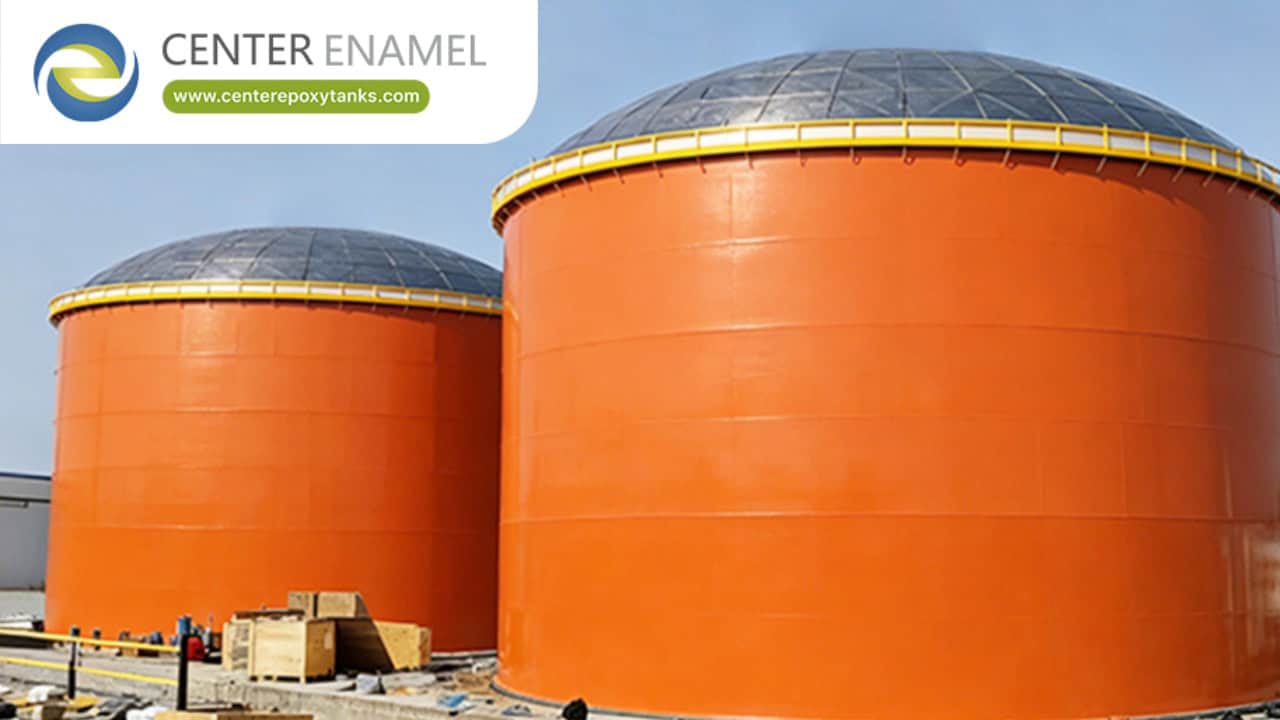
Condensate Recovery Tank For A Data Centre: Capturing Cooling Loop And AHU Condensate
Condensate from data centre AHUs and cooling coils is a low-solids but acidic, oxygen-rich and often copper-bearing stream whose volume scales with airflow and the humidity removed; you capture it in a corrosion-resistant tank and use it for duties that tolerate its chemistry, most commonly cooling tower make-up, after the minimum treatment the duty requires.
Introduction
Condensate is the water a data centre already pays to produce and then lets run to drain. Every air-handling unit that cools humid supply air, and every cooling coil that dehumidifies a space or a process stream, drops liquid water as a by-product of the cooling itself. On a humid site the volume is far from trivial, and capturing it is one of the few water-saving measures that needs no external source and no treatment train to be worth attempting.
This article treats condensate as a recoverable resource with its own quantity, quality and handling problems. It starts with where condensate forms and how you estimate the volume from the psychrometrics of the air stream, then addresses the quality surprises, the corrosion risk that drives material selection, the collection system and tank, the duties that can use the water, the treatment before reuse, and how condensate recovery compares with recovering cooling tower blowdown.
The engineering point throughout is that condensate is clean in appearance but chemically aggressive, and the tank you choose is chosen for that aggression rather than for the sediment or biological load you would worry about in other reuse streams.
Where condensate comes from
Condensate forms wherever air is cooled below its dew point. In a data centre that is principally the air-handling unit cooling coils that condition supply air, and the chilled-water or direct-expansion coils that dehumidify it. Secondary sources are any process exhaust that carries moisture and is cooled, and the coil drain pans that collect what the coil sheds. The water is essentially the moisture that was in the air.
Because the source is the air stream, the volume tracks occupancy and weather rather than IT load directly. A humid climate with large supply-air volumes produces far more condensate than a dry one, and the seasonal swing can be large. The recovery opportunity is therefore site-specific and has to be estimated from the air handled, not assumed from the chiller capacity.
How much condensate a plant produces
The volume is estimated from psychrometrics. For a given air mass flow rate the condensate mass rate is the air flow multiplied by the drop in humidity ratio between the entering and leaving air streams: m_cond = Q_air x (W_in - W_out), where W is the humidity ratio in kilograms of water per kilogram of dry air and Q_air is the dry-air mass flow rate in kilograms per second. The humidity ratio is read from a psychrometric chart at the entering and leaving conditions of the coil.
The estimate is only as good as the air-handling data behind it. You need the supply airflow, the entering and leaving dry-bulb and wet-bulb temperatures, and the coil leaving condition, which is typically near saturation. Summing the condensate across all AHUs and coils, then applying the operating hours and an availability factor for the humid season, gives the annual recoverable volume. The figure is an estimate to size storage and the reuse duty, not a guaranteed yield.
The water quality surprises
Condensate looks clean, but its chemistry is the surprise. It is essentially distilled water that has picked up whatever the air and the coil surface contributed: low in dissolved solids but carrying carbon dioxide from the air, which forms a weak carbonic acid and drives the pH down, often into the acidic range.
If the coil or the drain path is copper or galvanised, the water leaches metals on contact, so the collected stream can carry dissolved copper and zinc. It also picks up any biofilm growing in a wet, nutrient-poor but not sterile pan, and it is fully aerated, which matters for corrosion. None of this makes the water dirty in the suspended-solids sense; it makes it chemically active, and that is the property that governs the tank.
Corrosion and material selection
The corrosion risk comes from three things at once: low pH, low dissolved solids that leave the water aggressive towards metals, and dissolved oxygen from aeration. A neutral or low-solids water with free carbon dioxide will attack carbon steel and will dissolve unprotected metal surfaces, which is why a bare steel tank is a poor choice for raw condensate.
Material selection follows from that. Stainless steel resists the carbonic acid attack well and is a common choice for condensate duty where the chloride load is low. A glass-fused-to-steel tank presents a vitreous enamel surface referenced through ISO 28765 for the design and manufacture of vitreous-enamel-coated tanks, which isolates the water from the steel; where a steel shell with a coating is preferred, the coating system is selected under AWWA D102. The point is that the lining is chosen for acid and oxygen resistance, not for abrasion or sediment.
The collection system and the tank
Collection starts at the coil drain pans, which must slope and be trapped so that air-handling units do not pass air or odour through the drain line. The pans tie into a condensate header, usually by gravity, and the header runs to the collection tank. On large plants the header is sized for the peak simultaneous condensate rate, not the average, because several coils can be dehumidifying hard at once during a humid afternoon.
The tank itself is a buffer, not a treatment step. It smooths the intermittent arrival of condensate against a steadier reuse demand, and it holds the volume needed to cover the reuse duty through a dry spell when little condensate forms. The usable volume is set by that duty and by the turnover needed to keep the stored water from stagnating; the inlet should disperse flow to avoid disturbing any settled material, and the tank needs an overflow and a drain for cleaning.
Where condensate can be used
The most common and most forgiving reuse is cooling tower make-up. The tower already manages water chemistry through a treatment programme and blowdown, so condensate added at make-up simply becomes part of the cooling water inventory, and its low solids content actually helps by diluting the recirculating concentration.
Other duties are possible but more demanding. Irrigation and landscape use need the water to meet a microbiological and, in some jurisdictions, a treatment standard, and they expose the water to public contact. Toilet and fixture reuse usually require a defined treatment and disinfection step and a separate, labelled piping system. The low-solids nature of condensate makes it a good feed for further treatment, but the duty chosen sets how much treatment you must add before the tank.
Treatment before reuse
Raw condensate needs at least the minimum treatment the reuse duty demands. For cooling tower make-up the practical steps are filtration to remove pan debris and biofilm slough, and adjustment of pH so the added water does not depress the cooling water alkalinity below the programme's setpoint. Disinfection may be required where the stored water sits warm and aerated and could support growth.
If the duty is potable-adjacent or public-contact reuse, the treatment rises to a filtration and disinfection train sized to the local requirement, and the tank becomes part of a treated-water system rather than a simple buffer. The decision to treat or not is made on the duty, not on the water: condensate is a good candidate for treatment precisely because it starts low in solids, so the treatment load is light compared with greywater or blowdown.
Comparison with other recovery sources
Condensate recovery and cooling tower blowdown recovery are both on-site water savings but they are different problems. Blowdown is the concentrated, high-solids, chemically-treated discharge from the cooling loop; recovering it means removing dissolved solids through softening, reverse osmosis or evaporation, which is a real treatment load. Condensate is low in solids and needs little treatment, but it is produced only when the air is humid.
The two are complementary rather than competing. Condensate gives you a clean, low-solids make-up supplement during humid periods, which reduces the blowdown rate and the chemical load; blowdown recovery, where adopted, addresses the concentrated stream that condensate cannot replace. A plant that captures both has reduced its municipal draw on two fronts, but the condensate tank and the blowdown recovery tank are specified to different water chemistries and should not be confused.
Condensate Source And Volume Drivers
Source | Forms When | Volume Driver | Quality Character |
AHU cooling coils | Supply air cooled below dew point | Supply airflow and humidity removed | Low solids, acidic |
Dehumidification coils | Air dehumidified | Airflow and W_in - W_out | Low solids, metal-bearing |
Process exhaust cooling | Moist exhaust is cooled | Exhaust flow and moisture load | Variable with process |
Drain pans | Collect coil shedding | Sum of coil condensate | Biofilm-prone, aerated |
Condensate Vs Blowdown Recovery: What Each Needs
Attribute | Condensate Recovery | Blowdown Recovery | Implication |
Solids load | Low | High (concentrated) | Condensate needs light treatment |
Chemistry | Acidic, oxygenated | Alkaline, chemically treated | Different tank lining each |
Availability | Humid periods only | Continuous with cooling | Condensate is seasonal |
Typical treatment | Filtration, pH adjust | Softening or RO | Blowdown is a real process |
Best reuse | Cooling tower make-up | Make-up after treatment | Complementary, not competing |
About Center Enamel
Center Enamel (Shijiazhuang Zhengzhong Technology Co., Ltd.) designs and fabricates bolted steel storage tanks, welded steel tanks, fusion-bonded epoxy tanks, galvanized tanks, stainless steel vessels, pressure vessels, aluminum geodesic dome roofs and floating roofs. The company has more than 30 years of production experience and has supplied equipment to projects in more than 100 countries. Aluminum geodesic dome roofs are designed and fabricated to API 650 Appendix G, AWWA D108, the Aluminum Design Manual, ASCE 7 and IBC, and the company developed and exported a 72 m diameter aluminum dome roof in 2023. Engineering, fabrication, coating, quality control and site service are handled as one scope, which is why the drawings, the calculation basis and the delivered hardware can be reconciled against each other.
Frequently Asked Questions
How much condensate does a data centre cooling plant produce?
The volume scales with the air handled and the moisture removed, estimated from the psychrometrics of each coil: the condensate mass rate equals the dry-air mass flow rate times the drop in humidity ratio between entering and leaving air. You read those humidity ratios from a psychrometric chart at the coil conditions, sum across all AHUs and coils, and apply operating hours and a humid-season availability factor. The result is an estimate to size storage and the reuse duty, not a guaranteed yield, and it is far larger on a humid site than a dry one.
What contaminants are in cooling condensate?
Condensate carries little suspended solids but it is chemically active. It is essentially distilled water that has absorbed carbon dioxide from air, forming weak carbonic acid that lowers pH, and it can leach copper and zinc where coil or drain surfaces are those metals. It also picks up biofilm from wet pans and is fully aerated. So the contaminants of concern are dissolved metals, low pH and microbiological growth rather than dirt or sediment, and that profile drives the tank and treatment choice.
Why is condensate corrosive?
It is corrosive because it combines three aggressive traits: low pH from dissolved carbon dioxide, very low dissolved solids that leave the water hungry for ions and therefore attackive toward metal, and dissolved oxygen from aeration. Together these attack carbon steel and dissolve unprotected surfaces, which is why bare steel is unsuitable and why the tank is specified for acid and oxygen resistance rather than for sediment or abrasion.
Where can condensate be reused?
The most common reuse is cooling tower make-up, because the tower already manages water chemistry through its treatment programme and blowdown, and condensate's low solids content dilutes the recirculating concentration. Irrigation, landscape and toilet or fixture reuse are possible but need treatment and disinfection and, for public-contact duties, a separate labelled system. The duty you choose determines how much treatment must sit between the collection tank and the point of use.
What tank material suits condensate service?
Material choice follows the acidic, oxygenated chemistry. Stainless steel resists the carbonic acid attack where chloride is low, and a glass-fused-to-steel tank presents a vitreous enamel surface referenced through ISO 28765 that isolates water from steel. A coated steel tank uses a coating system selected under AWWA D102 for acid and oxygen resistance. Bare carbon steel is the wrong answer for raw condensate regardless of cost, because the water will attack it.
How is condensate collected?
Collection begins at the coil drain pans, which must slope and be trapped so the air-handling unit does not pass air or odour through the drain. The pans tie into a condensate header, usually by gravity, sized for the peak simultaneous condensate rate rather than the average. The header runs to a collection tank that buffers intermittent arrival against steadier demand, with an overflow, a drain for cleaning and an inlet that disperses flow without disturbing any settled material.
How does condensate recovery compare with blowdown recovery?
Condensate is low in solids and needs light treatment, but it is produced only when air is humid; blowdown is the concentrated, chemically-treated discharge from the cooling loop and needs real solids removal such as softening or reverse osmosis to recover. They are complementary: condensate supplements make-up during humid periods and reduces blowdown, while blowdown recovery addresses the concentrated stream condensate cannot replace. The two streams have different chemistries and need separately specified tanks and treatment.
Condensate is the easiest water a data centre can recover because the plant makes it regardless, but it is also the one most often mishandled as if it were clean. Its volume is an estimate from the air handled and the moisture removed, its quality is acidic and metal-bearing rather than dirty, and its tank is chosen for acid and oxygen resistance.
Capture it in a corrosion-resistant tank, send it to the most forgiving duty it can serve, usually cooling tower make-up, with the minimum treatment that duty requires, and treat it as a clean low-solids feed if you later route it to higher-grade reuse. Send us the air handling data, the coil conditions and the intended reuse duty, and we will return a collection and tank specification sized to the condensate your site actually produces.
Talk To Our Engineering Team
Send the duty, the volume basis, the governing code and the site constraints, and our engineering team will come back with a specification that a supplier can price and a reviewer can approve. We will also tell you plainly when a different tank type or a different scope is the better answer.