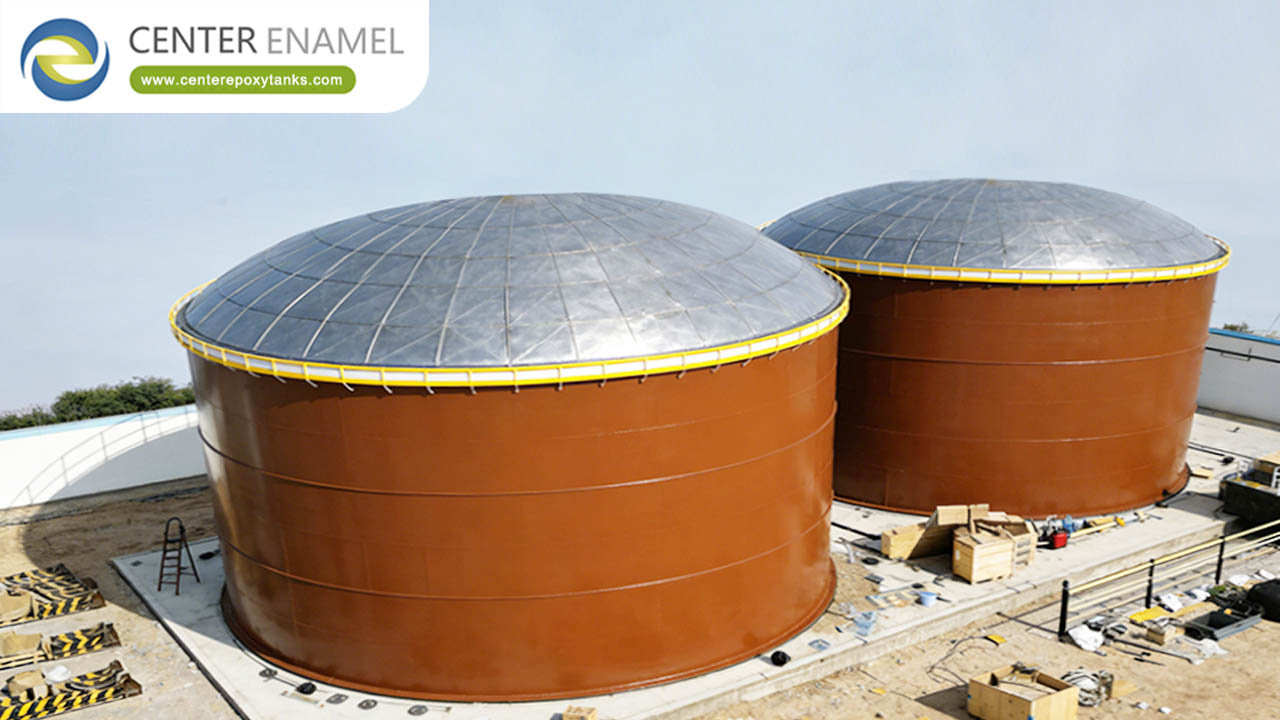
 Chilled Water Thermal Storage Tank: Chilled Water, Ice And Phase Change Compared
Chilled water, ice and phase-change material store cooling at very different densities; ice holds roughly eight times the energy per volume of a 10 K chilled water spread. The choice trades footprint, capital, parasitic loss, integration effort and maintenance, and no medium suits every duty.
Introduction
Thermal energy storage for cooling is not one technology. The store can hold the cooling as sensible heat in water, as latent heat in ice, or as latent heat in a phase-change material, and the three sit at very different points on the trade between footprint, cost, losses and complexity. Picking the medium is the first decision in the design, and it is easy to make on a single attractive property and regret it later.
The conclusion is that the medium is a system choice. The smallest footprint is not the lowest cost, and the lowest loss is not the easiest to integrate, so the comparison has to be read as a linked set rather than a ranking by any one column.
The three media in one view
Chilled water storage holds cooling as sensible heat: the water is cooled a few kelvin and the energy is the mass times the specific heat times that difference, about 1.163 kWh per cubic metre per kelvin of spread. Ice storage holds it as latent heat: water releases about 334 kJ/kg as it freezes, roughly 93 kWh per cubic metre of ice, so the same volume stores far more cooling, at the price of a lower storage temperature.
Phase-change material sits between the two: it melts and freezes at a chosen temperature above freezing, releasing a latent heat that varies with the formulation, typically tens of kWh per cubic metre, and it lets the store sit at a temperature that suits the chiller better than ice does. The three are not interchangeable; they occupy different temperature levels and different parts of the plant, which is the first thing the comparison has to respect.
Storage density and what it means for footprint
Storage density decides how much space the store occupies, and the gap between the media is large. A chilled water tank at a 10 K spread stores about 11.6 kWh/m3; an ice store stores about 93 kWh/m3 of ice, roughly eight times denser; a PCM store is in between, the exact figure set by the material's latent heat and how much of the volume is active material rather than containment.
The footprint consequence is direct: for a given duty, an ice store is a fraction of the volume of a chilled water tank, which matters on a dense data centre site where the tank yard competes with the electrical and the plant rooms. The offset is that the ice store sits at or below 0 C, so its envelope, piping and heat exchange are built for that, and the smaller volume does not mean the smaller system. Density is read together with the temperature level, not on its own.
Capital cost structure by medium
The capital cost of each medium is built from different parts. Chilled water is the cheapest per unit of stored energy: a steel tank, water, and diffusers, with no refrigeration specials. Ice is more expensive per kWh because it needs a lower evaporator temperature, a larger refrigerant-side or secondary loop, and the ice-on-coil or encapsulated hardware; the chiller itself is also larger or runs at a lower coefficient of performance for the charging duty.
PCM carries the material cost of the phase-change medium and the containment and heat-exchange surface to use it, and that material cost is the variable that decides whether it pencils out. You compare on installed cost per kWh of delivered cooling, including the chiller penalty for the lower storage temperature, because a medium that is cheap to contain can be expensive to charge.
Parasitic loss and heat gain
Every store loses some of its cooling to the surroundings, and the rate depends on the medium and its temperature. A chilled water tank near 5 C has a modest temperature difference to a temperate ambient, and its loss is the insulation performance over the surface area for the dwell time.
An ice store at 0 C or below has a larger temperature difference and, because it is colder, a larger driving force for heat gain, so its envelope and any melt risk have to be managed carefully; the loss is also a melt, which reduces the stored inventory. PCM losses depend on its store temperature and the containment. The parasitic load is the cooling you must replace to keep the store ready, and it is charged against the duty: a store with high gains on a long dwell can give back less than the nameplate implies, which is why the loss is part of the comparison rather than a footnote.
Integration effort and controls
Integration effort scales with how far the medium sits from the ordinary chilled water loop. Chilled water storage ties directly into the loop with pumps and a stratified tank, and the controls are flow and temperature management. Ice storage needs a charging cycle at a lower temperature, often a secondary fluid or an ice harvester, and the controls sequence charging, melting and the interface to the chiller, which is more than a pump schedule.
PCM needs the melt or freeze to be driven across its temperature band and the heat exchange to be effective at that band. The more the medium differs from plain chilled water, the more the plant and the control sequence differ from a conventional system, and the more commissioning and operator training it demands. Integration is read as a cost and a risk, not just as a piping drawing.
Operational consequences and maintenance
The operational consequences follow the medium. Chilled water is forgiving: it is water in a tank, and the maintenance is the tank, the coating, the diffusers and the instrumentation. Ice brings freeze and melt cycles, the hardware that makes and breaks the ice, and the risk of an incomplete charge or a stuck harvest, so its maintenance is the ice-making equipment and the loop that serves it.
PCM brings the material itself, whose performance can degrade with cycles and whose containment must stay intact, so its maintenance is material and heat-exchanger inspection. Each medium also behaves differently under a partial or failed charge, and the operator needs to know what fraction of the duty remains when the store is only partly full. The maintenance profile is part of the lifecycle cost, not a separate concern.
Choosing by duty
You choose by what the duty rewards. If the site is space-constrained and the utility or code pushes peak shaving hard, the density of ice earns its cost despite the chiller penalty. If the duty is large, the space is available, and the simple life is valued, chilled water is the lower-risk choice.
If the duty wants storage at a temperature above freezing without the volume of water, PCM is the candidate, provided its material cost works at the required energy. The decision also depends on the chiller strategy: a plant that already runs at a low lift favours ice less than one that does not, and a plant with a long, predictable off-peak window favours the cheaper, slower medium. The duty, the site and the chiller together point to one medium, and the comparison table is how you show that the choice is reasoned rather than assumed.
The decision checklist
The checklist keeps the comparison honest. State the duty in kWh and the available footprint, then read the density column to see whether the volume is even feasible on site. Put the installed cost per kWh next to it, including the chiller penalty for the storage temperature. Add the parasitic loss over the expected dwell, because a dense store that leaks cooling is not as dense as it looks.
Score the integration effort against the plant's control capability and the team's experience. Weigh the maintenance profile against the lifecycle budget. Last, check the chiller strategy and the off-peak window, because they decide whether the lower-temperature medium is cheap to charge. The medium that wins is the one that survives all five columns, not the one that leads any single one.
Three-Medium Comparison
Property | Chilled water | Ice | Phase-change material |
Storage density (kWh/m3) | ~11.6 at 10 K spread | ~93 (latent) | Tens, formulation-dependent |
Storage temperature | 4 to 7 C | 0 C or below | Above freezing, set by material |
Capital cost per kWh | Lowest | Higher | Material-dependent |
Parasitic loss | Low (small delta T) | Higher (melt risk) | Medium |
Integration effort | Low | High | Medium |
Maintenance | Tank and coating | Ice hardware and loop | Material and HX |
Medium Selection Decision Checklist
Check | What to state | Effect on choice |
Duty and footprint | kWh and available volume | Rules out infeasible media |
Installed cost per kWh | Include chiller penalty | Favours cheaper medium |
Parasitic loss over dwell | Gain versus dwell time | Penalises high-gain store |
Integration versus control skill | Plant capability | Favours simpler medium |
Maintenance versus lifecycle | Budget and team | Affects lifecycle cost |
Chiller strategy and window | Lift, off-peak length | Decides charge cost |
About Center Enamel
Center Enamel (Shijiazhuang Zhengzhong Technology Co., Ltd.) designs and fabricates bolted steel storage tanks, welded steel tanks, fusion-bonded epoxy tanks, galvanized tanks, stainless steel vessels, pressure vessels, aluminum geodesic dome roofs and floating roofs. The company has more than 30 years of production experience and has supplied equipment to projects in more than 100 countries. Aluminum geodesic dome roofs are designed and fabricated to API 650 Appendix G, AWWA D108, the Aluminum Design Manual, ASCE 7 and IBC, and the company developed and exported a 72 m diameter aluminum dome roof in 2023. Engineering, fabrication, coating, quality control and site service are handled as one scope, which is why the drawings, the calculation basis and the delivered hardware can be reconciled against each other.
Frequently Asked Questions
Should I use chilled water, ice or PCM for thermal storage?
It depends on the duty, the site and the chiller, and no medium is best for every case. Chilled water is the lowest capital cost and the simplest to run but needs the largest volume. Ice stores about eight times the energy per volume, so it suits space-constrained sites, but it needs a lower charging temperature and a larger chiller penalty. PCM sits between, useful when storage above freezing is wanted without water's volume, if its material cost works. Choose by reading the comparison across density, cost, loss, integration and maintenance together.
Which medium gives the smallest footprint?
Ice gives the smallest footprint. A chilled water tank at a 10 K spread stores about 11.6 kWh per cubic metre, while an ice store stores roughly 93 kWh per cubic metre of ice, about eight times denser, and a PCM store is in between depending on its latent heat. The smaller ice volume is real, but the store still sits at or below 0 C, so its envelope, piping and heat exchange are built for that temperature, and the system is not simply smaller overall.
Which has the lowest parasitic loss?
None of the three is universally lowest; it depends on the store temperature and the dwell. A chilled water tank near 5 C has a modest temperature difference to a temperate ambient, so its gain is small. An ice store at 0 C or below has a larger driving force for heat gain and can melt, losing inventory. PCM gains depend on its band and containment. The parasitic load is the cooling you replace to keep the store ready, and it is compared per kWh of delivered cooling, including the dwell time, not by medium name.
How do the capital costs compare?
Chilled water is cheapest per kWh stored: a steel tank, water and diffusers, with no refrigeration specials. Ice costs more per kWh because it needs a lower evaporator temperature, larger or lower-efficiency charging equipment, and ice hardware. PCM carries the material cost of the phase-change medium plus containment and heat-exchange surface, and that material cost decides viability. Compare installed cost per kWh of delivered cooling including the chiller penalty for the lower storage temperature, because a cheap-to-contain medium can be expensive to charge.
Which medium is easiest to integrate with existing plant?
Chilled water is easiest: it ties into the loop with pumps and a stratified tank, and the controls are flow and temperature management. Ice needs a charging cycle at a lower temperature, often a secondary fluid or harvester, with sequencing for charge, melt and chiller interface. PCM needs the phase change driven across its band with effective heat exchange. The further the medium sits from plain chilled water, the more the plant and controls differ from a conventional system, and the more commissioning and operator training it demands.
How much maintenance does each medium need?
Chilled water is forgiving: maintain the tank, coating, diffusers and instruments. Ice adds freeze and melt cycles, the ice-making hardware, and the risk of an incomplete charge or stuck harvest, so its maintenance is that equipment and its loop. PCM adds the material, which can degrade with cycles, and its containment and heat exchangers, which must be inspected. Each medium also behaves differently under a partial charge, and the operator must know the remaining duty when the store is only partly full.
How do I choose between chilled water and ice?
By the duty and the site. If space is tight and peak shaving is strongly rewarded, ice's density earns its cost despite the chiller penalty. If the duty is large, space is available and simplicity is valued, chilled water is the lower-risk choice. If storage above freezing is wanted without water's volume, PCM is the candidate if its material cost works. Also weigh the chiller strategy and the off-peak window, because they decide whether the lower-temperature medium is cheap to charge. Read the comparison across all columns, not one.
Chilled water, ice and phase-change material are three answers to the same question, and the right one is set by the duty, the site and the chiller rather than by a preference for density or simplicity. Read the comparison across storage density, installed cost per kWh, parasitic loss over the dwell, integration effort and maintenance, and the medium that survives all five columns is the one to specify.
Send us the duty, the available footprint, the chiller strategy and the off-peak window, and we will return a medium comparison and a storage specification sized to your plant, with the chiller penalty and the loss over dwell stated rather than assumed.
Talk To Our Engineering Team
Send the duty, the volume basis, the governing code and the site constraints, and our engineering team will come back with a specification that a supplier can price and a reviewer can approve. We will also tell you plainly when a different tank type or a different scope is the better answer.


